
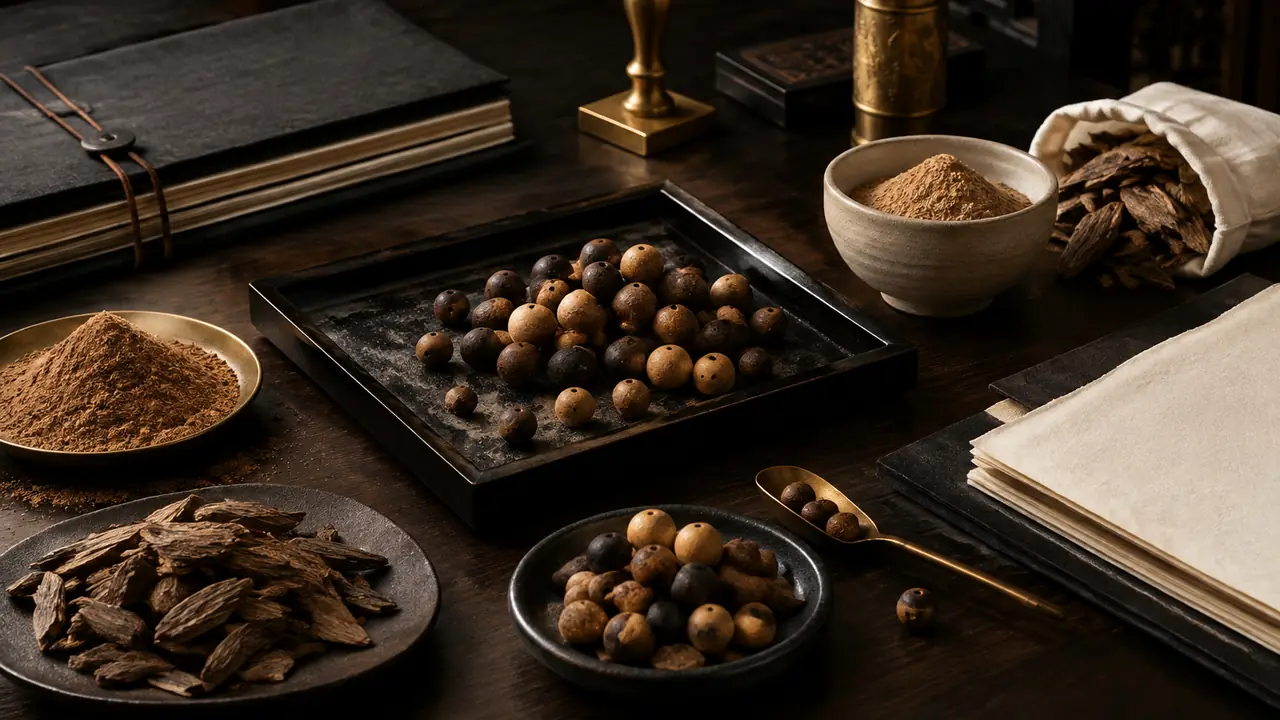
Two separate questions: conservation and trade
Sandalwood questions are often muddled because two different systems are involved. The first is conservation status. The IUCN Red List assesses Santalum album, the true or Indian sandalwood, as vulnerable, mainly because of long-term over-harvesting of wild trees. The second is trade control, which operates through national laws and, for some species, CITES. Santalum album is not listed in the CITES appendices, so no CITES export permit applies. That does not mean the wood is unregulated. The countries where it grows set their own rules, and importing countries can apply theirs.
The practical result is that origin documents matter more than any single international certificate. A buyer cannot rely on a permit type, as with agarwood; the buyer has to ask where the wood grew, who harvested it and under what authority. The contrast with agarwood is set out in CITES and agarwood.
India: the historic source, with restrictions
India, especially the Mysore region of Karnataka, is the historic home of high-oil sandalwood, and its aged wood is the reference many buyers have in mind when they say fine sandalwood. India has long restricted the export of sandalwood, with state control over harvesting and sale of the heartwood. In effect, legal export of raw wood from India is tightly controlled, and trade in finished or processed goods follows separate rules. Buyers should not assume that any batch described as Indian can be legally exported or imported; documents are the test, not the label.
In the Chinese trade, the term Laoshan sandalwood is used for aged wood of Indian origin. It is a trade term and not a legal category, and the desk describes lots by their actual documented origin. The vocabulary is explained in what buyers mean by Laoshan sandalwood.
Australia and plantation supply
Santalum album is also grown commercially in northern Australia, where plantations established in recent decades now supply a significant share of legally traded heartwood and oil. Plantation wood has advantages for a compliance file: the land, the planting and the harvest are documented, the harvest is lawful and the supply chain is shorter. The wood is younger than aged Indian stock, and its oil content and aroma profile can differ, which is a matter of formula design rather than legality. Some lots combine plantation wood with legally sourced Indian stock; whichever applies, the origin is stated per lot.
| Source | Status | Document to ask for | Note |
|---|---|---|---|
| Indian aged wood | Export restricted by India | Evidence of lawful sale and export or import of legally sourced stock | Check the paper trail, not the label |
| Australian plantation wood | Cultivated, harvested under local rules | Supplier declaration of plantation origin, invoice from the processor | Younger wood, different oil profile |
| Other Santalum species | Different species, different status | Species declaration | Must not be labelled as Santalum album |
What a legal sourcing file contains
- Species statement. The workshop names the species as Santalum album, or states clearly if another species is used.
- Origin statement. A country and, where possible, a region or plantation, written per lot.
- Chain of custody. Invoices or delivery notes showing how the wood reached the powder supplier and then the workshop.
- Quantity reconciliation. Powder purchased against powder used, per lot of beads.
- Import-side check. The importer confirms that the destination does not apply extra rules to sandalwood products.
This file does not have to be long, but it has to exist before the order ships. When a supplier cannot produce one for a particular lot, the sensible response is to change the lot or the supplier, not to argue about wording.
Why powder complicates the picture
Sandalwood powder is a processed product, and by the time it reaches a bead workshop it has often passed through one or more traders. Powder from different woods can be blended, and some powders sold as sandalwood contain other species or sawdust fillers. A buyer who wants clear legal origin should therefore avoid vague wording such as natural sandalwood powder and ask for the species and country on every lot. A powder that is unusually inexpensive for its stated origin is a reason to ask more questions, not fewer. The grade side of the question is in sandalwood powder grades, and the main differences between woods are in sandalwood origins.
How the conservation status affects buyers
A vulnerable listing does not stop trade, but it shapes the market. Retail customers, marketplaces and press increasingly ask where sandalwood comes from, and a brand that can answer in one clear sentence has an advantage over one that cannot. Prices also reflect scarcity: aged wood from established stock is limited, and plantation wood is still maturing. Buyers planning multi-year programs should ask the desk how many seasons of supply a given origin can support, so a bestselling bracelet does not run into an origin shortage in its second year. Where continuity matters, agree on an alternative origin in advance and test its scent against the approved reference bead.
Wording that stays honest
- Say Santalum album sandalwood, with the origin in the lot record, such as Australian plantation or legally sourced Indian wood.
- Avoid claims such as rare, wild or ethically certified unless a document supports them.
- Use Laoshan only as a trade term and explain it if it appears on a spec sheet.
- Do not state that sandalwood needs no permits anywhere; say that it is not listed in CITES and that the importing country may have its own rules.
Next steps for a program
If sandalwood is the core of your range, decide early whether you want plantation wood for a simpler file or aged wood for a particular scent character, and accept that the second choice costs more documentation time. State the origin you need in the order, ask for the species and origin statement with the samples, and keep a reference bead from the approved lot. The bracelet that most programs start with is described on the sandalwood bracelet page, and the document list that accompanies a lot is on compliance and certifications. To get a shortlist with origin options, send the line, bead size and destination through the quote form; the desk will confirm the sourcing file in writing.