
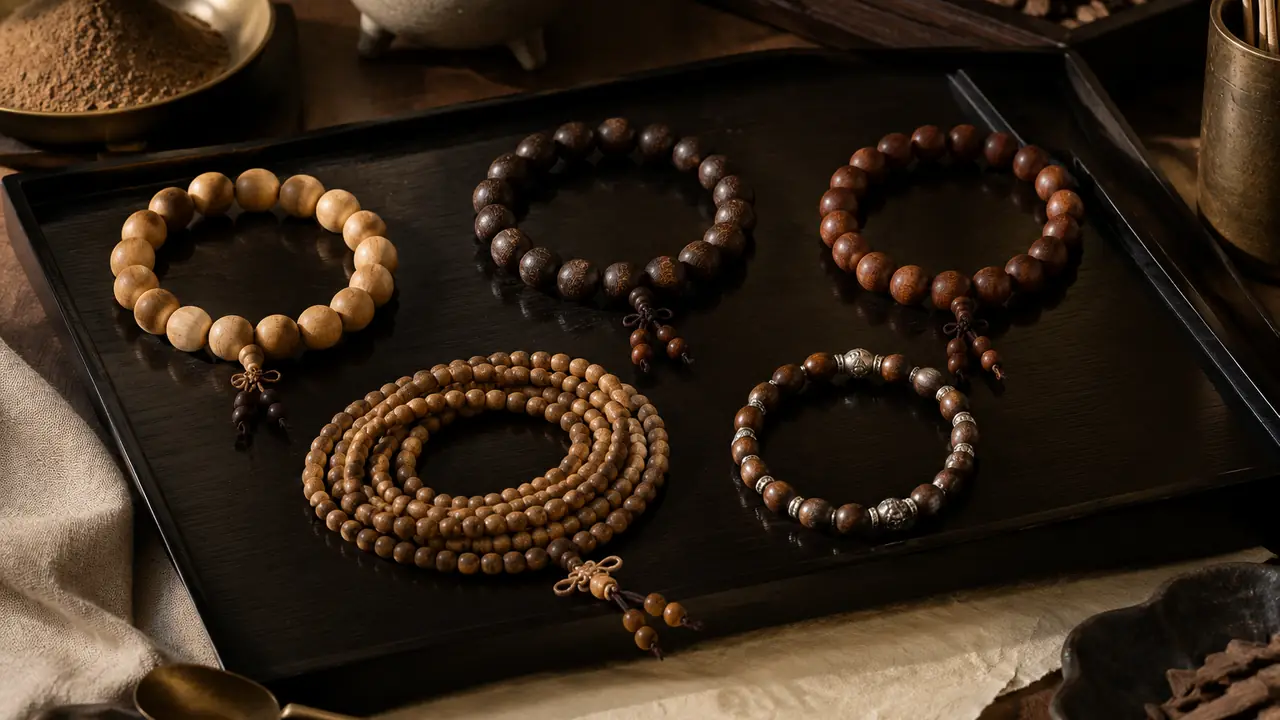
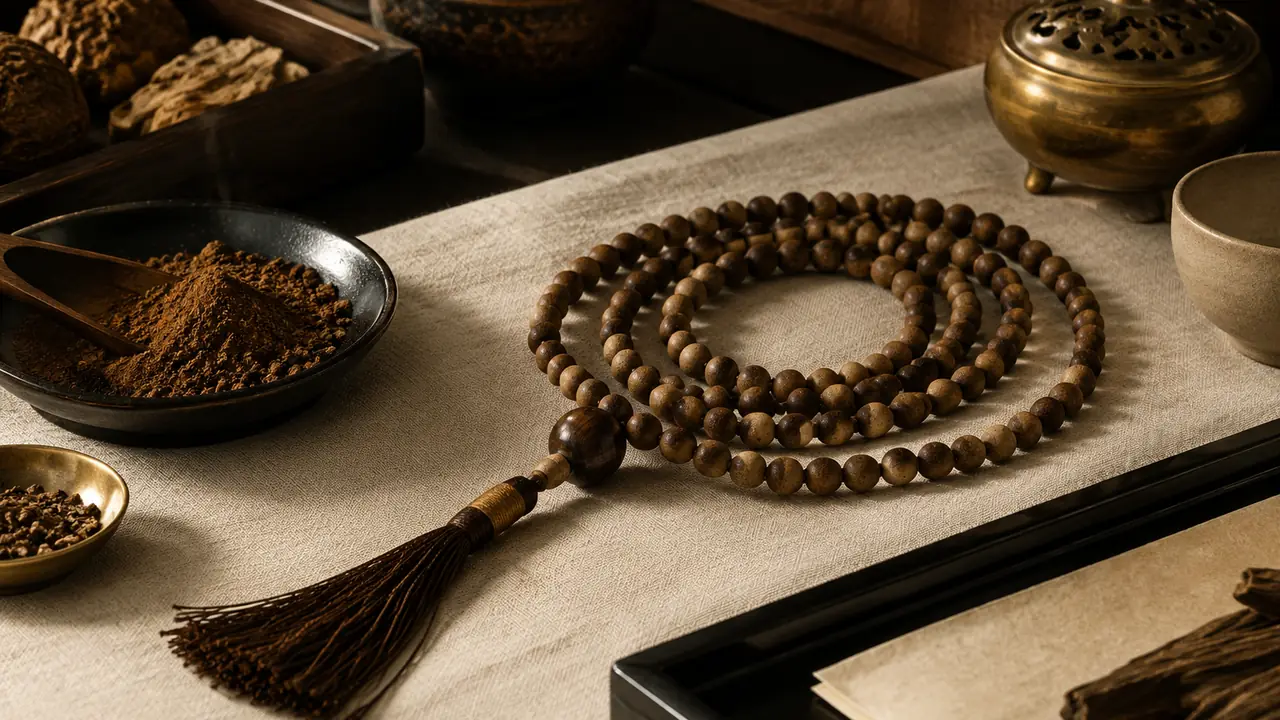
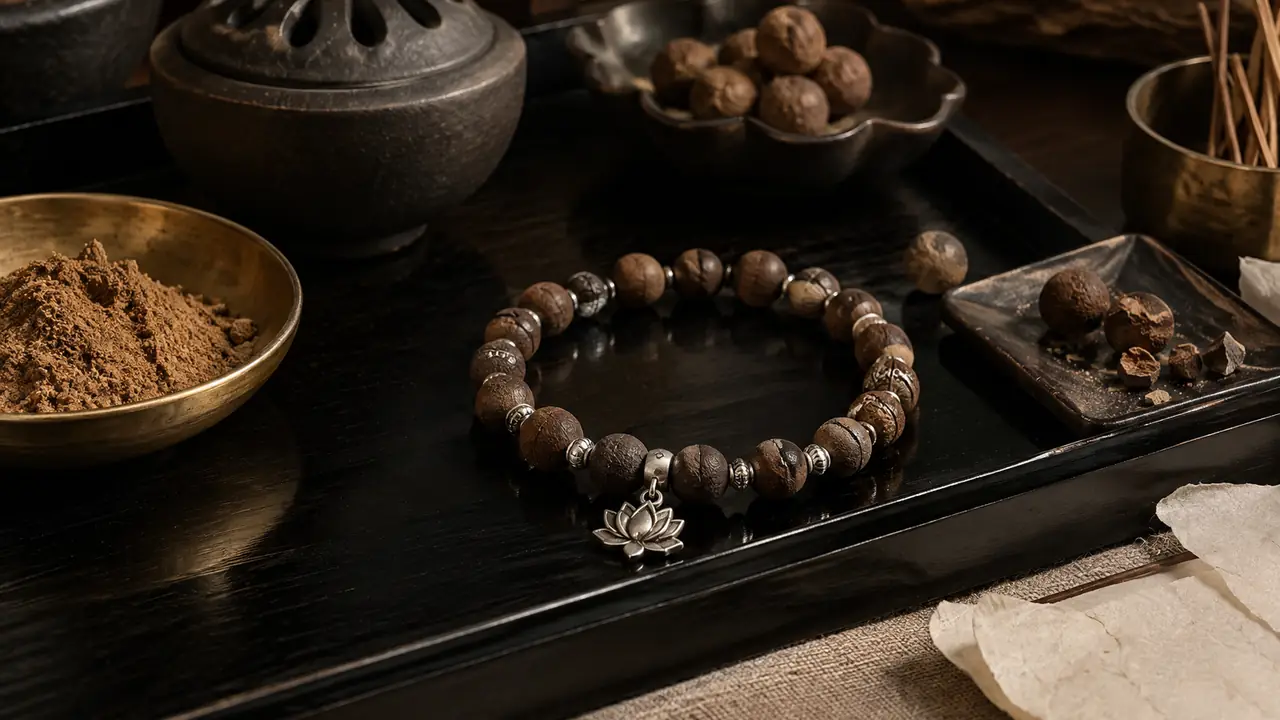
The bracelet family at a glance
An incense bead bracelet is a strand of hand-rolled beads made from fragrant wood powder, a plant binder and a little honey. It is worn rather than burned: body warmth and the friction of the wrist release the scent slowly. Ouvare coordinates five bracelet lines with partner workshops in the Fujian and Guangdong incense clusters. They share the same craft, described on how incense beads are made, but they differ in base material, scent character, weight, price logic and the paperwork that travels with them.
Picking the right line first saves a sample round. A retailer who wants an easy, familiar scent for gifts is in a different place from a jewelry brand that needs consistent hole sizes, or an importer who must prepare export documents for agarwood.
How to choose among the five lines
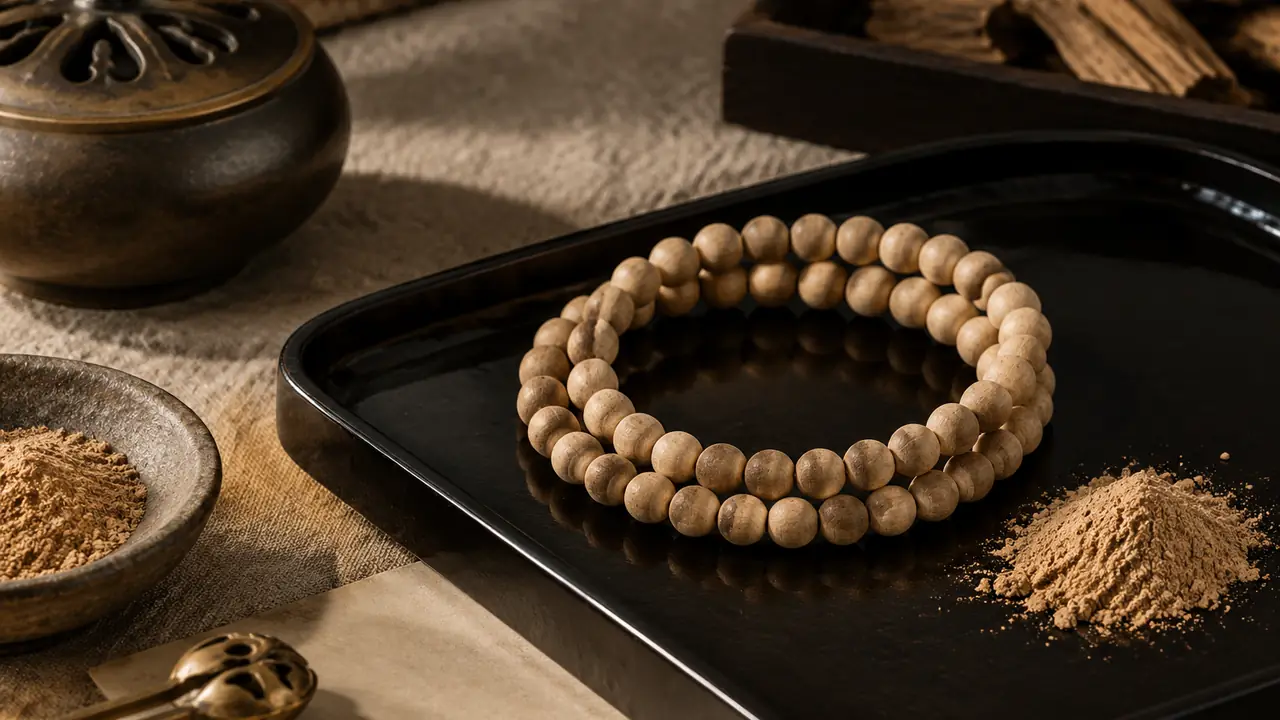
- Sandalwood. The entry point. A creamy, milky wood scent that most buyers recognize at once, in four common sizes. It suits gifting, lifestyle brands and online sellers. See the sandalwood bracelet.
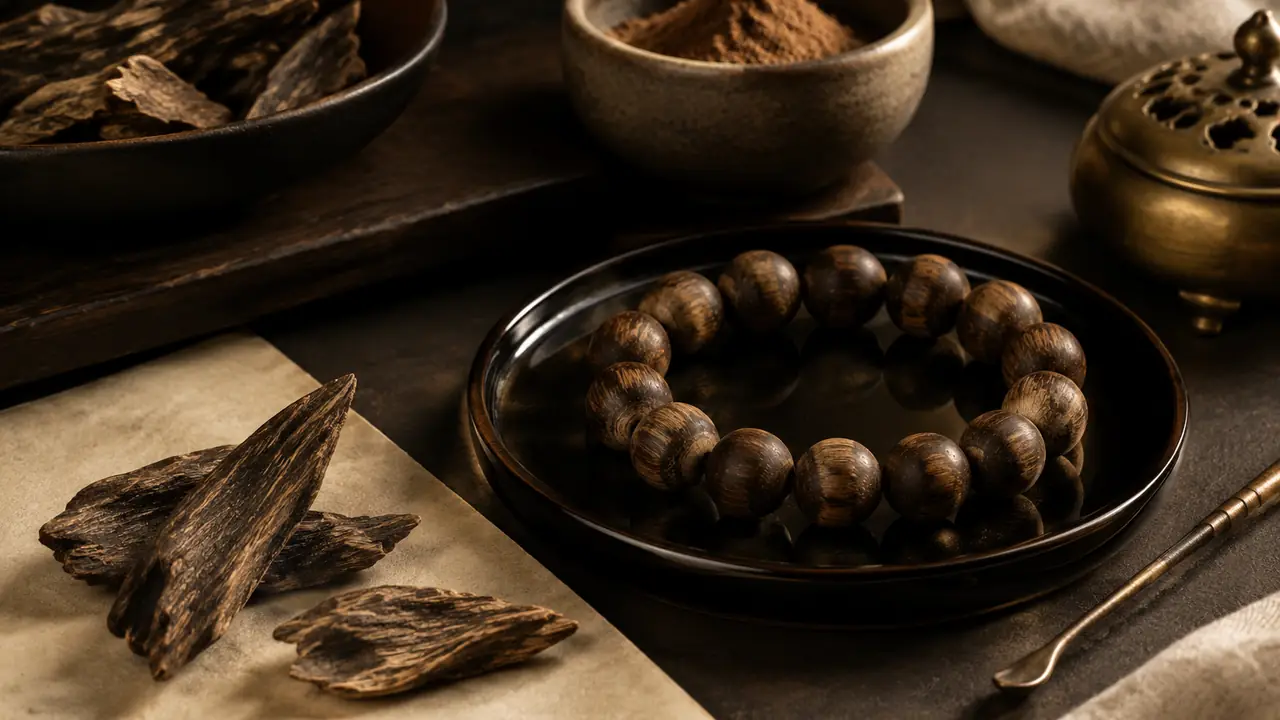
- Agarwood. Darker, deeper and longer-lasting, with resin grades that move both scent and cost. It suits premium ranges and buyers who can handle CITES paperwork. See the agarwood bracelet.
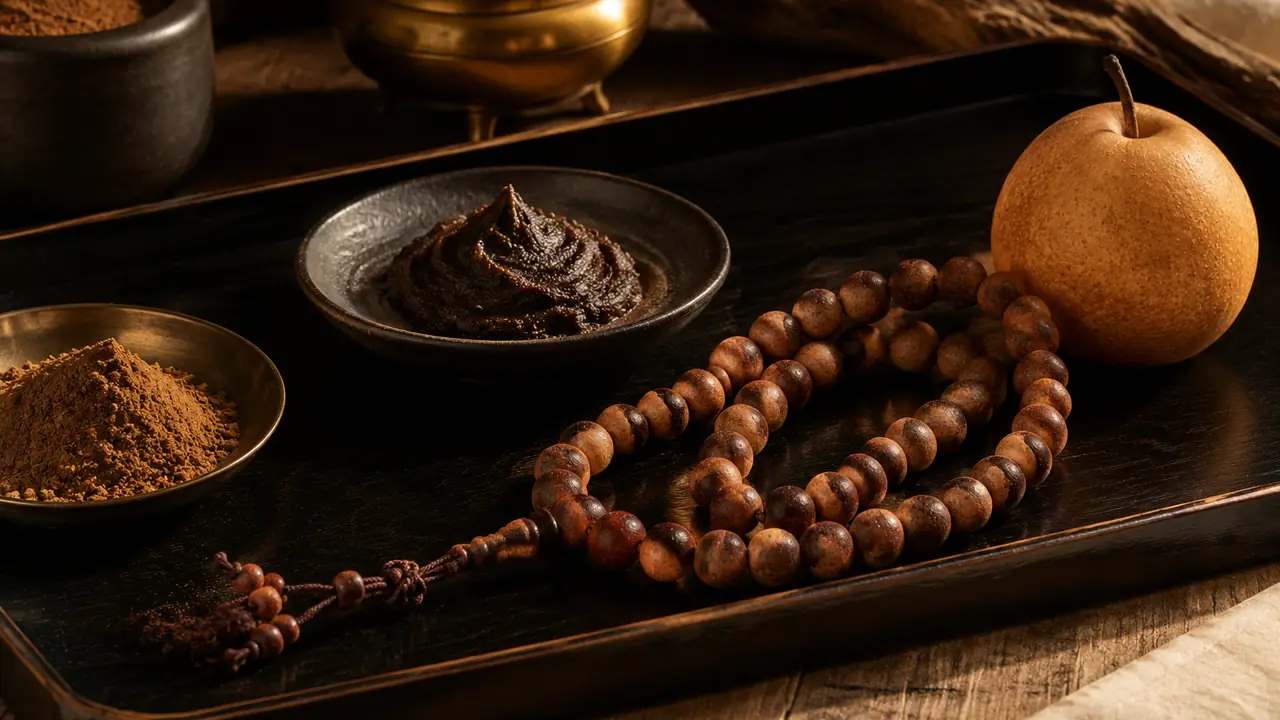
- Goose pear. A historical formula with a sweet fruit top note over agarwood and sandalwood. It carries a story, which helps with storytelling-led brands. See goose pear beads.
- 108 strands. A longer strand of smaller beads with a guru bead, made for yoga, retreat and meditation channels. See the 108-bead strand.
- Silver sets. Any of the above, finished with 925 silver or copper-silver spacers and a charm. It suits jewelry brands. See the silver set.
Side-by-side comparison
| Line | Scent | Color | Weight (8 mm) | Typical channel | Document needs |
|---|---|---|---|---|---|
| Sandalwood | Creamy, milky wood | Warm tan to light brown | About 7-9 g | Gift, lifestyle, online | Origin statement per lot |
| Agarwood | Deep, resinous, long | Dark brown to near black | About 7-9 g | Premium retail, importers | CITES documents per lot |
| Goose pear | Sweet pear over resin | Reddish brown | About 7-9 g | Story-led brands, temple shops | CITES and origin per lot |
| 108 strand | Soft woody, herbal | Tan to brown | About 35-50 g (6-8 mm) | Yoga, retreats, studios | Origin statement per lot |
| Silver set | As the bead chosen | As the bead, with metal accents | Bead weight plus findings | Jewelry brands | Metal declaration, plus bead documents |
Weights are typical reference figures from partner workshop weighing and shift with size and count; they are confirmed on the formula sheet for each program.
What stays the same across lines
Every line follows the same seven-step workshop sequence: material preparation, shade-drying and milling, blending with binder, resting the dough for about a day, rolling and piercing, shade-drying for five to ten days, then polishing and aging. The standard specification uses natural powders and a nanmu bark binder, with no synthetic fragrance oil and no industrial glue; any variation is confirmed in writing. Beads are available from 6 to 12 mm, with holes usually 1.2 to 2.0 mm so that elastic, silk cord or silver findings fit without cracking.
Because the rolling is done by hand, the surface is matte and slightly grainy, and no two beads are identical. That is what a botanical bead looks like, and polishing adds a soft sheen without a lacquer coat. Scent lasts for years with proper storage: sealed when not worn, away from heat and direct sun.
Matching the line to your channel
Fragrance and lifestyle brands usually begin with sandalwood and add agarwood as a premium tier. Gift and corporate buyers lean on sandalwood and goose pear with engraved or boxed packaging. Yoga studios and retreat shops tend to take the 108 strand in small quantities across several colors. Jewelry brands ask for silver sets and consistent hole sizing. E-commerce sellers like the light weight: a bracelet ships in a small foil pouch, which keeps freight low. More on each audience is on the solutions page.
Ordering notes
Stock bracelets typically start from 50-200 pieces per design. Private-label packaging usually starts at about 300-1,000 pieces, and a custom formula from about 500 pieces with sample rounds. Stock samples take 5-10 working days; formula samples 15-25 days. These are typical reference ranges, confirmed in writing for each program. Read MOQ and lead time for the full picture, then send sizes and quantities through the quote form.