
Why goods and tools sit beside the beads
Buyers who start with incense beads often ask for the next shelf: something to burn and something to hold. Incense sticks and pills answer the first, combs and tools the second. Both are everyday items in Chinese incense culture, and both sell well as add-ons: a stick box next to a bracelet, a comb next to a tea set. The desk handles them through the same partner network as the beads, which keeps documents, inspection and logistics in one place.
The two lines
| Line | What it is | Typical contents | Main buyers |
|---|---|---|---|
| Incense stick and pill gift box | Burnable incense in a presentation box | Sticks, incense pills, holder, optional burner | Gift programs, tea and yoga shops, temple shops |
| Sandalwood comb and incense tools | Handled objects and incense table tools | Comb, spoon, tongs, holder, burner, box | Lifestyle brands, gift shops, retailers |
Sticks and pills
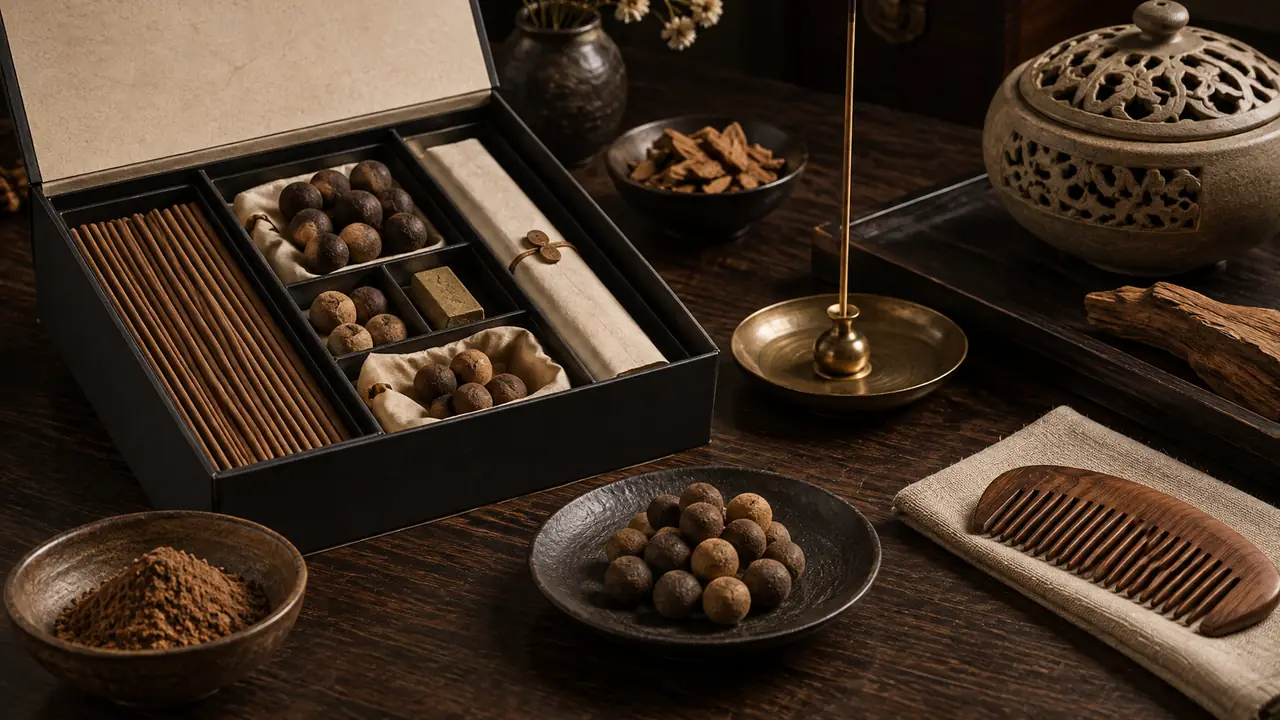
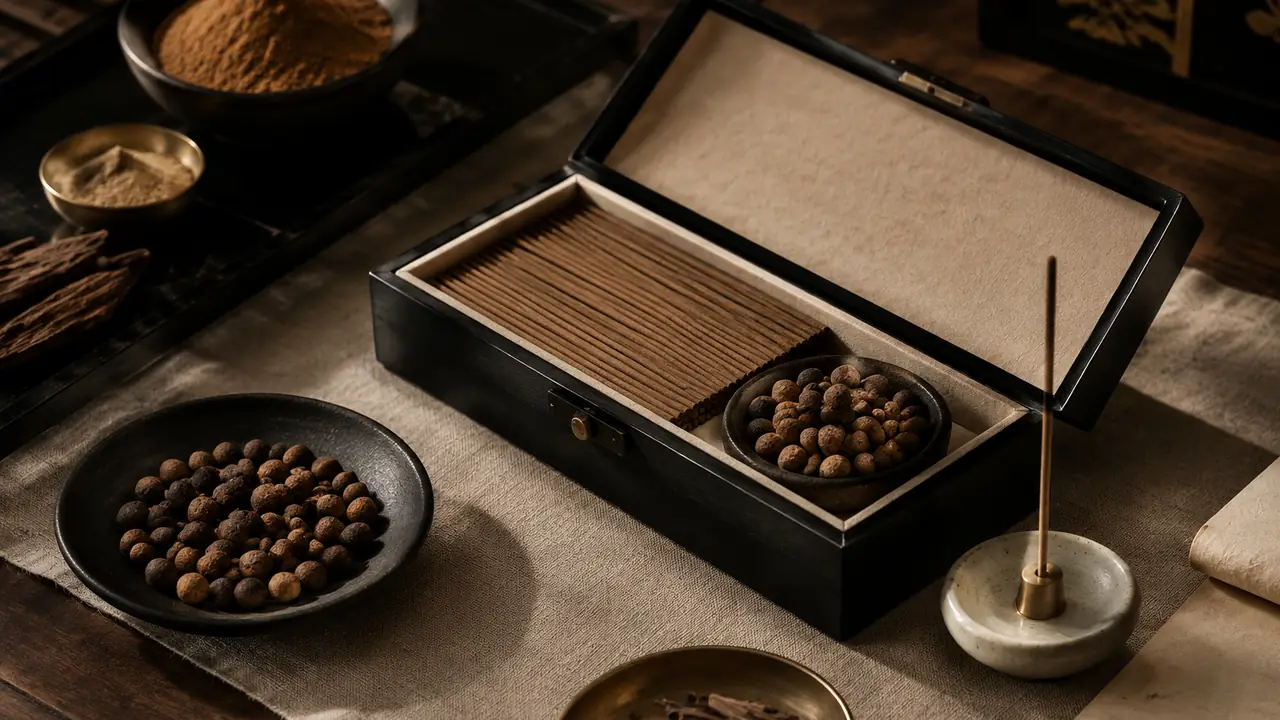
Sticks are the most familiar format. China has two main kinds: bamboo-core sticks, a speciality of Yongchun in Fujian where the craft is listed as national intangible heritage, and coreless sticks that are pure dough all the way through. Pills are small pressed or rolled balls of blended incense, aged in sealed jars, burned on a charcoal-free heater or a mica plate. Both kinds come in boxes with a holder, and the box can include a small burner. Yongchun's reported scale is on the industry clusters page.
Combs and tools
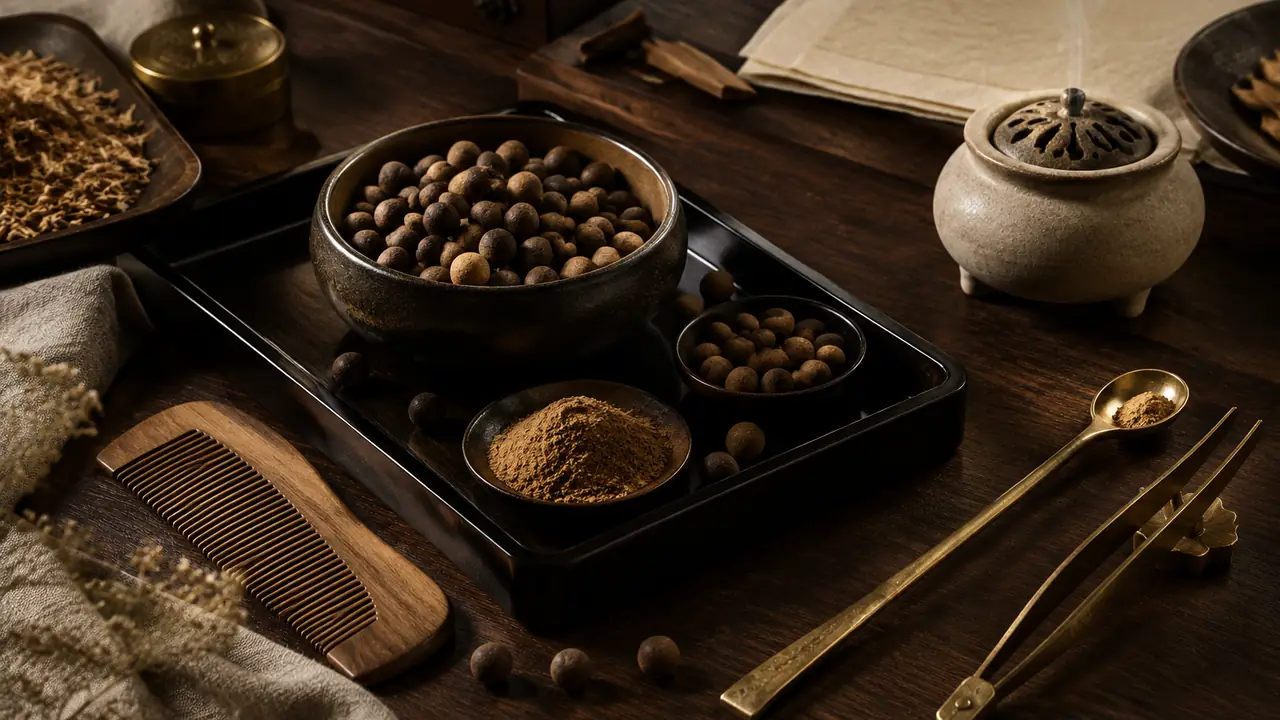
A sandalwood comb is a hand-sized object that also scents the pocket or the hair-care shelf; it is a gift item, not a scent-delivery device. Alongside the comb sit the tools of the incense table: a spoon to move powder, tongs for hot charcoal or pills, a holder for sticks, a burner and a small box. Items are made from sandalwood, ceramic, brass or wood and can be sold as singles or sets.
Regulatory and handling points
- Burnable incense. Sticks and pills are classed as incense products for customs; the desk can share a typical tariff code (the 3307.41 family is the usual reference) for your broker to confirm.
- Sandalwood comb. Sandalwood is not a CITES species but origin matters; it is stated per lot, and the comb can be supplied with a declaration. See the sandalwood guide.
- No health claims. Packaging and cards describe scent and use only.
- Ceramic and metal. Declared by material; lead and cadmium limits for glazes follow the target market and are agreed per program.
How companion lines are ordered
Companion programs usually start with one stick box and one comb, sampled with the same labels as the beads. After approval, the lines are ordered together so freight, cartons and documents travel in one shipment. Gift boxes typically start from about 200-500 boxes per design, comb and tool sets are quoted by set, and samples take 5-10 working days for stock items. These are typical reference ranges, confirmed in writing for each program. The packaging page covers boxes, inserts and labeling.
Burn safety and customer notes
Printed instructions matter for any burnable product. Cards should tell the customer to burn on a stable, non-flammable holder, away from curtains and children, in a ventilated room, and never to leave burning incense unattended. Ouvare reviews card text to keep it factual and free from health statements, and can supply a short instruction block in the language of your market.
Building a companion range
A balanced first range is small. One bracelet line, one stick box and one comb or holder set cover three price levels and three shelf positions with only a handful of SKUs. Stick boxes bring repeat purchases because the contents are used up; combs and tools are one-off gifts; beads stay in the wearer's life for years. Brands that sell all three can build a simple story around one scent family, with the same sandalwood note carried from wrist to room to desk. The desk can match scent notes between lines by comparing retained samples, so the family hangs together when the lots arrive at different times. Ask for a scent-matching sample when you request quotes.
Next steps
Choose the line, then send target quantities, box preferences and any branding through the quote form. The desk replies with a shortlist, sample plan and timing for the first lot.