
Plan first, then produce
Hand-rolled beads are not identical, and a buyer who has not agreed what is acceptable before production will argue about it afterwards. For that reason every program starts with an inspection plan, drafted by the desk with the buyer and confirmed in writing. The plan names the tolerances for diameter and weight, the allowable hole size, what counts as a surface defect, the level of dryness expected, the sample the scent is judged against and the sampling rule. It is attached to the approved pre-production sample, which is sealed and kept as the reference for the whole lot. Anything not written on the plan is a matter for discussion before production, not after it, which keeps decisions on sample approval, packaging and acceptable variation clear for both sides. The plan is built on the workshop findings from the workshop audit.
Incoming powders and materials
Quality is largely decided before the dough is mixed. The desk asks the workshop to check incoming powders for the following, and to record the result against the lot.
- Documents match the lot: origin statement for sandalwood, CITES paperwork for agarwood.
- Powder is dry, free of clumps, odor of damp or mustiness, and of the sieve grade agreed.
- Different woods are kept in labelled containers, so that agarwood and sandalwood are not confused.
- Nanmu binder is present in the agreed share, and honey is stored sealed.
In-process checks
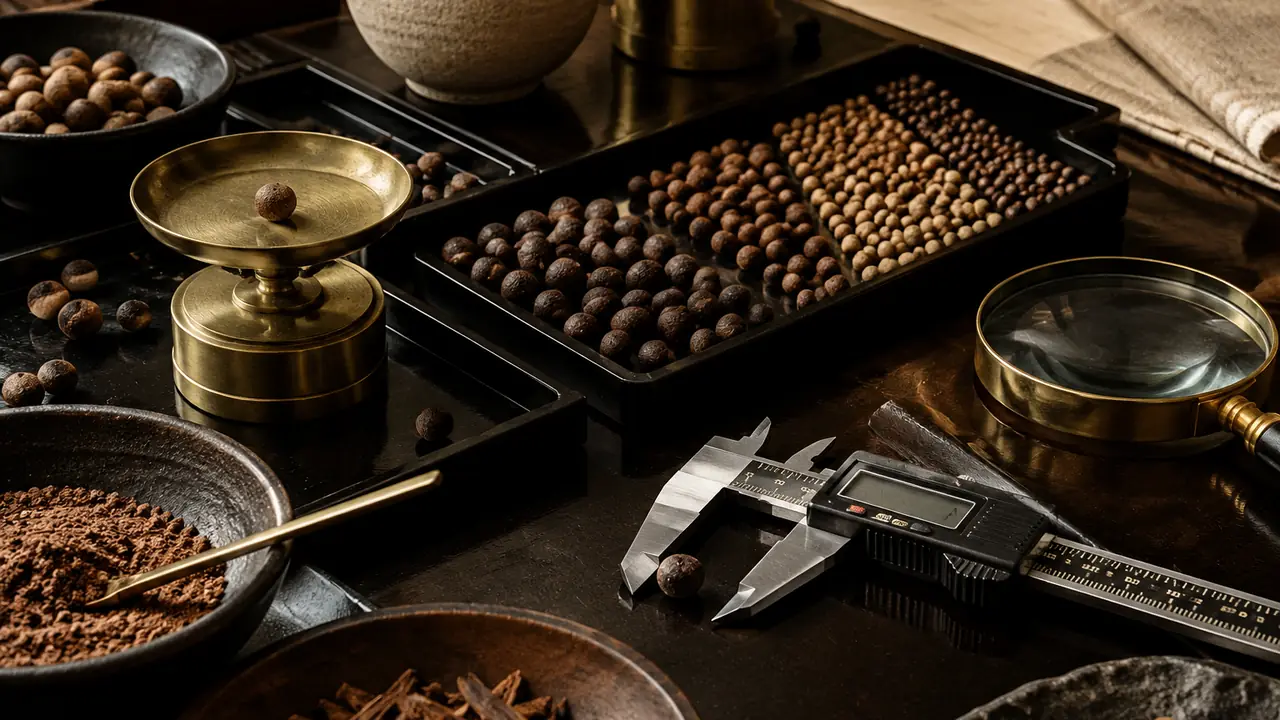
Most problems can be caught while a lot is still dough. After blending and resting, the workshop checks dough moisture by feel and, where possible, by a simple weight test. A dough that is too wet slumps and dries slowly; one that is too dry cracks as it is rolled. During rolling, the workshop weighs sample beads: an 8 mm bead typically weighs about 0.3-0.5 g and the spread within a lot should be small. Diameter is measured with calipers every batch, and holes are checked for centering. During drying the log of temperature and humidity is reviewed and beads are turned and looked over for the first signs of mold or hairline cracks. The steps themselves are set out in the production process.
Final checks before sealing
| Item | Method | Typical acceptance basis |
|---|---|---|
| Diameter | Calipers on a sample | Within the tolerance on the plan |
| Weight | Scale, single bead and full strand | Within the plan range for the size |
| Hole | Gauge pin, visual centering | Agreed hole size, centered, no chipping |
| Surface | Daylight and magnifier | No cracks, mold spots or heavy dust |
| Dryness | Weight stability, hygrometer reading in sealed bag | Stable, no damp feel |
| Scent | Smelled against the retained sample | Same character, no off-notes |
| Findings and cord | Fit and finish, metal declaration | Matches the approved sample |
Tolerances are agreed per program and are not fixed figures on this page; they are listed on the plan.
AQL sampling in practice
AQL, or acceptable quality limit, is a way of deciding how many pieces to inspect from a lot and how many defects are allowed before the lot is not accepted. The larger the lot, the larger the sample. For botanical beads the desk usually separates defects into critical, such as mold or a wrong material; major, such as cracks, wrong hole size or strong scent difference; and minor, such as a small surface blemish. The AQL level for each class is agreed with the buyer on the plan and noted on the inspection record. Mold and wrong material are treated as unacceptable at any level.
When a lot does not meet the plan
If the sample finds defects above the limit, the lot is held. The cause is identified, and the lot is reworked, sorted, replaced or rejected, with the choice agreed in writing. Reworking means re-polishing or re-drying; sorting means removing the defective pieces and rechecking; replacing means a new batch for the affected quantity. A lot that has been reworked is inspected again from the start. Photos are taken of the sample laid out in rows, of the packed cartons and of any defect found, so that the record can be understood without a visit. The inspection record states the finding, the action taken and the result, with photos, and is shared with the buyer before shipment. For timing effects, see MOQ and lead time; to set up a plan for your program, send details through the quote form.