
One craft, six ways to buy it
Incense beads are a small product with an unusually wide range of buyers. A lifestyle brand wants a wearable scent with a story. A studio owner wants a few dozen strands on a shelf by the front desk. A jewelry designer cares about hole sizes and metal declarations. A temple shop wants plain packaging and a traditional formula. The beads themselves come from the same craft, described on how incense beads are made, but the way each of these buyers should specify, order and document them is different.
Ouvare is a sourcing desk, not a single workshop. We coordinate partner workshops, bead rollers and packaging suppliers in the Fujian and Guangdong incense clusters, shortlist them per project, inspect before shipment and organize logistics. The program pages below set out what that looks like for each buyer type, using the same factual base: bead sizes from 6 to 20 mm, nanmu bark powder as binder, honey as plasticizer, no synthetic fragrance oil in the standard specification, and every variation confirmed in writing.
The matrix: buyer, pain points, lines, documents
| Buyer | Typical pain points | Lines to start with | Documents that matter |
|---|---|---|---|
| Fragrance and lifestyle brands | Natural wearable scent, differentiated SKUs, a clean no-synthetic-oil statement | Sandalwood and agarwood bracelets, goose pear, incense tablets | Formula sheet, ingredient declaration, origin statement |
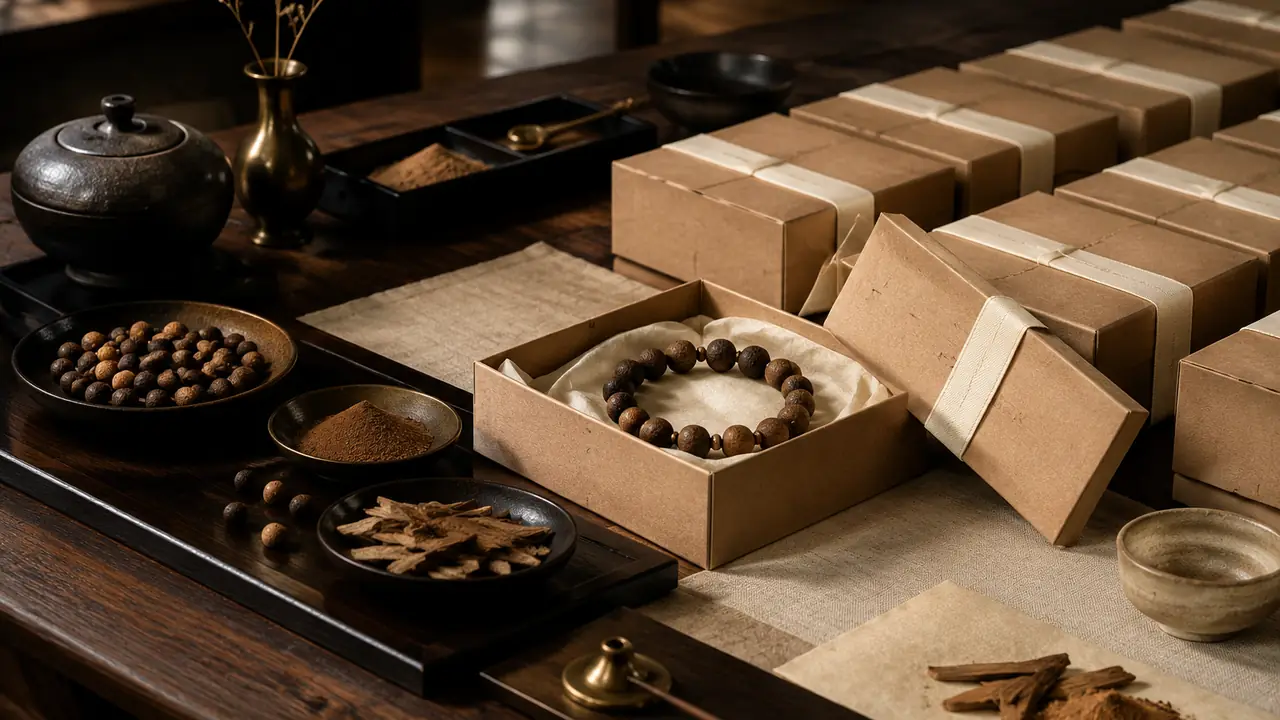
| Gift and corporate buyers | Seasonal boxes, engraving, batch size and delivery date | Bracelet and sachet sets, stick and pill gift boxes, tablets | Artwork approval, packing list, inspection record |
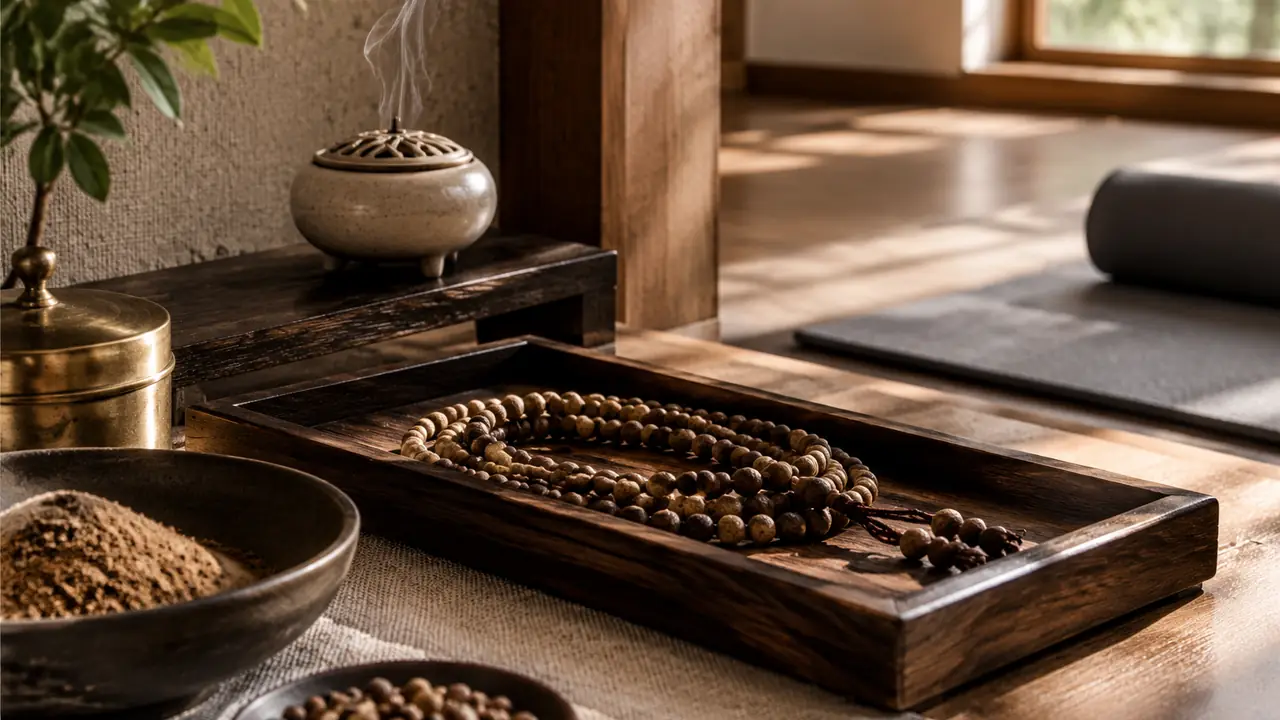
| Yoga and meditation studios | 108 strands, small orders across several designs, neutral scent in class | 108-bead strands, loose beads | Origin statement, care card text |
| Temples and retreat shops | Traditional formulas, no chemical additives, plain packaging | Goose pear, sticks and pills, 108 strands | Formula sheet, ingredient declaration |
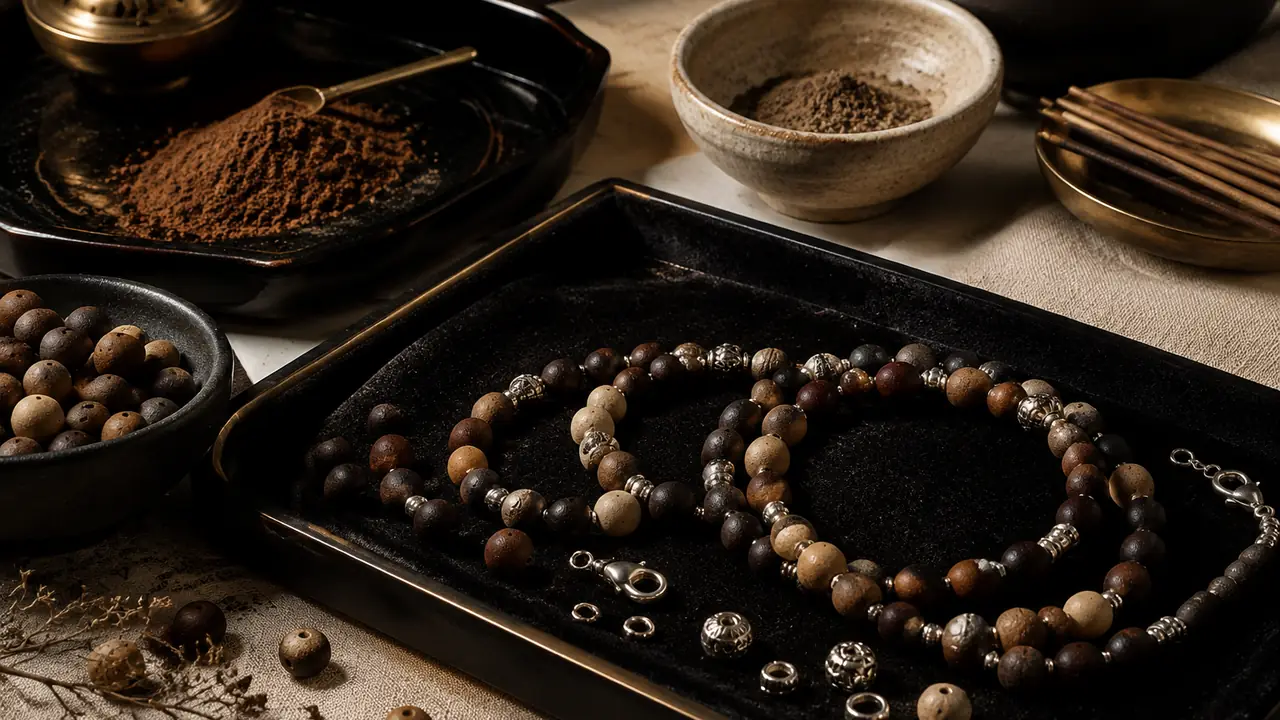
| Jewelry brands | Pairing beads with silver, hole size fit, metal compliance | Silver sets, loose beads by kilogram | Metal declaration, test report for the target market |
| E-commerce sellers | Light goods, many SKUs, repeat ordering, listing compliance | Full range | Ingredient declaration, CITES documents for agarwood lines |
The matrix is a starting point. Many buyers sit in two rows at once, for example a yoga studio that also runs an online shop, and the desk handles such programs as one order with two sets of paperwork.
How a program starts
- Tell the desk your channel, target quantity per design and delivery market.
- The desk shortlists partner workshops and proposes a line, bead size and packaging, with a formula sheet.
- Stock or formula samples are made and sent for approval, with photos and weights.
- Bulk production follows a written specification, with inspection before shipment. See the sourcing process.
Case notes on this page and the program pages are illustrative and anonymous; real project details stay with the client. More examples of how orders are structured are on case studies.
What every program shares
- A written specification. Bead size, count, weight, scent family, cord and packaging are fixed on a formula sheet before production.
- Sample before bulk. Stock beads sample in about 5-10 working days; a custom formula takes about 15-25 days because drying and aging cannot be rushed.
- Inspection before shipment. Diameter, weight, hole centering, surface, dryness and scent against a retained sample, as set out in testing and inspection.
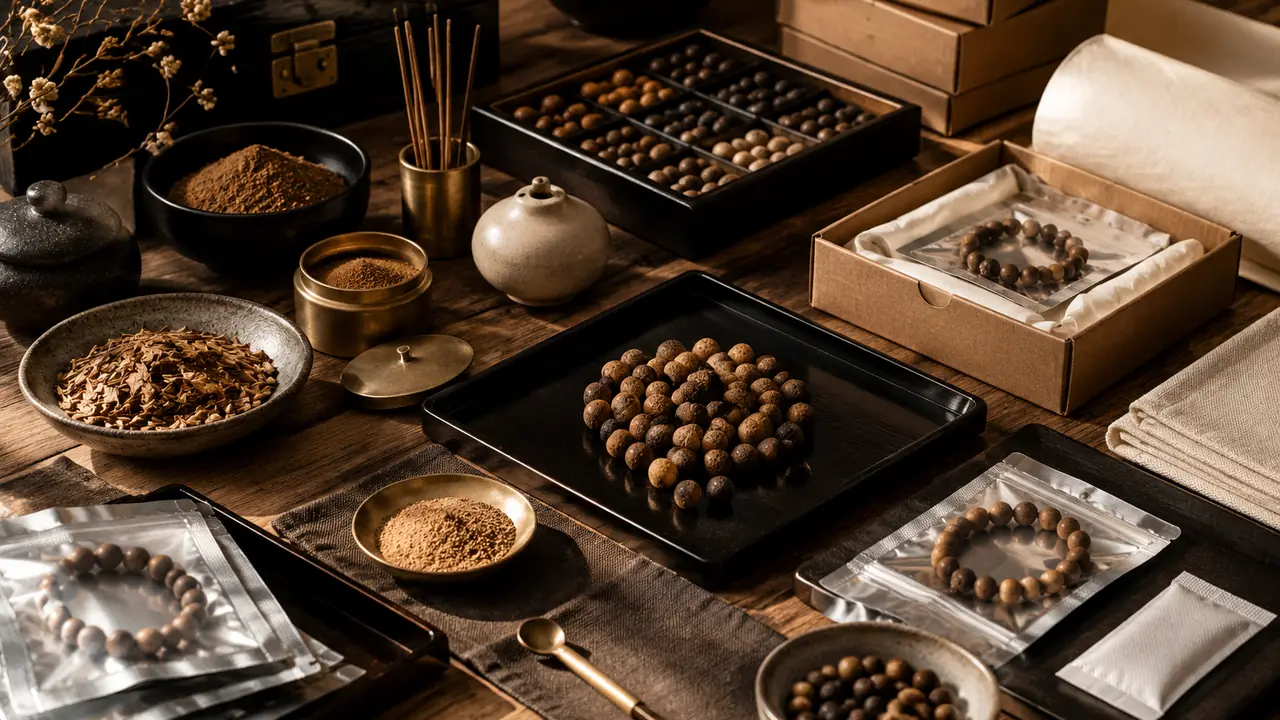
- Light, protected freight. Foil pouches with desiccant, shipped by courier, air or sea depending on the schedule. See logistics.
Compliance in one paragraph
Agarwood belongs to the genus Aquilaria, which is listed in CITES Appendix II, so export documents are prepared per lot for any line that contains it. Sandalwood is Santalum album; its origin, usually Australian plantation wood or legally sourced Indian wood, is stated per lot. Incense beads are sold as fragrance goods, and no program makes health claims. Silver and metal findings carry a material declaration, and the tests required for the EU or the United States are checked against the target market. The full picture is on compliance and certifications.
Ordering notes
Typical reference ranges, confirmed in writing for each program: stock bracelets from about 50-200 pieces per design, private-label packaging from about 300-1,000 pieces, custom formulas from about 500 pieces with sample rounds, and loose beads from about 1-5 kg per bead size. Batch production commonly runs 25-40 days, with custom ancient formulas at 40-60 days. If you are not sure which row you belong in, describe your channel on the quote form and the desk will suggest a starting program.