
Why grades are slippery
Agarwood is not a uniform raw material. A single tree can contain wood with almost no resin next to wood that is dense and dark. Grading therefore happens at the piece level, before the wood is ever milled, and the powder grade reflects which pieces went into the mill. Suppliers describe the result with their own scales: letters, stars, color names or origin names. None of these is internationally recognized, and none is regulated.
That does not make grading arbitrary. It means the grade has to be defined by the buyer and the workshop for each program, in words that both can check on a sample. The sections below set out the words that carry meaning.
Resin content, explained simply
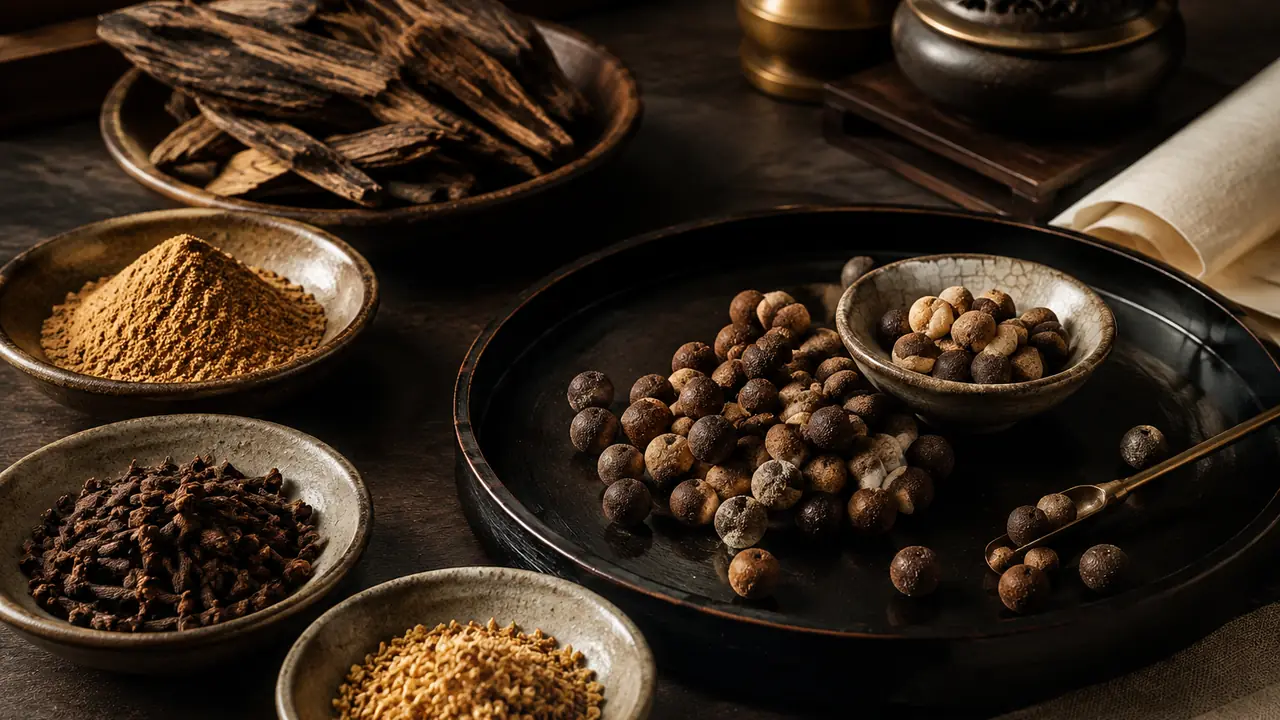
Resin content is the central quality idea. Agarwood is valued for the resin that forms in the wood; more resin generally means a darker, oilier and more aromatic material. In pieces, this is judged by color, weight, how the wood feels and how it smells when warmed. In powder, the visual cues are weaker, because milling blurs differences. A rich powder is usually darker, can feel slightly oily between the fingers, and gives a stronger, more complex scent when warmed. A weak powder looks pale or uneven and smells flat.
Resin content can be measured in a laboratory, but results depend on the method, and published values are not comparable across suppliers. This guide does not quote any figures. In practice, buyers rely on an approved reference sample and a retained sample, and on a written scent description, and ask for laboratory reports only when a specific market or customer requires them.
Grade descriptors at a glance
| Level in words | Powder appearance | Scent on warming | Typical use in beads |
|---|---|---|---|
| Light accent | Pale to mid brown, drier | Soft, woody, mild sweetness | Small share inside a sandalwood base |
| Standard | Mid to dark brown, even | Clear resinous sweetness, moderate depth | Agarwood bracelets and malas in the mainstream |
| Rich | Dark, slightly oily feel | Deep, layered, sweet and cool notes | Premium bracelets and gift sets |
| Collector | Very dark, dense | Complex, long in the base | Limited runs, documented lots only |
The wording is the desk's working vocabulary, not a standard. Its purpose is to let buyers and workshops talk about the same sample.
Other properties that shape the bead
- Cleanliness. Pale wood, bark and dust lower the scent and show as specks on the bead surface.
- Fineness. Agarwood is oily and can clump; poorly milled powder gives rough, cracking beads and needs more polishing.
- Species and origin. Aquilaria species and growing region change scent. Origin is stated per lot: plantation material from Guangdong or Hainan, or imported material.
- Treatment. Some powders are roasted or aged to change scent; ask whether any such step was used and have it written down.
Sampling that actually separates grades
A sample round is the only reliable way to tell grades apart, and it only works if it is designed. Ask the desk to arrange three samples with the same bead size, the same binder and honey proportions, and the same sandalwood base, changing only the agarwood grade. Wear each for a full day, preferably on different people, because skin chemistry changes how resin reads. Smell each after an hour of wear, and again the next morning, when the base notes are clearer. Cut one bead from each strand and compare the inside color and smell.
Record the result in a short note: which sample customers would pick blind, which is worth its extra cost, and which is too heavy for the intended channel. Keep one bead from each approved strand sealed as a retained sample. When the production lot arrives, the desk compares it with the retained sample before shipment, and anything that drifts visibly in color, fineness or scent is raised with the workshop in writing. This simple routine is worth more than any grade label, and it is how repeat programs stay consistent.
Finally, be realistic about natural variation. Two lots from the same workshop can differ slightly in shade and scent even at the same grade, because resin-rich wood is never exactly uniform. A tolerance statement in the specification, such as slight shade variation between lots is normal, keeps the conversation practical.
Grade, share and cost
Two levers decide how much agarwood a bead contains: the grade of the powder and its share in the formula. A rich powder at a lower share can give the same perceived depth as a standard powder at a higher share, and the cost per bead may be similar. Because resin-rich powder is costly, many successful products use agarwood as an accent in a sandalwood base. Remember also that a 10 mm bead holds far more powder than a 6 mm bead, so premium powder is often best used in smaller beads.
The cost logic is general, not a quote: higher resin richness, cleaner powder, documented origin and higher share all raise the cost of the bead. Read what drives incense bead prices for the wider picture, and agarwood vs sandalwood beads for the choice between materials.
Documents travel with the grade
All Aquilaria species are in CITES Appendix II, so every export lot needs a permit regardless of grade. A higher grade does not change the requirement, but it may attract closer scrutiny. Make sure the description on the permit, the invoice and the packing list matches what is in the carton. If the permit describes powder and the invoice describes finished beads, ask the workshop and exporter to align them before shipment. See CITES and agarwood export documents.
Writing the specification
- Species and origin of the agarwood, stated in writing per lot.
- Grade level in words, tied to an approved reference sample.
- Share of agarwood powder in the bead formula, with the other powders and binder.
- Form and fineness of the powder, and whether any roasting or aging step was used.
- Documents: CITES permit route and export description.
- Retained sample kept by the desk for comparison at each reorder.
When these points are fixed, the desk can request comparable offers from partner workshops. Send your target through the quote form. Finished product options appear on the agarwood incense bead bracelet page, and the material profile is in the agarwood guide.