
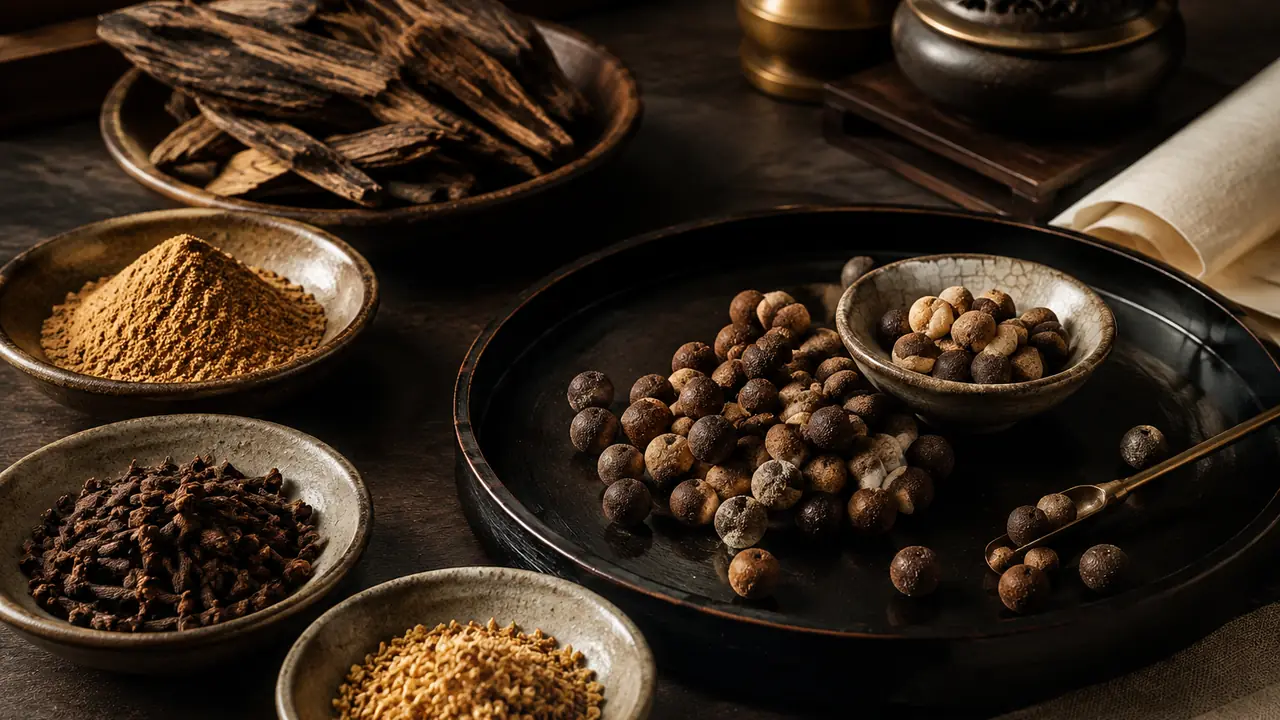
Two bases, two characters
Almost every incense bead starts with one of two woods. Sandalwood (Santalum album) gives a creamy, milky, warm wood scent that most people recognize at once and find easy to like. Agarwood (Aquilaria, also sold as oud) gives a deeper, resinous, sweet-bitter scent with more variation from one lot to the next. Both are ground to a fine powder, bound with nanmu bark powder and a little honey, rolled by hand and aged. The difference lies in the powder, and the powder drives scent, documents and cost.
Neither is better in absolute terms. They suit different shelves, different customers and different budgets, and many programs end up carrying both, often with a blended line as the bridge between them.
Scent on the wrist
Sandalwood beads open soft and rounded: milk, warm wood, a faint sweetness. The scent is close and calm, which is why the material is a common starting point for fragrance boutiques and yoga studios. Agarwood beads open with less warmth and more depth: a dry resinous sweetness, sometimes with bitter or woody edges, that many users describe as heavier and longer in the base. Agarwood also changes more with wear and age, because resin-rich fractions release slowly.
- First impression. Sandalwood is approachable on first contact. Agarwood can read as unfamiliar to customers who have never smelled it.
- Presence. Sandalwood stays close to the skin. Agarwood tends to carry a little further at the same bead size.
- Consistency. Sandalwood lots are easier to match from one reorder to the next. Agarwood is a natural resin product, so scent and color shift between lots and need an approved reference sample.
Side-by-side comparison
| Point | Sandalwood beads | Agarwood beads |
|---|---|---|
| Botanical source | Santalum album heartwood powder | Aquilaria resinous wood powder |
| Scent family | Creamy, milky, warm wood | Resinous, deep, sweet-bitter |
| Origin note | Stated per lot: Australian plantation or legally sourced Indian wood | Stated per lot: plantation material from Guangdong or Hainan, or imported material |
| Export paperwork | Origin and legality documents per lot | CITES documents per lot (Aquilaria is listed in Appendix II) |
| Lot-to-lot consistency | Higher | Lower, approved sample needed |
| Typical audience | Boutiques, studios, gift programs, first-time buyers | Collectors, premium lines, gift tiers |
For the material background, see the sandalwood guide and the agarwood guide.
What moves the cost
This site does not publish prices, because they depend on grade, origin, size and quantity. What can be said is which levers matter, and in which direction they push.
- Powder share. The more of the formula that is the named wood, the more material cost goes into each bead. A 50% sandalwood formula and a 70% one are different products with different costs.
- Grade of the raw material. Higher resin content in agarwood, or older, denser heartwood in sandalwood, raises the cost of the powder. Grades are discussed in sandalwood powder grades and agarwood powder grades.
- Bead size. A 10 mm bead holds far more powder than a 6 mm one. Material use scales faster than the diameter suggests.
- Documentation. Agarwood lots carry export permit work that sandalwood lots do not, and that effort shows up in lead time as well as cost.
- Handwork. Rolling, drying and aging take the same time for both materials, so labor is a similar share of the total on a low-cost line and a smaller one on a premium line.
In general, at the same bead size and formula share, agarwood lines sit above sandalwood lines because of raw material cost and paperwork. That is a rule of thumb, not a quote; actual numbers come from a workshop sheet for a defined specification.
Compliance and documents
Agarwood is the heavier file. All Aquilaria species are listed in CITES Appendix II, so export requires a permit and the paperwork has to follow each lot. Sandalwood (Santalum album) is not a CITES Appendix species, but it is assessed as vulnerable on the IUCN Red List and India restricts the export of sandalwood, so origin has to be stated per lot. Neither material should be sold with health claims; descriptions stay with scent and tradition. The detailed picture is in CITES and agarwood export documents and sandalwood legality.
Wear, aging and customer experience
Customers rarely compare powder grades; they compare how a bracelet feels after a month. Sandalwood beads tend to smooth and darken slightly with skin contact, and the scent settles into a gentle, steady note that is easy to describe on a product card. Agarwood beads are usually denser and darker from the start, and their scent can shift noticeably as the lighter top notes fade and the resin comes forward. Neither change is a defect, but a retailer should set the expectation in the product copy, and a returns policy should not count natural change as damage.
Storage is the same for both: sealed pouch or jar, dry, away from direct sun and heat. Both materials lose character in a humid or hot environment, and both can develop surface mold if shipped damp, which is why drying and packaging are specified together. With proper storage the scent lasts for years; the exact curve depends on formula, bead size and how often the strand is worn.
A practical retail tip is to sell the two materials in distinct visual families. Sandalwood strands in lighter, warmer tones and agarwood strands in darker tones help customers pick by eye, and a simple scent card with three words per material cuts questions at the counter and in online listings.
Which to stock first
For a first line, most buyers start with sandalwood: the scent is familiar, lots match more easily, the file is lighter and the price ladder is wider, so a good entry tier is possible. Agarwood suits a second phase or a premium tier, when the brand has a story to tell about origin and grade and customers who will read it. A third route is a blended bead that uses agarwood as an accent in a sandalwood base, which gives a deeper note without the full cost of an agarwood-led formula. The decision framework is expanded in sandalwood or agarwood bracelet: which to stock first.
Next step
Whichever you choose, ask for the formula sheet with percentages, the stated origin of the powder, the bead size and count, and typical reference MOQ ranges, all confirmed in writing for the program. Send your target specification through the quote form and the desk will shortlist partner workshops and propose reference samples for both materials side by side.