
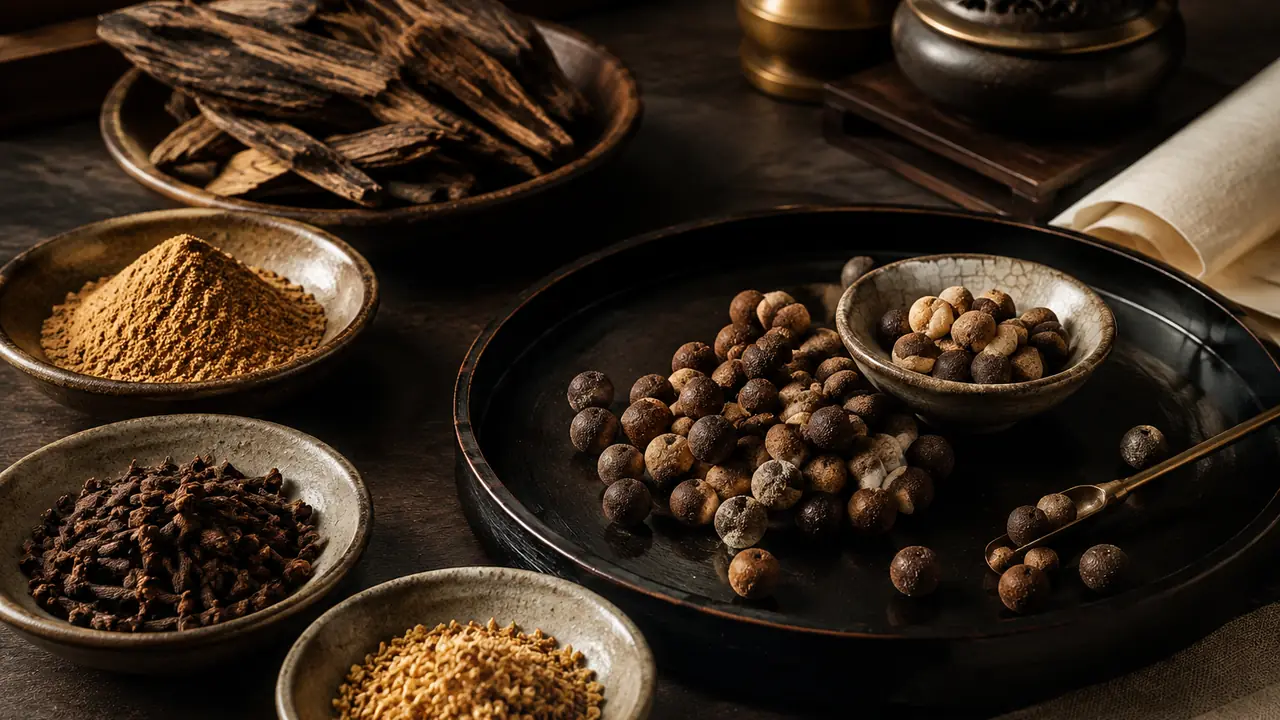
A tree and a resin, not just a wood
Agarwood is not the wood of a tree in the ordinary sense. Healthy Aquilaria heartwood is pale, light and almost scentless. When the tree is wounded or attacked by certain organisms, it responds by producing a dark, fragrant resin in the surrounding wood. Over months and years that resin-infused tissue becomes agarwood. The more resin, the darker, denser and more aromatic the piece. This is why the same species can yield both near-worthless pale wood and highly valued resinous material, and why two lots sold under the same name can smell very different.
The trade uses several names for the same family of material. Agarwood is the common English term, oud is the Arabic-market term, and chenxiang (literally sinking incense) is the Chinese term, said to refer to the denser pieces that sink in water. In incense bead work the material is ground to powder and blended with other woods, so what matters to a buyer is the powder, not the chunk.
Species and where the wood comes from
The genus is Aquilaria, a group of tropical and subtropical trees in Asia. Wild-grown wood has been harvested for centuries, and today a large share of supply comes from plantations where trees are grown on purpose and the resin is encouraged by inoculation or injury. In China, the main producing areas are in Guangdong, where Dianbai in Maoming is known as the home of agarwood, and in Hainan, which has promoted large-scale planting. Material from Vietnam and other Southeast Asian sources also enters the Chinese trade. The origin of each lot is stated in the paperwork and on the specification sheet. For the plantation side see cultivated vs wild agarwood.
Market sizing for agarwood varies widely by what is counted; for example, WiseGuy Reports puts the agarwood market at about USD 1.3 billion in 2025, while other publishers report much higher figures using broader scope. Use these as context, not as a forecast for any one buyer.
How grades are described
There is no single global grading standard for agarwood powder. Grades are workshop and trade conventions, usually expressed in words rather than numbers, and every supplier uses its own scale. For beads, the useful way to read them is by what you can check on a sample.
| Descriptor | What it usually means | What to check |
|---|---|---|
| Resin richness | Share of dark, oily material in the wood before milling | Powder color, oily feel, scent on warming |
| Wood type | Wild or cultivated, species, sinking or floating pieces | Written origin and species statement per lot |
| Scent quality | Sweet, cool, woody, medicinal or smoky character | Approved reference sample and retained sample |
| Cleanliness | Little pale wood, bark or foreign matter in the powder | Visual check of powder and a sieved sample |
| Fineness | How finely the powder is milled and sieved | Bead surface smoothness and crack-free drying |
Detail on powder specification sits in agarwood powder grades. If a supplier quotes a grade name without a sample and a written description, read it as a marketing label.
Agarwood in incense beads
In a bead, agarwood powder is usually combined with sandalwood and a nanmu bark binder, with a little honey to make the dough workable. The share matters more than the name: a bead described as agarwood may contain a small accent amount or may be agarwood-led. Always request the formula sheet with percentages. Agarwood-led beads are heavier in scent, darker in color and higher in cost; blended beads use agarwood to deepen a sandalwood base. Product options are on the agarwood incense bead bracelet page, and the comparison with the other major material is in agarwood vs sandalwood beads.
Common misunderstandings
"Darker powder is always better." Color depends on resin content, but also on how the wood was dried, whether it was roasted, and what else is in the blend. Two powders of the same shade can smell quite different. Smell the sample, do not judge by eye alone.
"Oud means the oil." In perfumery, oud often refers to the distilled oil. In incense beads the material is powder from the wood itself, with no oil added in the standard specification. If a listing mentions oud oil on a bead, ask whether it is a surface treatment, because a surface oil fades much faster than a bead that is aromatic all the way through.
"Wild is the only real agarwood." Wild material is scarce, legally complex and costly. Cultivated Aquilaria with induced resin is a large part of today's supply, and a well-documented plantation lot is often a more dependable choice for a repeat program than an unverifiable wild claim.
"One sample represents the whole supply." Agarwood is a natural product and each batch differs. The practical answer is to approve a reference sample, keep a retained sample at the desk and compare every production lot against it before shipment.
Compliance in one paragraph
All Aquilaria species are listed in CITES Appendix II. This does not ban trade, but it means export of agarwood and many derived products requires a CITES permit, and documents have to be prepared per lot. In practice a buyer should ask which documents travel with the shipment, who is the exporter of record and how the powder or beads are described on them. Wording differs by destination, so confirm the requirements of the import country as well. Read CITES and agarwood export documents before placing the first order.
What to ask a supplier
- The species and origin of the agarwood in each lot, in writing.
- The percentage of agarwood powder in the formula, and the other woods and binder.
- A reference sample that can be smelled and retained for comparison.
- The export permit route and which documents will accompany the goods.
- Confirmation that no synthetic fragrance oil or industrial glue is used in the standard specification.
- Typical reference MOQ and lead time for the program, confirmed in writing.
With these answers the desk can shortlist partner workshops and prepare comparable offers. Share your target specification through the quote form.