
What touches the skin
A standard incense bracelet has up to four materials against the wrist: the beads, the cord, any spacers or charms and the clasp. Each has a different profile, and sensitivity, where it occurs, is most often traced to one of them rather than to the beads as a class.
| Part | Typical material | What to check |
|---|---|---|
| Beads | Sandalwood or agarwood powder, botanicals, nanmu bark binder, honey | Ingredient list; no synthetic fragrance oil in the standard spec |
| Cord | Elastic, silk, cotton, nylon | Dye bleed in sweat; fit not too tight |
| Spacers, charms | 925 silver, copper with silver plating, alloy | Material declared; nickel and heavy-metal rules of the target market |
| Clasp | Silver, brass, plated alloy | Same as spacers; smooth edges |
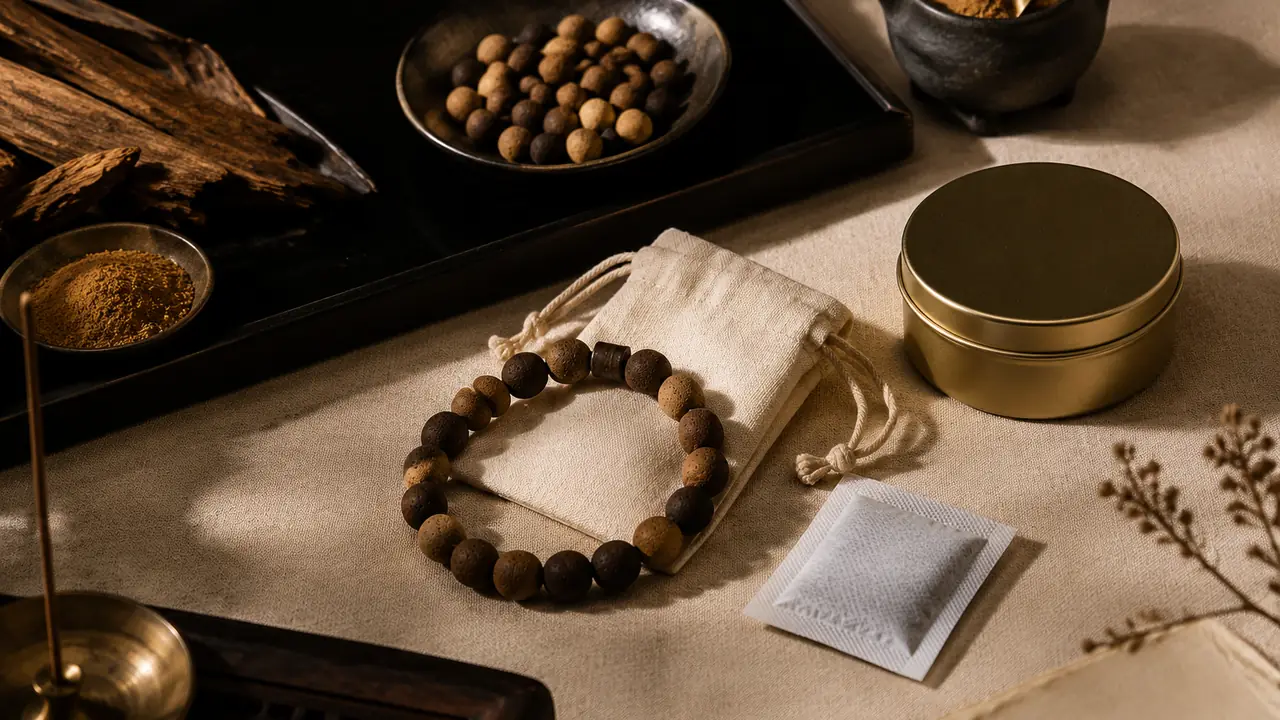
The beads themselves are made from plant powders and a natural binder, dried and aged. There is no industrial adhesive and no synthetic fragrance oil in the standard specification, and the workshop confirms that in writing for each order. That keeps the ingredient list short and readable, but a short list is not a promise that no one will react to it. People differ, and natural materials, including woods, resins and honey, can bother some individuals.
Comfort basics
Comfort is mostly about fit and finish. A bracelet that is too tight can mark the skin, and a bead with a rough hole edge or a loose fiber can scratch. Look for smooth, well-polished beads, hole edges that are not sharp and a cord without stiff ends sticking out. A 6 or 8 mm bead sits flatter than a 12 mm one, which suits people who type or work with their hands. Weight is light: an 8 mm bead weighs about 0.3 to 0.5 g, so a full bracelet seldom feels heavy.
Wear habits help comfort too. Take the piece off for sleep if it presses on the wrist, remove it for washing and exercise, and wipe it with a dry cloth at the end of the day to remove sweat and skin film. Let perfume and lotion dry before putting the bracelet on; coating the beads with product also hides their scent. These habits are also good for the beads, as covered in can incense beads get wet.
Sensitivity and metal findings
Where sensitivity does appear in jewelry, metal findings are a frequent suspect, particularly nickel in plated alloys. That is why findings should be declared by material. For incense beads with silver, 925 silver or copper with silver plating are the usual choices, and for the EU and US markets the target-market rules on nickel release and heavy metals in jewelry should be verified per lot; names such as REACH and CPSIA can be cited, and the desk can request test reports from the supplier. Where a program is aimed at customers who know they react to some metals, offer a version on silk or cotton cord with fewer or no metal parts. Compare options in silver vs copper findings.
Wording that stays within bounds
Incense products are sensory and traditional, not health products. Product pages and cards should avoid any wording that suggests the beads act on, relieve or prevent a condition, and should not compare them with drugs. Speak about what is true and checkable: materials, scent character, care. A suitable card might say that the beads are made from natural botanical powders, that customers with known sensitivities to woods, resins or honey should take care, and that anyone who notices irritation should stop wearing the piece and consult a professional. Keep the message short and neutral, and do not use the words that promise safety for all skin types.
- Say: made from botanical powders, nanmu bark binder and honey; no synthetic fragrance oil in the standard spec.
- Say: findings are declared by material.
- Say: if irritation occurs, stop use and consult a professional.
- Do not say: suitable for all skin, hypoallergenic, or anything about health benefits.
If a customer reports a reaction
- Respond with care and without argument. Ask the customer to stop wearing the piece.
- Suggest they consult a professional if the irritation continues. Do not offer health advice or guess at the cause.
- Collect facts: product, lot code, photos, how long the piece was worn, and what else touched the area (perfume, lotion, metal jewelry).
- Check the lot record and ingredient and findings declarations; ask the desk to contact the workshop.
- Offer a refund or exchange under your normal policy, and consider an alternative on plain cord if the customer wishes.
Keeping lot codes on the packaging and a retained reference bead per lot makes this process fast and fair. The documents a buyer should hold are listed in compliance and certifications; wording rules are discussed in health claims on incense products.
What to ask the workshop before ordering
A buyer can reduce most skin-related questions at the specification stage. Ask for a formula sheet that lists powders, binder and honey by percentage. Ask for written confirmation that no synthetic fragrance oil and no industrial glue are used in the standard version. Ask for a material declaration for every metal part, with the alloy named, and for a test report where the target market requires one. Ask that cord ends be sealed and hole edges smooth, and that the lot code be printed on the pack. If your customers include people who handle the product all day, such as studio staff or shop assistants, consider a sample run on plain cord and compare comfort before committing. These requests cost little, give the workshop clear instructions and give your support team documents to point to when a question arrives. Specifications are confirmed in writing for each program, and the desk keeps the records together with the retained reference bead.
Care for the piece itself
Skin contact also affects the bracelet. Skin oils and sweat can leave a film that dulls scent and darkens the beads near the holes, and cosmetic products can stain the surface. Wipe with a dry cloth, keep the piece sealed when not worn and away from heat and sun, and rest it in a closed jar occasionally. If the bracelet becomes damp, dry it slowly in the shade, as described earlier. Restring when the cord is worn, since a frayed cord can scratch or snag; see restringing incense bracelets.
When you brief a program, state the target markets and any sensitivity-conscious variants you want, such as plain-cord or reduced-metal versions. The desk will confirm materials and declarations in writing. Use the quote form, with reference timelines on MOQ and lead time.