
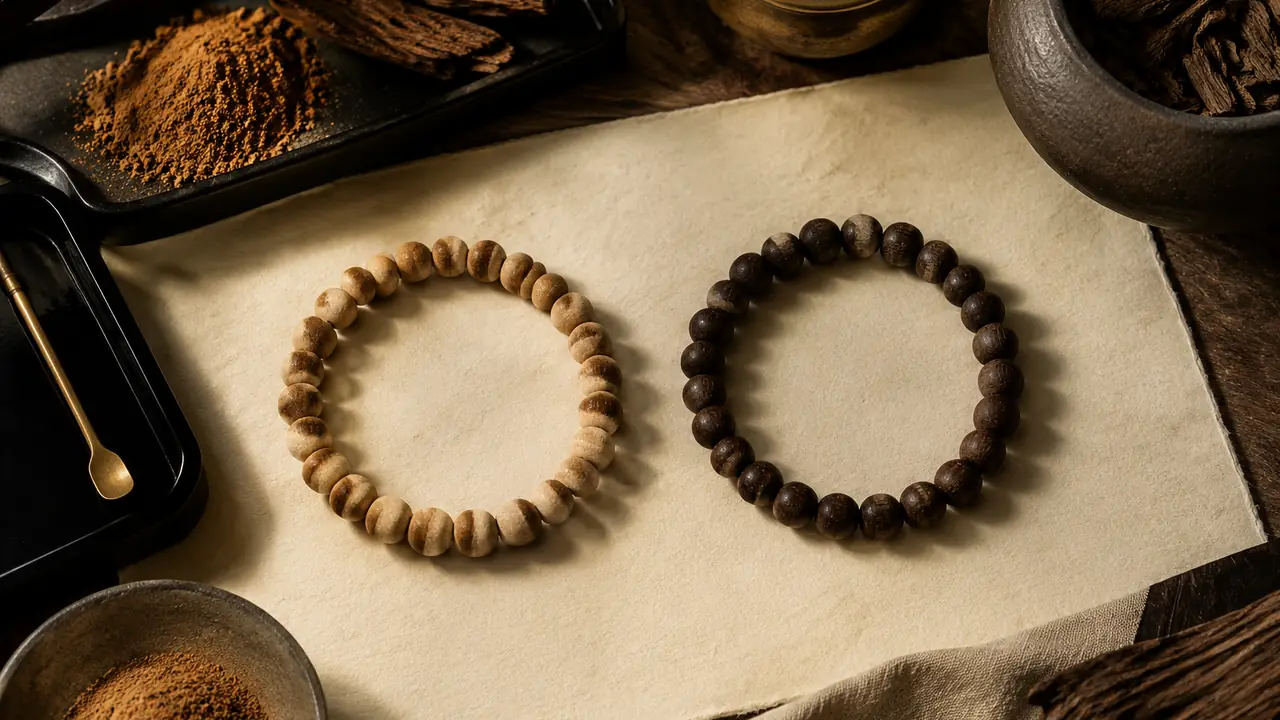
Two ways to buy the same beads
Loose beads are supplied by size and formula, sorted and packed in bags or jars, and priced by weight. The buyer strings them, adds findings and packs them for sale. Finished bracelets arrive strung on cord with the count, spacers and clasp agreed, packed in their sales packaging, and priced by piece. The beads themselves are identical; the difference is who does the stringing, the quality checks on the finished piece, and the packaging. A third route, DIY kits, supplies loose beads with cord, tools and instructions, so the end customer does the assembly.
Side-by-side comparison
| Criterion | Loose beads | Finished bracelets |
|---|---|---|
| Scent character | Same formula; open storage in bulk can dull the surface | Same formula; each piece sealed in its own inner pack |
| Scent life | Years with proper storage; depends on how well you reseal bulk jars | Years with proper storage; protected from the first day |
| Weight and feel | Sold by weight; flexible for any strand length | Fixed count and weight per design |
| Documents needed | Ingredient declaration, origin, CITES for agarwood; no findings reports | Same, plus declaration and reports for cord and metal findings |
| Typical channel | Jewelry makers, DIY and craft sellers, studios, brands with in-house assembly | Gift, fragrance retail, boutiques, e-commerce |
| Relative cost factors | Material and handwork per bead; your own labor and packaging added later | Material plus stringing, findings, quality checks and packaging at the workshop |
What you take on with loose beads
Buying loose gives flexibility. You can string the same beads in different lengths, mix sizes, add your own findings and change the design as trends move. Minimums are set by weight, with a typical reference range of 1 to 5 kg per bead size, and the same stock can feed several products. The trade-offs are labor, quality and storage. Stringing takes time and skill; hole alignment, knot strength and bead count need checking; and a sack of loose beads must be stored sealed with desiccant. Beads cut from a lot also need a consistent standard for size, so measure and weigh a sample from every batch. The DIY route adds a further consideration: the end customer may string badly, so kits should include clear instructions and strong cord. See incense bead sizes for what to specify.
What you take on with finished bracelets
Buying finished transfers the assembly to the partner workshop. You receive a sellable product with a consistent count, cord, knots and findings, packed for retail. Quality checks on the finished piece, including bead count, hole centering, cord strength and clasp fit, are done before shipment. The trade-offs are less flexibility, a higher per-piece outlay and minimums counted per design rather than per kilogram, typically in the reference range of 50 to 200 pieces per design for stock bracelets, confirmed in writing per program. If a design sells slowly, you hold finished stock rather than raw beads you could reuse.
Findings add a documentation load. Metal parts carry material declarations and, for the EU and US, test reports on nickel and heavy metals. Loose beads avoid this until you add your own findings, at which point it becomes your responsibility. See silver vs copper findings.
How to decide
- If you already have assembly staff and want design flexibility, buy loose beads.
- If you want a ready-to-sell product and a short path to the shelf, buy finished bracelets.
- If you are testing the market with limited capital, start with a small finished run of one design and keep a small loose stock for samples.
- If you sell kits, DIY packs or craft supplies, loose beads are the correct format.
- If you have a studio or workshop audience, loose beads can serve as both retail and a base for custom orders.
Hidden costs on each side
The invoice price is only part of the picture. With loose beads, count the hours of stringing and checking, the cord and findings you buy separately, the packaging you design and print, and the losses from beads that crack or split during assembly. A small studio may find these hours cheap; a growing brand usually does not. With finished bracelets, count the carrying cost of stock in several designs, the retail packaging that is included in the unit and the lower freedom to change a design after the run is made.
Quality risk also sits in different places. In the loose route, a poor stringing job reflects on your brand even when the beads are fine. In the finished route, a stringing fault is the workshop's responsibility under the agreed inspection plan, which is a reason to define pass criteria for count, hole centering and cord strength before production. In both routes, keep a sealed reference strand from the approved sample.
A practical hybrid is to buy loose beads for the first small batches while you refine the design, then move to finished bracelets once the design is stable and volume justifies the minimum per design. This keeps early risk low and avoids paying for packaging you may later change.
Freight, packaging and handling
Both formats are light, so freight is driven by volume and by how well the cargo is protected against humidity. Loose beads travel in sealed foil bags or jars inside cartons with desiccant; finished bracelets travel in individual inner packs inside retail boxes. Retail boxes take more space per piece, which raises freight volume for finished goods. Customs classification differs between loose goods and finished jewelry, so confirm the codes with your broker; see logistics and shipping. On arrival, open loose bags in a dry room and reseal what you do not use immediately, since bulk exposure is the main risk for scent.
Whichever route you choose, describe the order precisely: formula, bead size, hole size, count or weight, cord and findings, and packaging. Reference minimums and lead times are on MOQ and lead time. Send your brief through the quote form and the desk will return a formula sheet and compare quotes for the loose and finished options on the same specification.