
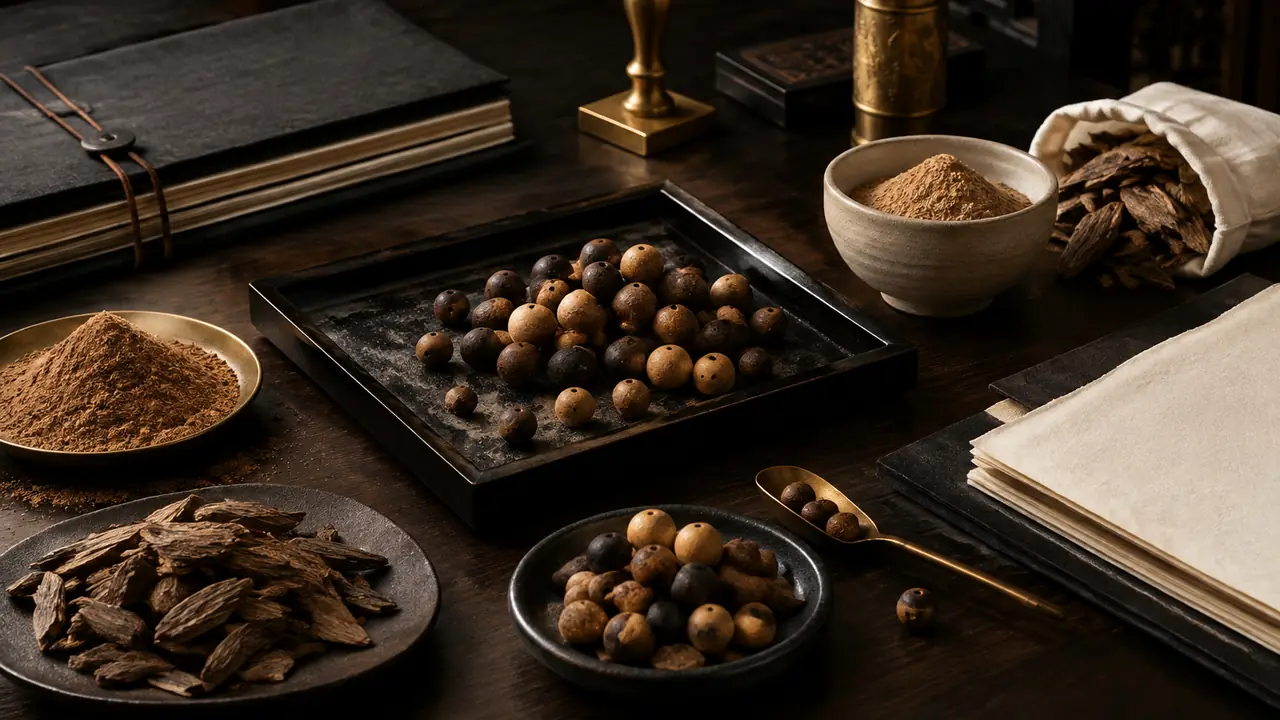
Why a declaration is worth writing
Ask three people at three companies what natural means on an incense product and you may get three answers. A written declaration removes the ambiguity. It states which materials are in the product and which are not, in a form that a workshop can sign, a broker can read and a customer can understand. It also protects the buyer in an ordinary way: if a later lot differs from the approved one, the declaration is the reference against which the difference is judged.
The declaration is not a certificate from an authority. It is a supplier statement, and its value comes from detail and from the supplier's willingness to stand behind it in writing. Where a market demands more, such as test reports or permit documents, those are added to the file; they do not replace the declaration.
What a declaration contains
| Section | What to state | Example wording style |
|---|---|---|
| Product | Name, line, size, count, format | Sandalwood incense bead bracelet, 8 mm, 19 beads |
| Aromatic base | Each powder by common and Latin name, with origin per lot | Sandalwood powder (Santalum album), Australian plantation |
| Binder | Binder and plasticizer | Nanmu bark powder, honey, water |
| Accents | Each botanical accent individually | Dried osmanthus flower |
| Surface | Any finish or leaf | Gold leaf on selected beads, or none |
| Excluded items | Items not used | No synthetic fragrance oil, no industrial glue |
| Findings and cord | Material of each component | 925 silver spacer, polyester elastic cord |
| Documents | CITES for agarwood, test reports for findings | CITES permit reference per lot |
The percentages of the formula are commercially sensitive and are usually held on the internal formula sheet, not on the public declaration. The declaration lists the materials in descending order of weight so that the reader can see the main components without seeing the exact recipe.
The words that need care
- Natural. Define it in the document. In the standard specification it means plant-derived powders, plant binder and honey, with no synthetic fragrance oil and no industrial adhesive. Without a definition, natural is a marketing word and not a specification.
- Pure. Avoid it. A blended bead is not pure, and the word suggests a single material.
- Organic. Do not use it unless there is a certification covering the lot. A product that is merely plant-based is not organic in the regulated sense.
- Chemical-free. Avoid it. Everything is a chemical, including water and honey. The accurate statement is that no synthetic fragrance oil or industrial glue is added.
- Aged. Fine if the workshop ages the beads in sealed storage; say so and give the typical practice in general terms.
These cautions come from the same logic as the claims discussion in health claims on incense products: wording should describe what the product is and what was done, nothing more.
Origin and legality statements
Two materials need extra lines. For agarwood, state the species as Aquilaria, note that it is listed in CITES Appendix II and give the permit reference for the lot; the process is described in CITES and agarwood. For sandalwood, state the species and the country of origin per lot, whether Australian plantation wood or legally sourced Indian stock, as described in sandalwood legality and sourcing. Other woods and botanicals should carry the species name and country too. Where a material cannot be traced to a country, say so in the internal record and ask whether the lot is the right choice.
Who signs and who keeps it
- The workshop drafts the declaration from the approved formula sheet.
- The desk reviews it against the sample and the order, checking that names, origins and exclusions match.
- The buyer approves it at the sample stage and keeps a copy with the approved reference bead.
- The declaration is reissued for each lot if origin changes, and referenced on the invoice and packing list.
- Changes require re-approval. A new powder supplier, a new accent or a new finding means a new declaration.
A short version of the declaration can be printed on a care card or the back of the box. Keep that version consistent with the full document: same order of materials, same exclusions, same wording.
Handling variations and kits
Product families bring complications. A bracelet and sachet set contains two products, so it needs two ingredient lists: the beads, and the sachet filling with its cloth. A DIY kit needs the declaration for the beads plus the material of the cord, tools and any included powder. A range with several scent variants can share one declaration only if the differences are in size or color; if a variant adds a botanical accent, it needs its own line. The simplest way to avoid errors is to keep one declaration per SKU and to name the file after the SKU code.
A worked example in plain words
Consider a sandalwood bracelet with 19 beads of 8 mm. The declaration lists sandalwood powder as the main aromatic, then nanmu bark powder as binder, then honey and water as plasticizer, and finally a small share of botanical accents named one by one. It says that the sandalwood is Santalum album from a named origin for that lot, that no synthetic fragrance oil and no industrial glue is used, and that the bracelet is strung on elastic cord with a 925 silver spacer. It is one page, dated, signed by the workshop and checked by the desk against the approved sample. A customs broker can use it to describe the goods, a marketplace can use it to answer an ingredient question, and a customer service agent can use it to reply to a skin-sensitivity query without improvising. The same page, with small changes, serves the next scent in the range.
Keeping the declaration true over time
Declarations drift. A workshop switches powder suppliers because of a shortage, an accent is replaced, a new batch of honey is used. None of these may change the scent noticeably, but each can change the declaration. Agree a rule at the start: any change to an ingredient, origin or finding is notified to the desk before production, and the declaration is updated before shipment. Keep a retained bead from each lot, labeled with the declaration version it matches. The wider list of documents available is on compliance and certifications.
Starting a file for your range
Send the line, size, format and market through the quote form. The desk will return a draft declaration with the formula sheet and confirm the wording in writing for the first order. Typical reference timelines are on MOQ and lead time.