
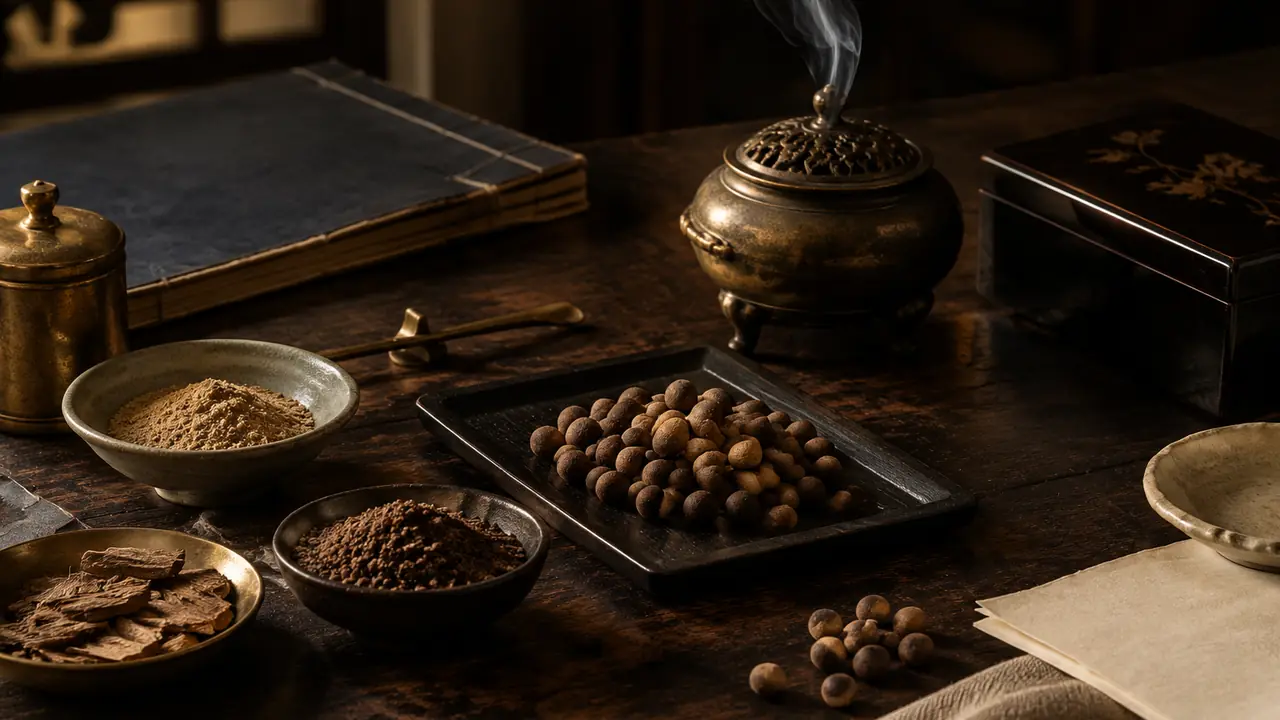
What the name means
The name combines two ideas. Palace points to the imperial court as the setting where fine incense was compounded and worn, and medicine beads refers to the use of herbal materials, the same kinds of dried roots, barks, flowers and spices that traditional Chinese pharmacy also handles. In trade usage, ding zi yao is a label for beads or small pellets made by kneading aromatic and herbal powders with honey or another soft binder, rolling them and aging them. It is a trade and tradition term rather than a standardized product class, so two suppliers using it may mean quite different things.
That looseness is the first thing a buyer should note. There is no regulated definition, no fixed formula and no single historical recipe that every palace bead follows. The name is best treated as a style: herbal, warm, slightly spiced beads in the manner associated with court and scholar households.
What is reasonably documented
Some points are well supported by the general history of Chinese incense. Compounded incense was made and used at court and in elite households over many centuries. Formularies from the Song dynasty, including Chen Shi Xiang Pu, record pills and powders bound with honey, and the later Ming compendium Xiang Sheng collects many such recipes. Pellets and small shaped pieces of scented paste were handled and carried, and the use of honey as a binder and of long resting and aging is part of the written record. These facts give a legitimate foundation to the idea of court-style compounded incense. See Chen Shi Xiang Pu and Xiang Sheng.
What is thinly documented is the specific claim that a particular bead on sale today reproduces a named palace recipe. Where a seller cites a court origin for a bead, the buyer should ask for the source passage and the changes made. In many cases the honest answer is that the bead follows a traditional method and style, not a recorded palace formula.
Documented, traditional and unverified
| Statement | Status | Safe wording |
|---|---|---|
| Compounded incense was used at court and in elite households | Supported by classical sources | Compounded incense has a long court and household history |
| Honey was used to bind pills and pastilles | Supported by formularies | Bound with honey and plant binder in the traditional manner |
| A specific palace recipe is reproduced exactly | Usually unverified | Inspired by court-style compounded incense |
| Named emperors used particular beads | Mostly lore | Traditionally associated with, or omit |
| The beads have particular effects on the body | Not a claim a seller may make | Do not state; describe scent only |
What goes into a court-style bead today
A herbal bead of this kind starts, like any incense bead, with a powder base. Sandalwood or agarwood often supplies the body, and herbs and spices add character: for example dried flowers, peel, bark and warm spices, in small and defined amounts. A binder of nanmu bark powder, often about a quarter of the powder weight, and a little honey turn the powder into dough. The dough rests for about 24 hours, is rolled by hand into beads and pierced, then dried in the shade for 5 to 10 days and aged in sealed jars. The sequence is the same one described in how incense beads are made.
The herbs are what separate the style from plain sandalwood. They push the scent toward warm, sweet-spiced, slightly bitter notes. Each herb in a formula should be listed on the specification by name and share, and each needs to be checked against the rules of the destination market, because a botanical that is acceptable as a scent ingredient in one country may be restricted in another. The desk asks partner workshops for an ingredient declaration and verifies the list before approving a sample.
How the scent reads
Court-style herbal beads tend to smell warmer and more complex than a plain sandalwood bead. Many users describe a sweet, spiced, slightly dry character, with the wood in the background and the herbs in front. Because herbs are more volatile than wood, the top of the scent changes within the first weeks and then settles; this is why the sample must be judged after aging and not straight from the drying rack. It is also why retail testers should be refreshed, since a tester left in the open loses its herbal top notes first and may give a flatter impression than a sealed pack. When describing the scent on a product page, name the families rather than listing every herb: warm wood, sweet spice, dried flower.
Avoiding health wording
The word medicine in the name creates a real risk. A bead sold as palace medicine can be read by a customer, or by an inspector, as a product with a health purpose. Incense products cannot carry health claims, and the safest course is to avoid medicine as a headline on listings, product cards and packaging in markets where it could cause confusion. Use palace-style herbal incense beads or court-style blended beads instead, and explain the name in a neutral note about tradition. The page on compliance sets out the approach to claims.
- Describe scent, ingredients and tradition.
- Do not describe effects on sleep, mood, illness or the body.
- Do not use before-and-after language or testimonials about health.
- Keep the translation of the name literal and accompany it with a plain description.
Specifying a palace-style program
- Choose the base: sandalwood, agarwood or a blend.
- List the herbs and spices with their shares and confirm each against the target market.
- Set bead size, count and finish; 8 mm is common for bracelets and 6 or 8 mm for 108-bead strands.
- Approve a sample after aging, and retain a reference bead.
- Agree wording: which tradition is cited, which claims are left out.
Typical reference timelines and minimums for custom herbal formulas are on MOQ and lead time, confirmed in writing per program. A related format that suits gift programs is the bracelet and sachet set, where herbal powders sit in a cloth sachet beside the beads.
Start with a short brief on the quote form: base material, herbs of interest, bead size and target market. The desk will propose a formula sheet and sample plan.