
What the bead adds to a metal line
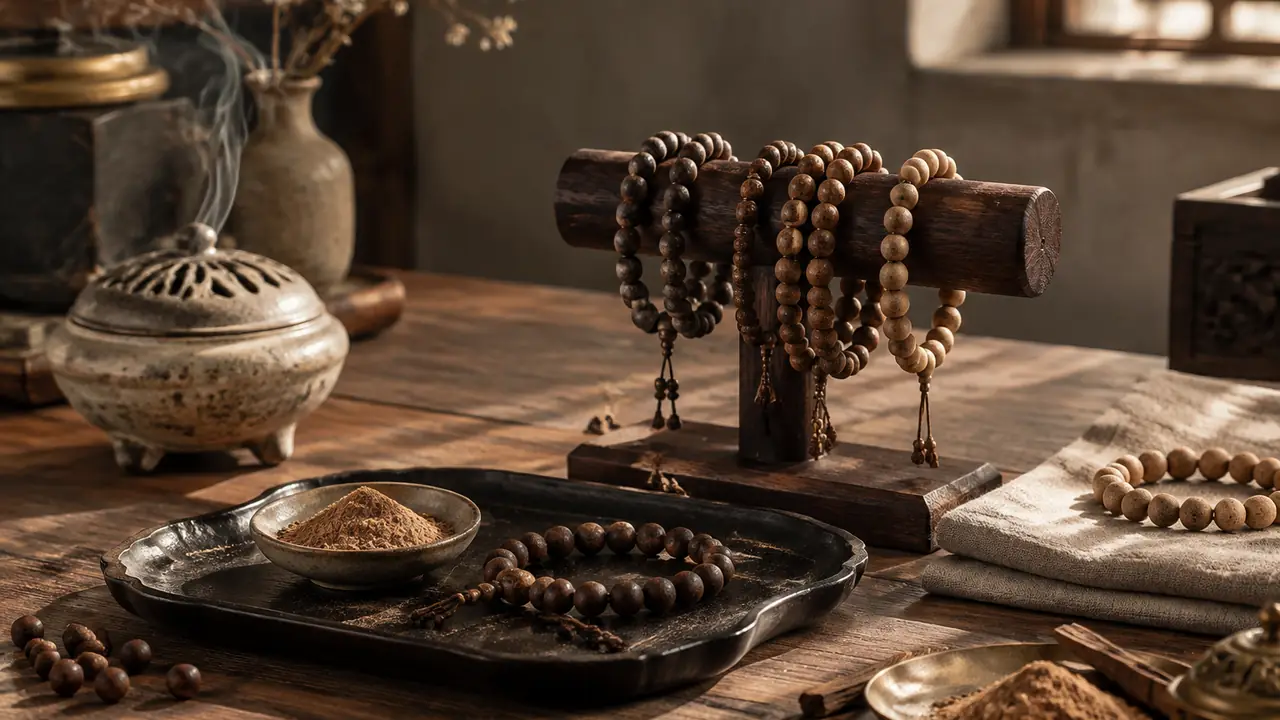
A jewelry brand that works mainly in metal often wants a softer counterpart: something warm to the touch, matte in finish and inviting to handle. Incense beads supply that. They are rolled from wood and herb powders, they look like fine-grained dark wood, and they carry a scent that appears when the piece is warmed by the wrist. The pairing with silver is classic because the bright metal contrasts with the quiet bead, and because the scent gives a reason for the customer to wear the piece rather than display it.
The beads are lighter than stone or glass. An 8 mm bead typically weighs about 0.3 to 0.5 g, so a bracelet with metal spacers stays comfortable even when the metal carries most of the weight. This is useful for statement pieces in which the silver elements are large.
Findings that fit
The most common failure in mixed pieces is a mismatch between bead hole and finding. Holes in incense beads usually run from 1.2 to 2.0 mm, and the choice is set at the sample stage. A finding with a thick pin will split a small hole; a loose one will rattle and chip the bead edge.
| Finding | What to match | Notes |
|---|---|---|
| Spacer or rondelle | Hole diameter, thickness against bead size | Keep the metal edge smooth to protect cord |
| Bead cap | Cap diameter to bead size (8 or 10 mm) | Shows the bead edge; choose an open cap shape |
| Charm or pendant | Bail size, jump ring diameter | Weight can pull elastic; use silk for heavy charms |
| Clasp or end cap | Cord diameter, knot size | For 108 strands, a tassel cap is common |
Pairing details, including typical hole sizes and the way spacers are set between beads, are on the incense beads with silver page.
Silver, plating and what to declare
Metal findings should be declared by material. The usual options are 925 sterling silver, and copper or brass with silver plating. Each has its own price, color stability and compliance profile. Solid silver tarnishes slowly and resists skin reaction; plated copper is lighter in cost and appropriate for fashion price points, but plating wears with use and exposes the base metal. Which is better depends on the price band and on the market; a comparison appears in silver vs copper findings.
For the EU and the US, findings in jewelry should be checked against the nickel release and heavy-metal rules that apply in the target market. The regulation names that buyers usually cite are REACH for the EU and CPSIA for certain children's items in the US; the specific tests and thresholds are verified per lot with the importer or a laboratory, not assumed. A material declaration from the metal supplier, plus a test report where required, should accompany each order. The wider position is described in compliance and certifications, and in more detail in metal findings compliance.
Loose beads or finished pieces
A jewelry brand has two ways to source. It can import loose beads and assemble in its own studio or with its own findings supplier, or it can have the desk coordinate finished pieces, with the metal supplied by the brand or sourced through the same network.
| Route | Strength | Watch for |
|---|---|---|
| Loose beads | Full design control, flexible runs, uses existing assembly | Weight sorting, hole consistency, stringing time |
| Finished pieces | Less handling, bead count and cord set at source | Higher minimum, less change after approval |
Loose beads are supplied by weight, sorted by size, with a typical reference minimum of about 1 to 5 kg per bead size, as set out in loose incense beads for DIY and makers. Stock finished bracelets typically start at about 50 to 200 pieces per design. These are reference ranges, confirmed in writing per order, and the working numbers are on MOQ and lead time.
Assembly and handling tips
- String on elastic or silk. Elastic suits stackable wrist pieces; silk with knots suits necklaces and heavier charms. Wire is rarely appropriate, since the bead is softer than glass.
- Avoid pliers on the bead. Squeezing a bead with a tool can mark the surface. Use a bead board and fingers.
- Keep beads dry. Polishing cloths with liquid, ultrasonic cleaners and jewelry dips damage the bead and must be avoided. Wipe the metal separately before stringing.
- Seal the finished piece. A small foil pouch and desiccant protect scent and prevent tarnish on silver from nearby humidity.
Design directions that sell
Jewelry brands tend to use incense beads in three ways. One is the minimalist stack: three or four strands of the same 6 or 8 mm bead in different cord colors. A second is the metal-forward piece: a single bead or a short run of beads between larger silver elements. The third is the pendant: a pressed tablet with a relief or logo, hung on a chain or cord, which fits the brand's identity more directly than a round bead can. See incense tablet pendants for tablet specifications.
The ritual and scent story also supports gifting. A piece in a small box with a card that names the scent family and gives care advice looks complete without further components.
Care guidance to print on the card
Jewelry customers expect to wear a piece daily and may be surprised that beads are not like stone. The care card should say to remove the piece before water, sweat-heavy exercise and cleaning products; to wipe the metal and beads with a soft dry cloth; to store the piece sealed in its pouch; and to expect the scent to change gradually. The text is also a protection for the brand, since most returns for dulled or swollen beads trace back to water exposure.
Getting started
- Choose the bead size, usually 8 mm for stacks and 10 mm for statement pieces.
- Decide hole size with your findings supplier and send sample findings to the desk.
- Choose metal: 925 silver or plated copper, with material declaration.
- Request a bead sample plus one assembled piece for fit check.
- Approve the sample, then order loose or finished in the quantity that suits your channel.
Send your brief and findings drawings through the quote form, and the desk will propose partner workshops and a sample plan.