
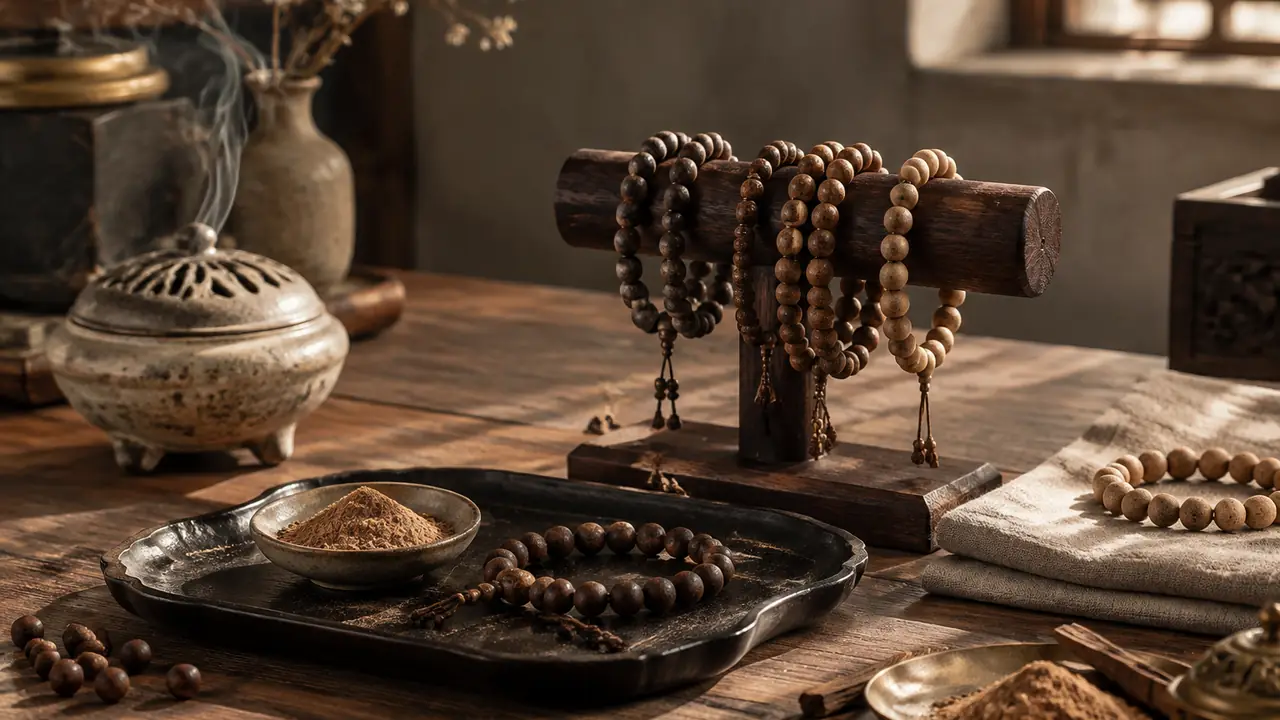
What this setting asks for
Temple and retreat shops differ from ordinary gift shops in three ways. The audience includes practitioners who know the tradition well and are quick to notice shortcuts. The shop often serves a community and a mission, not a margin target. And what is sold is judged by what it is made of and how it is presented, more than by how it is marketed. A product that suits this setting is plain in its description, clear about its ingredients and calm in its packaging.
Incense beads and traditional incense fit that brief when they are made from botanical powders with natural binders and no synthetic fragrance oil in the standard specification, confirmed in writing for each order. This is a practical point as much as a values point: retreat guests, monastics and volunteers are often sensitive to strong perfume, and a chemical smell in a hall is an immediate complaint.
Products that suit the shop
| Product | Typical spec | Use |
|---|---|---|
| 108-bead strand | 6 or 8 mm, guru bead, tassel or counter | Personal practice, gift to new members |
| Wrist bracelet | 8 mm, 18-22 beads | Daily wear, small donation gift |
| Incense pills and sticks | Bamboo-core or coreless sticks, aged pills, simple box | Altar, hall or home use |
| Goose pear beads | Classical fruit-and-wood formula | Seasonal item, traditional interest |
| Loose beads | By weight, sorted by size | Volunteer craft sessions |
Details are on the meditation incense beads 108, incense stick and pill gift boxes and goose pear incense beads pages. The structure of the 108 strand is explained in why 108 beads.
Tradition, stated neutrally
Incense has a place in Buddhist, Daoist and other traditions, and a shop has to describe the product without taking a position on practice. Stay with the object and the ordinary use: this is a strand of 108 beads rolled from sandalwood powder; this is a box of incense sticks with a bamboo core; this formula follows a recipe recorded in a Song dynasty formulary. Avoid explaining or ranking what any tradition means by the beads, and do not make statements about spiritual effect. The wider background is given in the notes on incense in Buddhist and Daoist practice, which keeps to a neutral account of history and use.
Ingredient questions to ask
Because the shop's reputation rests on the honesty of what it sells, a short ingredient review is worth doing before any order.
- Binder. Nanmu bark powder, with honey as plasticizer, is the standard. Ask whether any industrial adhesive is used; the standard specification uses none.
- Scent source. Confirm that scent comes from the powders themselves and that no synthetic fragrance oil is added.
- Wood origin. Sandalwood origin is stated per lot, from Australian plantations or legally sourced Indian wood. "Laoshan" is a trade term, so the shop should describe the actual source.
- Agarwood. Aquilaria is listed in CITES Appendix II, so documentation accompanies each lot for export. Ask to see it. Details are in the agarwood guide.
- Animal-derived materials. Some historical formulas include materials such as musk or ambergris. Ask for a written statement that none are used, since many communities will not accept them.
Packaging in a restrained style
Packaging for this setting is usually plain: undyed paper, a small cloth pouch, a simple tin or a wooden box with a paper band. Printed text can be limited to the name of the product, a short ingredient line and care instructions. Brand marks are often unnecessary, and some shops prefer to add their own label in the community's name. Inner foil pouches and desiccant should still be included for export lots, since a damp carton is the main cause of mold during sea freight; they can sit inside plain outer packaging. The options are listed on the packaging and gift boxes page.
Planning a small order
Many temple and retreat shops buy in modest volumes, with long gaps between orders and a calendar driven by festivals and retreat seasons. The reference minimums for ready lines run from about 50 to 200 pieces per design for bracelets, 200 to 500 boxes for incense gift boxes, and from 1 to 5 kg per bead size for loose beads. These are reference ranges, not commitments, and are confirmed in writing for each program; see MOQ and lead time.
- List what you sell now, what customers ask for and what is missing.
- Choose one or two scents; keep a simple sandalwood for broad use and add a classical formula for interest.
- Confirm the written ingredient statement and any exclusions required by your community.
- Request samples and let senior members smell them after a few days of airing.
- Place the order well ahead of the festival or retreat date; ready lines take about 15 to 25 working days, plus shipping.
Storage and handling in the shop
Temple shops are often housed in old buildings with stone floors, thick walls and little heating, which makes them cool and damp for much of the year. That is hard on incense products. Keep sealed stock in a closed cabinet or lidded boxes, not on open shelves near doors or walls that sweat. Put a desiccant sachet in each box and replace it each season. Rotate stock so the oldest pieces are sold first, and check a sample piece each month for surface bloom or a musty smell, which are early signs of moisture. Incense sticks and pills should be kept in their original wraps until sold, away from kitchens and cooking smoke, which they absorb easily.
Display testers deserve the same care. A single open strand under a glass lid is enough, replaced every few weeks. If the shop is heated only on busy days, avoid placing beads on a radiator shelf or in a sunny window, because repeated warming and cooling dries out the surface and can cause fine cracks over time.
Gifts, donations and group purchases
Shops often supply small gifts to visitors, volunteers and teachers, or accept bulk donations of a product from a supporter. A plain bracelet or a boxed incense set suits both. Where a group buys on behalf of a congregation or a course, consolidating the order into one shipment lowers freight and paperwork. Ask the desk to prepare a pack list by item so the shop can count what arrived against what was ordered.
When you are ready, send the product list, quantity per design, packaging preference and delivery date through the quote form. The desk will shortlist partner workshops and return a formula sheet with the written ingredient statement.