
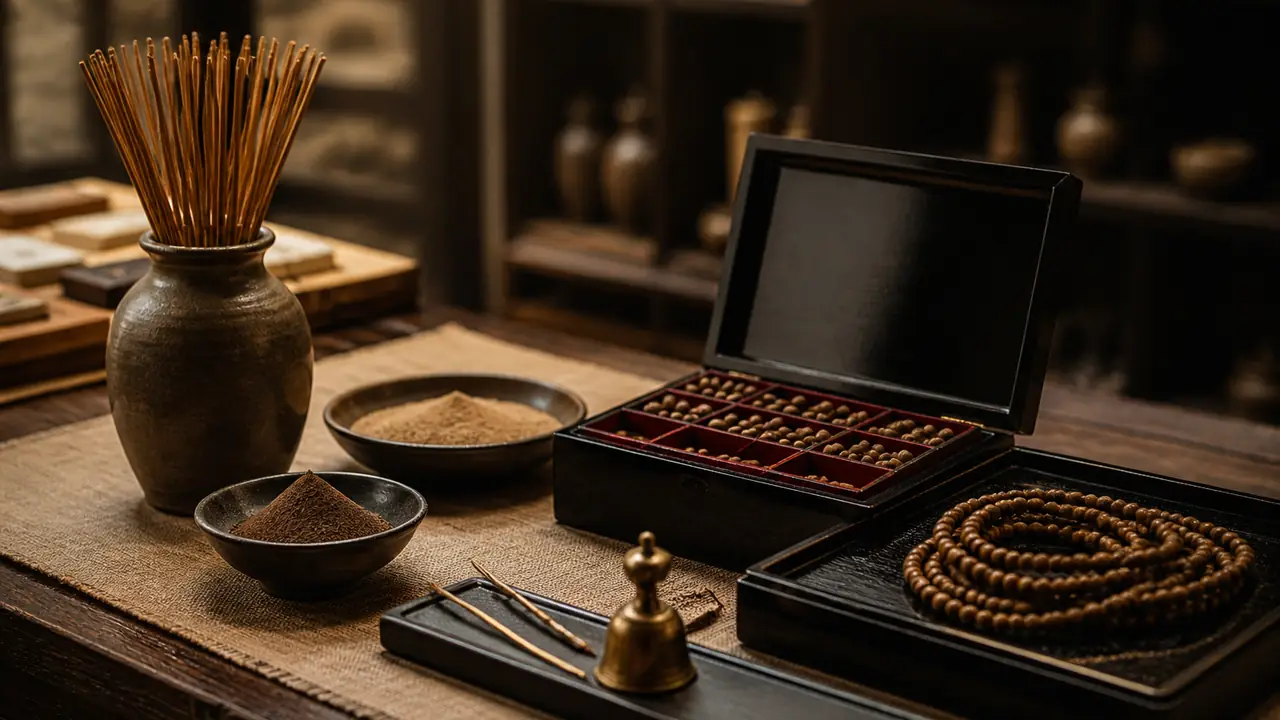
What temple and retreat shops look for
A shop attached to a temple, monastery or retreat center has a different standard from a lifestyle retailer. The goods are often used in daily practice, so the first question is what they are made of. The second is how they look: plain, quiet and without decoration that distracts. The third is that the supplier speaks about the product without commentary on belief. This program is built around those three points and nothing more.
Ouvare is a sourcing desk. It does not teach, advise on practice or describe any doctrine; it supplies incense goods and the information a buyer needs to judge them. Where a tradition is mentioned on this page, it is only to describe how a product has historically been used.
Traditional formulas, written out
Many buyers in this channel prefer formulas with a record behind them. The goose pear formula, for instance, appears in the Song dynasty Chen Shi Xiang Pu and the Ming compendium Xiang Sheng, and calls for agarwood, sandalwood and pears steamed together. Partner workshops can reproduce it as a bead, as described on the goose pear incense beads page, and as an incense pill for burning. Other historical blends are outlined in the ancient incense formulas guide. Every formula is printed on the sheet with percentages by weight, so the shop knows exactly what it is selling.
Sticks, pills and strands compared
| Item | What it is | Typical use | Packaging | Typical start |
|---|---|---|---|---|
| Bamboo-stick incense | Incense paste rolled on a bamboo core, Yongchun style | Burning at an altar or in a hall | Paper sleeve or kraft box | About 200-500 boxes |
| Coreless stick | Pure powder stick without a core | Burning where a cleaner smoke is wanted | Paper sleeve or tube | About 200-500 boxes |
| Incense pill | Compound pill that can be aged in a jar | Burning on a charcoal-free heater or small burner | Glass jar or paper box | About 200-500 boxes |
| Goose pear bead strand | Hand-rolled bead on a cord | Worn or held | Cloth pouch, plain box | About 50-200 per design |
| 108-bead strand | 108 beads with a guru bead | Counting during practice | Cloth pouch | About 50-200 per design |
The stick and pill details, including optional holders and burners, are on the gift box page and the incense tools page.
No chemical additives, in writing
The standard specification contains no synthetic fragrance oil and no industrial glue. Beads are bound with nanmu bark powder and honey; sticks and pills use plant binders. Because many temple and retreat buyers must be able to state what is in the incense they hand out, the desk supplies an ingredient declaration with each lot and confirms in writing that no additives were included. If agarwood is part of the blend, CITES documents are prepared per lot, as outlined in compliance and certifications.
Plain packaging and a respectful tone
- Packaging. Kraft or paper boxes, undyed cloth pouches and plain paper sleeves, with a small label giving name, weight and ingredients. No logos unless the shop asks for its own mark.
- Language. Labels can be bilingual. The desk uses neutral wording and avoids decorative or promotional claims.
- Imagery. No figures or symbols are added by the desk. If a shop wants a specific symbol on its label, the shop supplies and approves the artwork.
More on boxes and labels in packaging and gift boxes.
Illustrative example
An illustrative, anonymous case: a retreat center's supply shop wanted three items on a plain shelf: stick incense in paper sleeves, a jar of aged incense pills and a cloth-pouched 108 strand. The desk shortlisted two partner workshops, ran a sample round, and the center kept the formula sheets on file for its own records.
Ordering notes
Reference ranges, confirmed in writing for each order: sticks and pills from about 200-500 boxes, bead strands from 50-200 pieces per design. Stock samples take 5-10 working days; formula versions with aging can take 15-25 days. Aged pills need the longer window because the aging step cannot be hurried. Send your list through the quote form.
Shipping is by courier for samples and small lots, and by air or sea for larger ones. Incense sticks and pills are packed in sealed cartons with desiccant and kept away from heat in transit, so that the scent arrives as it left the workshop. A packing list names each item and its ingredients, which also helps at customs.