
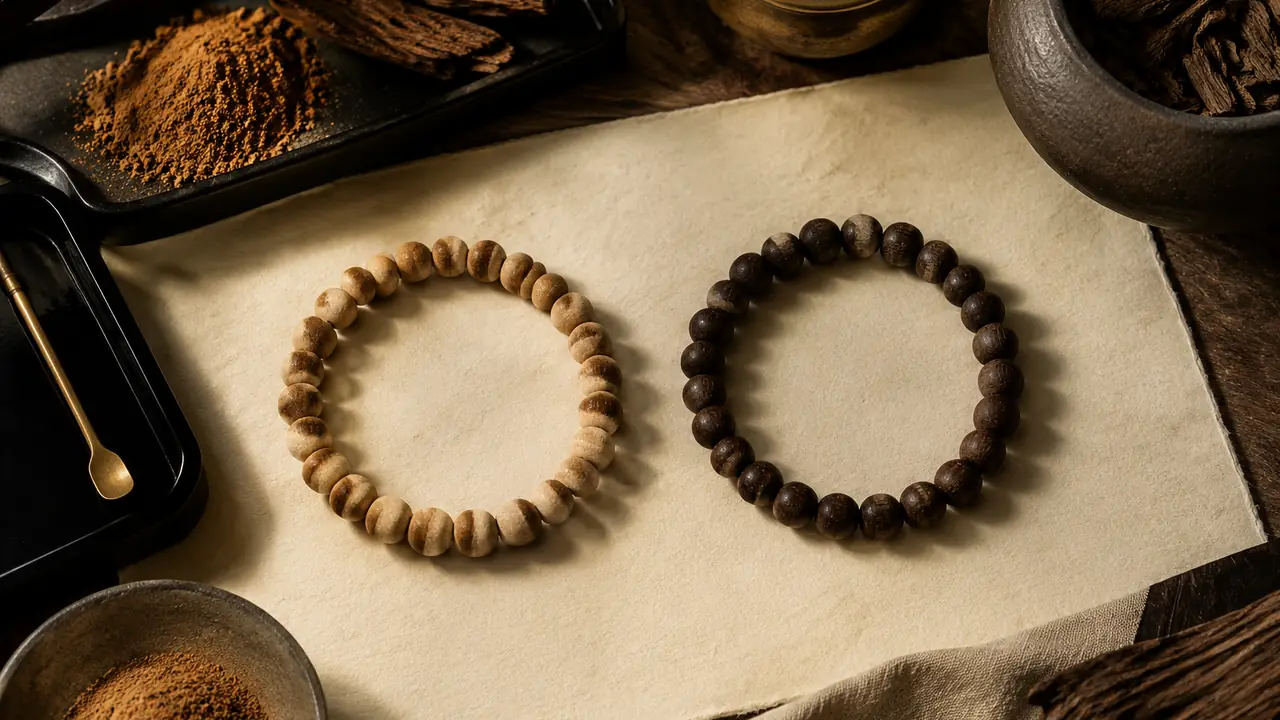
Two different delivery systems
Perfume is a liquid: aromatic compounds dissolved in a carrier, usually alcohol, applied to skin or clothing and released as the carrier evaporates. The scent opens strongly, moves through top, heart and base stages over hours and is gone from the skin by the end of the day. An incense bead is a solid: ground wood and botanical powders, bound with nanmu bark powder and honey, hand-rolled and aged. It releases scent very slowly through body heat, friction and air, and keeps releasing for years with proper storage. No spray, no alcohol, no application step; the wearer simply puts on a bracelet. How the release works is explained in how incense beads release scent.
Side-by-side comparison
| Criterion | Incense beads | Perfume |
|---|---|---|
| Scent character | Quiet, woody, close to the skin; opens with warmth | Projected, layered, strong on application |
| Scent life | Years with proper storage; continuous but low in intensity | Hours on the skin; a bottle lasts months, then needs a refill |
| Weight and feel | A light strand on the wrist; no residue | A bottle to carry; liquid on skin |
| Documents needed | Ingredient declaration, CITES for agarwood, origin for sandalwood, metal reports for findings | Full formulation records, allergen labeling, alcohol and flammable goods shipping rules |
| Typical channel | Gift, lifestyle and jewelry shops, e-commerce, studios | Beauty retail, department stores, specialist fragrance shops |
| Relative cost factors | Material grade, handwork, drying and aging; no liquid filling | Fragrance oil, alcohol, glass, atomizer, filling and regulatory work |
What each product does well
Perfume gives impact. A spray fills a space around the wearer and makes a statement within seconds. It is the right tool for a signature scent and for occasions where projection matters.
Incense beads give intimacy and permanence. The scent stays near the wearer and is noticed by the wearer more than by others. The bracelet is also a visible object, so it works as jewelry and gift as well as scent. Customers often describe the effect as calming in their own words; copy should simply say that the scent is traditionally associated with quiet, ritual moments and avoid any wellness promise.
The two can cooperate. A bracelet worn on the same wrist as heavy perfume will smell of the perfume. Suggest in the care card that customers wear the beads on a clean wrist, or choose a perfume on the opposite side.
Regulation and logistics differences
Perfume is a complex regulated product. Formulations must be recorded, allergens declared on the pack in many markets, and liquids containing alcohol are flammable goods that restrict air shipping and some postal routes. Incense beads are solid, light and dry. For a botanical bracelet, the paperwork is an ingredient declaration and, for agarwood, CITES documents; metal findings carry their own reports. That is a very different file to manage, and it is one reason brands that already struggle with liquid logistics look at solid scent as a complement. See compliance and certifications and logistics and shipping.
The standard incense bead specification uses no synthetic fragrance oil, which makes a clear statement for customers who avoid alcohol or synthetic ingredients. If a brand wants to add fragrance compounds, it changes the declaration and the labeling duty, so decide this at the start.
How to decide
- If your brand sells a signature scent and needs projection, keep perfume as the hero and use incense beads as a companion product.
- If your customers ask for alcohol-free or natural options, incense beads answer that directly.
- If you lack liquid filling or flammable-goods shipping capacity, solid scent avoids both.
- If your range needs a giftable, durable item, a bracelet or pendant carries more shelf life than a bottle.
- If you want to extend a scent story, ask a workshop for a bead formula that echoes your perfume's note family, such as woody or resinous.
Building the pairing into a line
For a brand that already sells perfume, a practical route is to pick one existing woody note and develop a sandalwood or agarwood bracelet around it, then offer the two together as a boxed set. The perfume provides the opening and projection; the bracelet provides the quiet continuation on the wrist. Corporate and seasonal gift programs often work this way, and the desk can coordinate the bracelet and packaging side while the brand handles its own liquid. Related formats such as tablet pendants and bracelet-and-sachet sets suit the same range, as described in adding incense beads to a fragrance brand line.
Plan the shelf talk as well. A tester bracelet needs to be warmed in the hand to show its character, and a tester left in the open loses its freshness; replace it regularly. Staff should explain that the beads are not sprayed and that the scent lasts for years with proper storage, without quoting an exact number of years.
Sampling and customer education
Perfume is sold by spraying a strip and smelling it in seconds. Incense beads need a different routine, and customers who expect the perfume experience may think a bracelet has little scent if they smell it cold. Give shoppers a simple instruction: hold the strand in a closed hand for half a minute, then smell it, and wear it for a day before judging. A one-line card in the pack that says the scent is activated by warmth and movement prevents most disappointment.
It also helps to be clear about scent behavior over time. A perfume fades within hours and is reapplied. An incense bead keeps a steady, low output, and its lighter notes leave first while the woody base stays, so the scent may grow warmer and deeper over the months. Customers who know this in advance see the change as part of the product, not as a defect. For longer-term care, point them to the guidance in how long incense beads last.
Lastly, consider how the two products are priced and presented side by side. A bottle suggests a consumable that is replaced; a bracelet suggests an object that is kept. Pricing a bracelet against the cost of a refill is a poor comparison, because the buyer is paying for jewelry, scent and gift value together.
Ordering notes
A stock bracelet design typically starts at a reference range of 50 to 200 pieces, and branded or boxed programs start higher, confirmed in writing for each program; see MOQ and lead time. Send your scent direction, bead size and packaging brief through the quote form, and the desk will return a formula sheet from partner workshops.