
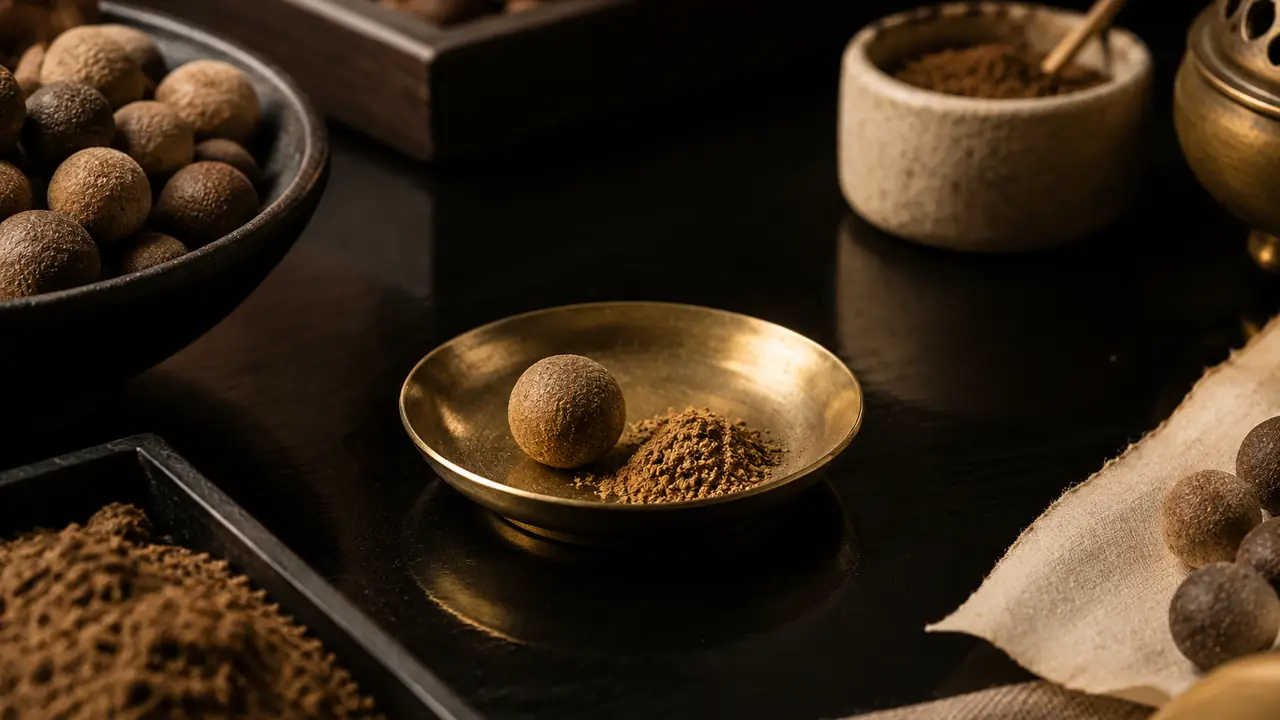
Scent without combustion
Burning incense releases scent through heat, fast and all at once. A bead works the opposite way. Ground sandalwood, agarwood and botanical powders are packed into a dense sphere, and the aromatic molecules inside migrate toward the surface and evaporate at a very low rate. Nothing is lit, no solvent carries the scent, and the bead does not need a carrier oil. The scent is the material itself, which is why the output is quiet and close to the body.
This is also why sampling incense beads needs a different routine from sampling a perfume. A smell strip tells you what is on the surface. A bead has to be handled, warmed and worn for a few minutes before it shows what it is.
The three forces that release scent
| Force | What happens | What a buyer notices |
|---|---|---|
| Body heat | Skin warmth raises the surface temperature a few degrees and speeds evaporation | Scent grows after a few minutes on the wrist |
| Friction | Rolling between fingers and rubbing on sleeves exposes fresh surface and fine dust | A brighter, more immediate burst of scent |
| Air movement and humidity | Moving air carries molecules away; moist air lifts them from the matte surface | Scent carries further on a warm, slightly humid day |
Heat matters most in the first minute. Hold a bracelet in a closed hand for thirty seconds and the character of the formula opens up. Friction matters in the long run: a strand that is touched and turned through the day keeps its scent present, while one that sits still smells faint, because the outer layer of each bead slowly loses its most volatile notes.
Top notes, heart and base
Blended incense is built in layers, and the layers leave the bead at different speeds. Light notes such as citrus peel, flowers or a sweet fruit element appear first and fade first. The creamy heart of sandalwood follows. The deep base of agarwood, resins or aged woods stays longest. Many users describe a bracelet that smells sweeter in the first weeks and more woody after a few months; that is the lighter fraction leaving while the base comes forward. It is normal and is the reason workshops age finished beads in sealed jars before packing, so the blend has already settled when it reaches the customer.
Different lines show this differently. Sandalwood tends to be soft, milky and warm; agarwood is resinous and deeper; a fruit-and-wood recipe such as the goose pear beads is sweeter and rounder at first. Product pages for each line state the scent direction in plain terms so retail copy can stay accurate.
What changes how a bead smells
- Formula density. A higher share of sandalwood or agarwood powder gives a fuller scent; a higher share of binder or filler gives a quieter one. The formula sheet shows the split.
- Bead size. Larger beads hold more material and last longer, but a small bead has more surface per gram. A 6 mm strand can smell as present as a 10 mm one while it is fresh.
- Surface finish. Polished beads release a little more slowly than a raw matte surface; a gold leaf finish adds a thin barrier on the leafed area.
- Storage. A bead kept in an open dish in a dry, hot room loses scent faster than one sealed away from light. See how long incense beads last for care guidance.
- Skin and environment. Warm skin, dry air or heavy perfume worn on the same wrist all change how the scent reads. Beads are best presented to customers on a clean wrist.
Why a bead can seem to go silent
Two situations account for most complaints. The first is a bracelet left in a closed pouch or packet for weeks: it still holds its scent, but the surface smells of nothing until it is warmed and handled, which is how it is supposed to behave. The second is a bracelet worn every day for a year in dry heat, where the outer layer has simply given up its lightest notes. A light polish with a soft cloth or a few days in a sealed container with other beads often brings the scent forward again, as described in the care notes in the making process guide, because aging in a closed jar is the same step the workshop used at the end of production.
A bead that never had much scent in a sample is a different case. It is usually a formula with a high filler share, or beads that were scented with a surface oil that evaporated. Ask the workshop to confirm that the scent comes from the powders themselves and that no synthetic fragrance oil is used.
How to sample and compare fairly
- Open the sealed pouch and let the beads rest in the open air for ten minutes.
- Smell the strand cold, then warm it in a closed hand for thirty seconds and smell again.
- Roll a few beads between the fingers to test the friction response.
- Wear the bracelet for a day and note the scent at the start, middle and end.
- Repeat after a week, since the first impressions of a fresh batch change as it settles.
When comparing two suppliers, use the same routine with the same bead size, otherwise the comparison is not fair. If the sample is a custom blend, ask the partner workshop to keep a reference bead so later production lots can be compared with the approved one.
What this means for product copy and orders
Because scent release depends on wear, product copy should say that the beads are activated by warmth and movement, not that they fill a room. Avoid fixed claims about how many years a bead lasts or how strongly it projects; say it lasts for years with proper storage and leave it there. Packaging should include a short care line: keep beads sealed when not worn, away from heat and water. When you are ready to specify an order, send the line, bead size, count and any custom scent request through the quote form; the desk will return a formula sheet and typical reference timelines, with the final terms confirmed in writing. Reference ranges are on the MOQ and lead time page.