
Why there is no fixed number
An incense bead is aromatic through its whole volume, so it does not run out the way a sprayed or soaked scent does. The aromatic compounds migrate to the surface and evaporate slowly. How slowly depends on the formula, the size of the bead, the temperature and humidity around it and how often it is handled. Two identical bracelets, one sealed in a jar and one worn daily on a warm wrist in dry air, can read very differently after a year.
For that reason a responsible supplier writes "lasts for years with proper storage" and stops there. A fixed figure such as three years or ten years cannot be backed up across every climate and habit, and it invites disputes. What can be described accurately is how the scent behaves over time and which habits protect it.
The stages a bead goes through
| Stage | What changes | What customers notice |
|---|---|---|
| First weeks | Light, sweet or fresh notes leave first; the blend settles | A brighter, sweeter scent that mellows |
| First months | The creamy or resinous heart comes forward | A rounder, warmer scent, closer to the wood |
| Later years | Surface notes thin out; the deep base remains | A quieter, woodier scent that wakes with warmth |
None of these stages is a defect. Many users describe the change as the bracelet becoming more personal, and workshops age finished beads in sealed jars before packing so the first stage has largely passed by the time a customer opens the box. The mechanics of release are described in how incense beads release scent.
What shortens scent life
- Heat. A bead left on a sunny windowsill, a heater or a car dashboard loses its lightest notes quickly and may crack. Keep beads away from heat and sun.
- Open air. A bracelet left in an open dish evaporates continuously. Sealed when not worn is the simplest rule and the most effective.
- Water and sweat. Soaking swells the bead and washes out surface material. Wipe, do not wash; see can incense beads get wet.
- Competing fragrance. Perfume or hand cream on the wrist coats the surface and masks the bead. It does not damage the bead, but the scent will seem to disappear.
- Dust and handling with oily hands. A film on the surface blocks release. A dry soft cloth removes it.
What extends it
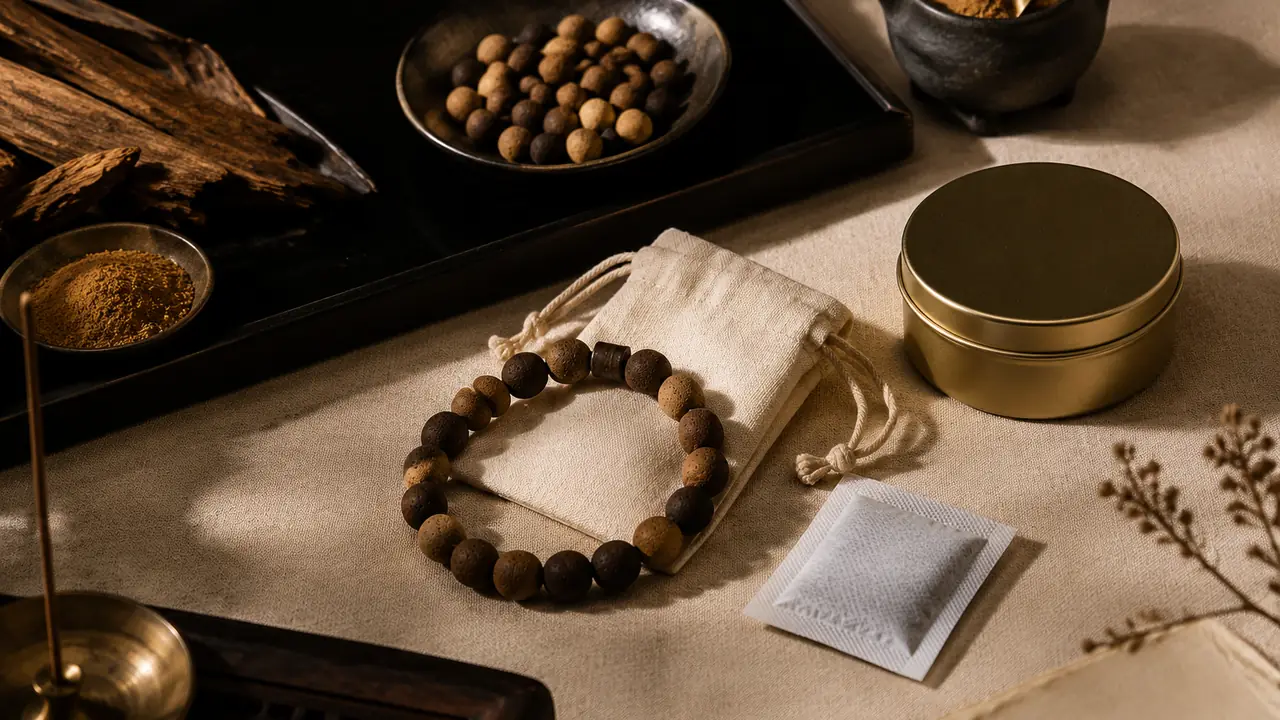
The same few habits show up in every well-kept collection. Store beads in a sealed jar, tin or foil pouch with a small desiccant sachet. Keep the container in a drawer or cabinet at normal room temperature, out of direct light. Rotate the bracelets worn so none is worn every day. Give a worn bracelet a rest in the jar overnight now and then; the beads redistribute their scent inside the closed space and come out fuller. The practical routine is set out in how to store incense beads.
Bead size also plays a small part. Larger beads hold more material and tend to keep their character longer, while small beads feel fresh sooner because they have more surface per gram. The formula matters more than size: a dense sandalwood or agarwood blend outlasts a thin one, which is why the formula sheet is worth reading before ordering.
Reviving a quiet bead
A bracelet that seems to have gone quiet is rarely finished. Often the outer layer has simply given up its lightest notes, and the fuller scent is still inside. Three steps usually help, in this order.
- Wipe the beads with a dry, soft cloth to remove surface film and fine dust.
- Seal the bracelet in a small closed jar or foil pouch for a day or more, ideally with a few other beads; scent redistributes in the closed space.
- If needed, ask the supplier about a light re-polish of the surface; this reveals fresh material.
More detail is in reviving the scent of older incense beads. A day in a closed jar is the reliable first move.
Expectations by product format
| Format | Care emphasis | Note |
|---|---|---|
| Bracelet | Keep dry; seal when not worn | Worn daily, it needs occasional rest in a jar |
| 108-bead strand | Seal in a pouch between sessions | Handled often, so scent stays present |
| Tablet pendant | Protect relief from knocks | Flat surface shows wear sooner |
| Car or bag charm | Keep out of hot cabins | Heat and sun age it fastest |
| Loose beads | Sealed jars, labeled by lot | Check periodically for moisture |
Climate and season matter
The same bracelet behaves differently in a dry northern winter and a humid coastal summer. In dry, heated rooms evaporation speeds up, so a bead left out loses its lightest notes sooner and may develop fine surface cracks. In warm, humid weather the risk shifts: beads draw moisture, the surface can feel slightly tacky, and in a closed damp space mold can start. Retailers who ship to more than one climate should therefore think about the receiving end. A foil pouch with a desiccant sachet suits humid markets; a sealed tin suits dry ones; both keep the bead at a stable weight during transit. If a shop displays open testers, replace them every few weeks, because a tester that sits under shop lights for months gives customers a false picture of the stock. Workshops dry beads to a stable weight and then age them in sealed jars; keeping that sealed state until the customer opens the pack is the whole purpose of the packaging.
What goes on the care card
A short care card reduces complaints more than any other single measure. Three lines are enough: keep sealed when not worn, keep away from heat and sun, and keep dry. Add a fourth line - if the scent seems faint, rest the bracelet in a closed jar for a day - and customers will have the answer to the most common question before they ask it. Avoid fixed claims about years; "lasts for years with proper storage" is accurate and enough. Product copy should also avoid health language, because scent is a sensory pleasure, not a treatment.
At order stage, ask the workshop to confirm packaging in writing: foil pouch or jar, desiccant, and how the carton is sealed for transit. Packaging options are on the packaging and gift boxes page, and care wording can be agreed in the quote form notes. Reference timelines for packaged lots are on MOQ and lead time.