
What the product is
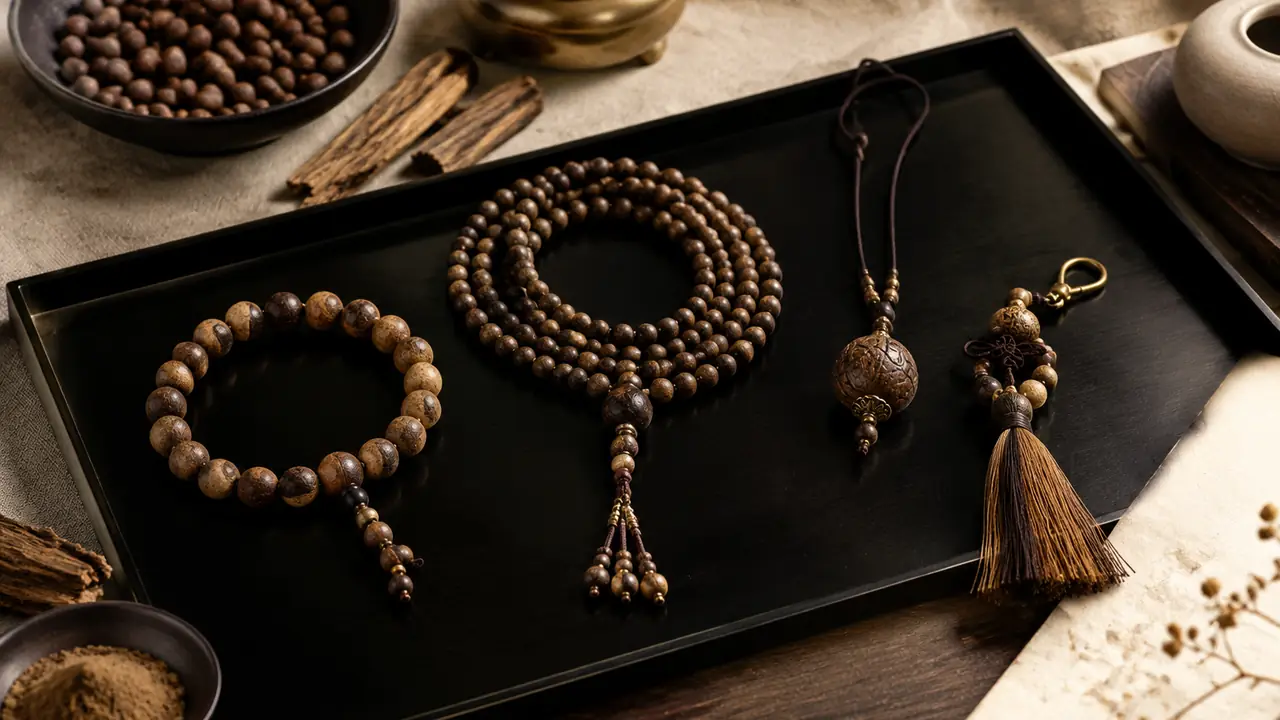
A hanging charm is a short strand of incense beads, usually three to five, finished with a decorative knot, a tassel or both, and a loop or clip for hanging from a rear-view mirror, a bag zip or a key ring. It uses the same dough as bracelets: aromatic powder, nanmu bark binder and honey, with no synthetic fragrance oil and no industrial glue in the standard specification, confirmed in writing. What differs is everything around the bead: cord, knot style, hanging hardware and packaging.
Customers buy charms as small gifts and as personal accessories, so the product reaches people who would not buy a bracelet. That makes the charm a useful second format in a range that started with bracelets.
Format options
| Option | Typical spec | Best for |
|---|---|---|
| Car mirror charm | 3-5 beads, 8-12 mm, knot and tassel, loop length set on sample | Gift and lifestyle stores |
| Bag charm | 3-5 beads, 6-10 mm, clasp or clip, short tassel | Online sellers, fashion add-on |
| Key ring charm | 1-3 beads, ring and short tassel | Promotional, low-price entry |
| Knot-work charm | Decorative Chinese knot with beads | Seasonal and festive programs |
Bead size is chosen for visibility: a car charm reads better with 10 or 12 mm beads, while a bag charm looks better smaller. The strand length, tassel length and hardware are agreed on the sample sheet.
Heat, sun and the car interior
A closed car in summer can reach temperatures far above those for which incense beads are designed. Beads dry out, can crack, and lose their lighter notes quickly in prolonged heat; the cord and tassel may fade or soften. Because of this, a car charm is not a product to promise as lasting in all conditions. The responsible specification has four elements.
- No chemical fragrance. Beads rely on their botanical powders alone; added fragrance oils can off-gas in a closed cabin, which is a reason to avoid them.
- Cord that tolerates heat. Cotton, polyester or waxed cord; avoid cords that soften or shrink in high temperature.
- Color-fast tassels. Choose dyes that resist fading, and test with a sample left near a window.
- Clear care wording. Tell customers to hang the charm away from direct sun, remove it when parking in strong sun, and avoid leaving it on the dashboard.
Practical advice for end users is in incense beads in hot cars. A short care card with those three lines prevents most complaints.
Cord, knot and hardware
Daily use wears the loop most. A thin cord can fray at the hanging point after weeks of swinging against a mirror or bag zip. Ask for a double-strand loop or a protective cap at the hanging point, and a knot between each bead so that a break does not scatter the strand. Hardware such as lobster clasps, swivel clips and key rings should be declared by material; if silver or plated metal is used, the findings rules in incense beads with silver findings apply.
- Pick bead size and count (three to five).
- Pick cord and knot style; agree loop length.
- Pick tassel material and color; test fade resistance.
- Pick hanging hardware and declare materials.
- Approve a physical sample and a pull test result.
Inspection and testing for charms
Charms deserve a short, practical test plan because they fail in use, not on the shelf. Before shipment, the desk or the buyer's inspector should run four quick checks on a random pull from each lot.
- Pull test. Hold the loop and the lowest bead and pull by hand; the cord, knots and hardware should not slip or open.
- Swing test. Hang a sample and swing it for a minute; look for rubbing, loose tassels or beads that chip against each other.
- Light test. Leave a sample in a bright window for a week and compare the tassel color with a sealed reference.
- Count and weight. Check bead count, finished weight and strand length against the approved sample sheet.
The results go on the inspection record, with photographs, so that a later dispute about a returned lot can be settled against evidence instead of memory. The wider inspection scope is on testing and inspection.
Seasonal programs add one more point. Charms with festive knots or colors are often ordered for a fixed date, and the knot work is manual, so the sample should be approved early and the production window agreed in writing. A late approval is the usual reason such programs miss the season.
Packaging for impulse sales
Charms are bought on sight, so packaging is part of the product. A small backing card with a hanging hole fits retail pegboards; a kraft box or tube suits online shipping. The charm should be sealed in a small bag so the surface scent is not lost, with a note on the card describing the scent and how to hang it. Small, light parcels are an advantage for online sellers, and a single carton holds many pieces. Options are listed on packaging and gift boxes, and channel notes for online sellers are on e-commerce and cross-border sellers.
Wording for listings
Describe a charm as a hanging accessory made of botanical incense beads that releases a soft scent through warmth and movement. It does not scent a whole car. Avoid saying that it removes odors or cleans the air, and avoid any health wording; the scent can be described as soft and woody, and many users describe it as pleasant. Say plainly that the beads are not for burning and should be kept away from water. Photography should show the real matte surface of the beads rather than glossy renders.
Ordering
Stock charms are typically ordered at around 50-200 pieces per design, with branded or boxed programs from about 300-1,000. Stock samples take about 5-10 working days and production about 15-25 working days, reference ranges that are confirmed in writing for each program. Light, small goods ship well by courier for samples and small lots; sea freight needs sealed bags and desiccant to protect against humidity. Send your brief through the quote form and read the ranges on MOQ and lead time.