
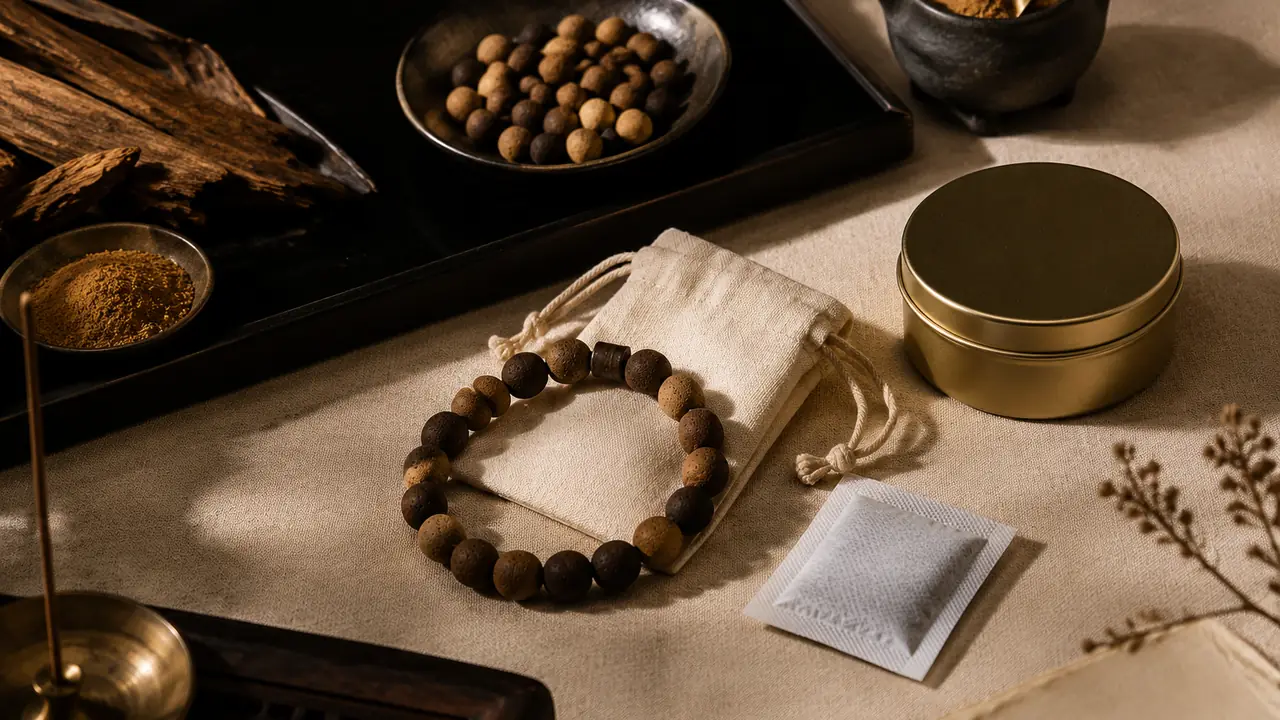
What patina means for a bead
Patina is the gradual change of a surface through use, handling and time. In wood and plant-based beads it shows as a slight darkening, a smoother and slightly glossier feel and a softening of the edges at the holes. The change is real and visible, and it comes from ordinary contact: skin oil, friction against sleeves and other beads, light and air.
Incense beads are porous powder-based spheres, so their surface takes on these changes readily. A freshly dried bead has a dry, matte, slightly chalky look. With wear, rolling between fingers and contact with skin burnish the surface, fine pores fill with skin oil and the color deepens. This is not a sign of defect; it is the bead taking on the owner's history, and for many customers it is a reason to keep wearing the piece.
Normal changes and warning signs
| Observation | Usually means | Action |
|---|---|---|
| Slight darkening over months | Normal patina from skin oil, light and air | None; part of the character |
| Smoother, softly glossy surface | Burnishing from handling | None |
| Rounded edges at the holes | Friction against cord and neighbors | Check cord; restring if worn |
| Warmer, woodier scent | Light notes have left; base remains | Normal; rest in a jar to bring it forward |
| Uneven darker patches near the cord | Sweat or product build-up | Wipe dry; air out |
| Fine cracks across beads | Heat, strong sun or soaking | Review storage; replace if deep |
| White, green or black spots, musty smell | Mold from trapped moisture | Stop use; see preventing mold |
| Chipped or crumbling beads | Impact, over-tight cord or water damage | Replace the bead; restring |
What drives the change
- Skin oil and sweat. They fill surface pores and darken the bead gradually. Skin differs, so two identical bracelets develop differently on two wrists.
- Handling. Rolling beads between fingers burnishes the surface and sharpens the shine on the most-touched side.
- Light. Sunlight and strong indoor light can fade or shift the tone, usually toward a deeper, warmer color. It also dries the surface.
- Air and time. Slow oxidation and loss of light notes deepen both color and scent, even in a sealed jar.
- Formula. Darker powders, resins and honey content change how a bead takes patina. Pale sandalwood shows the shift more clearly than a dark agarwood blend.
Differences by line are practical to explain. A sandalwood bead moves from pale cream toward warm tan; an agarwood bead, already darker, shows a deeper shine; a goose pear bead, which carries a fruit element, can show a subtle golden cast. Line pages describe the starting color for each; see the sandalwood bracelet and goose pear beads.
The scent follows the surface
As the surface changes, so does scent release. A burnished, oil-filled surface releases a little more slowly than a raw matte one, so a well-worn bracelet can seem quieter until it is warmed. Meanwhile, the base notes remain and come forward as the lighter ones fade. Many users describe a bracelet that smells sweeter in the first weeks and more woody after months; that is normal and is part of what patina means in a scented object. A short rest in a closed jar and a dry wipe, described in reviving the scent of older incense beads, lifts the surface again without removing the patina.
Gold leaf, silver and findings
Patina is not limited to the bead. Silver spacers darken with time and sweat, and a soft cloth restores their shine; plated parts may wear through at contact points, revealing the base metal. Gold-leafed beads are different: the leaf is thin and sits on the surface, so rubbing and sweat wear it away at the most-touched points first, leaving an irregular, aged look that some customers like and others do not. State this on the product page so the finish is understood as decorative and gradually changing. Cord also ages: elastic loosens and silk darkens. A bracelet whose beads look charming but whose cord is worn is a candidate for restringing, not replacement.
Managing patina in retail
Patina is a selling point only if customers expect it. Retail cards and product pages should say that incense beads are natural and will deepen in color and mellow in scent with wear, and that each bracelet develops its own character. Do not promise that a bracelet will look the same after a year, and do not market the change as improvement in any physical sense; it is a change of appearance and scent. Use photography that shows a fresh matte bead honestly. Display testers that have been handled for months will look darker than stock; replace them regularly so customers do not mistake a worn tester for the fresh product.
- Photograph a retained reference bracelet from each lot when new.
- Keep a sealed pair for comparison with returns and complaints.
- Add one line to the card about natural color change with wear.
- Ask staff to explain patina as character, and mold, cracks or musty smell as faults to report.
- Rotate testers every few weeks.
Slowing or preserving the change
Some customers prefer the new look. They can slow patina by keeping the piece sealed when not worn, away from heat and sun, wiping it after wear, rotating between bracelets and avoiding lotion on the wrist. Others want the change, and for them wearing daily is enough. Neither choice is wrong, and the care card can give both options. Where a program targets collectors or gift buyers, include a short note on patina so recipients know what to expect.
A polish, if wanted, should be light. A soft dry cloth is enough; coarse abrasives remove the patina and some of the scent with it. If you plan a care service for customers, such as wiping, jar rest and restringing, patina is part of the conversation; see restringing incense bracelets. For wider storage practice, read how to store incense beads.
When you brief a workshop, tell the desk how the beads will be sold and displayed so that finish and packaging can be chosen to match: raw matte, lightly polished or leafed. Send the brief through the quote form; reference ranges are on MOQ and lead time, and final terms are confirmed in writing for each program.