
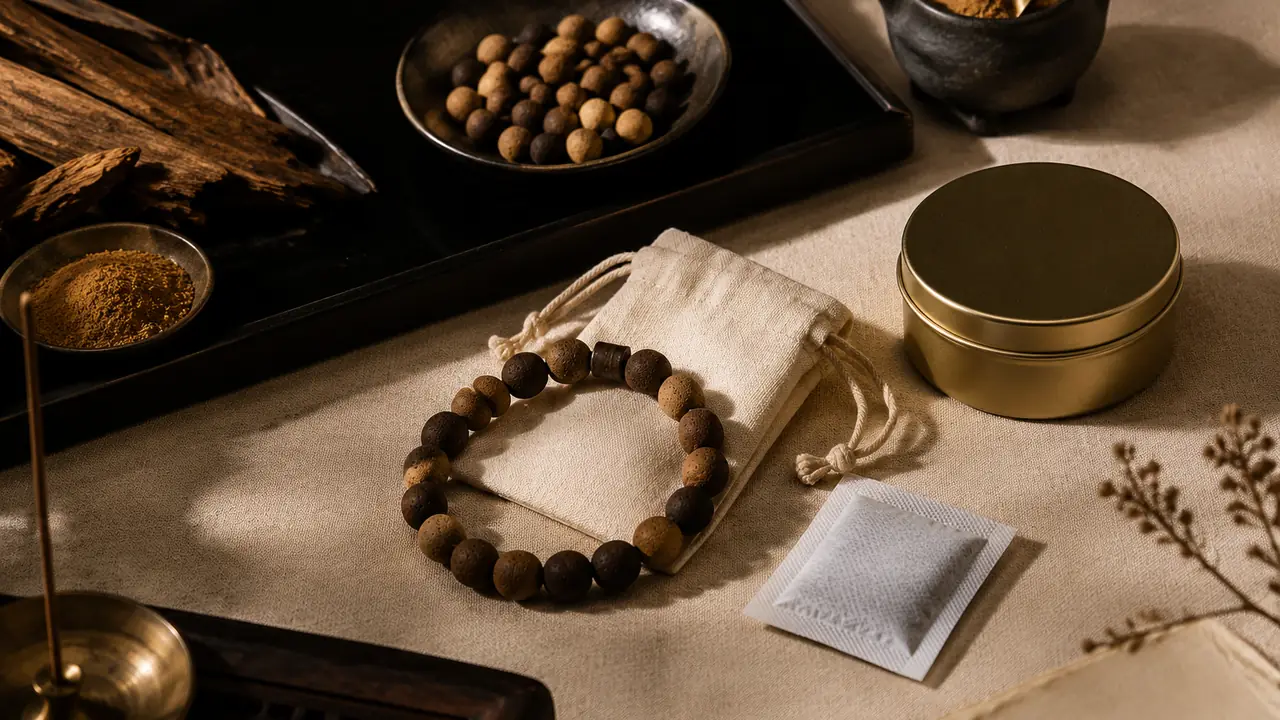
Why a bead goes quiet
An incense bead is aromatic all the way through, so it does not run empty in the way a scented coating does. What fades is the scent at the surface. Warmth, friction and air move the most volatile compounds out first, and over months of wear the outer layer of each bead thins in its lightest notes. Add a film of skin oil, hand cream or dust, and the surface barely releases anything at all. The inside, however, still carries the aged blend.
That is why revival is mostly a matter of exposing fresh material and letting scent redistribute, not of adding anything. Adding fragrance oil would only coat the surface, fade within weeks and change the ingredient declaration; it is not recommended. The standard specification contains no synthetic fragrance oil, and revival should keep it that way.
A five-step revival routine
- Wipe. Rub each bead gently with a dry, soft cotton cloth to remove dust and skin film. Use no water, soap or alcohol.
- Rest in a closed jar. Place the bracelet in a small sealed jar or foil pouch, ideally with a few other incense beads, for at least a day. Many workshops use a few days. The closed space lets scent redistribute from the core to the surface.
- Warm and handle. Hold the bracelet in a closed hand for half a minute, roll the beads between the fingers and smell them. Warmth and friction do the rest.
- Wear lightly for a week. Give the bracelet a few days of ordinary wear, then rest it again. Cycles of wear and rest work better than constant wear.
- Re-polish if needed. If wiping does not bring the scent forward, a light polish with a very fine, dry abrasive pad or a soft cloth exposes fresh surface. Ask the supplier before attempting this on gold-leaf or relief pieces.
The routine is gentle on purpose. Sanding hard or heating the beads is the most common mistake, and it can crack them or strip the best notes in one go.
What helps and what to avoid
| Action | Effect | Advice |
|---|---|---|
| Dry wipe with soft cloth | Removes film and dust | Safe; do first |
| Closed jar for a day or more | Scent redistributes | Safe; the most reliable step |
| Warm in hand and roll | Short-term scent release | Safe |
| Very light polish | Exposes fresh surface | Only if needed; go gently |
| Hairdryer, radiator, sun | Quick scent burst, then loss and cracks | Avoid |
| Water, soap, alcohol | Softens binder, strips scent | Avoid |
| Adding oil | Surface scent that fades; changes the declaration | Avoid |
How workshops do it
The revival routine is a small version of the last step of production. After drying, beads are polished and then aged in sealed jars so that the separate ingredients settle into one scent; a partner workshop will often keep a jar of finished beads for weeks before packing. A bracelet resting in a closed jar at home repeats that step. The same logic explains why beads that spend a long time in an open display lose character: they never get the closed rest that production gives them. When a retailer reports faint stock, the first question to the workshop is how long the beads were sealed before shipment and how they were packed. The making process guide describes the aging step in context.
Timing also matters. A day in a jar is a minimum; a week brings a clearer difference for older pieces. Do not rush the process by warming the jar. Room temperature is enough, and patience is what the beads respond to.
Reviving by line
Different formulas respond differently, and it helps to set expectations by line. Sandalwood beads, with their creamy heart, tend to recover well after a day in a jar and a warm hand; the milky note returns first. Agarwood beads respond more slowly but hold a deeper, longer base, so they often need a few days in a jar and are best revived by wearing in cycles. Fruit-and-wood formulas such as goose pear beads lose their sweet top notes first and settle into a woodier scent; reviving brings the heart back, not the fresh sweetness of the first weeks. Say so on the care card so that customers do not expect a bracelet to smell exactly like day one. Line details are on the sandalwood bracelet and agarwood bracelet pages.
Preventing the next fade
After revival, change one or two habits and the effect will last. Keep the bracelet sealed when not worn, in a pouch or jar away from heat and sun. Avoid applying perfume or lotion on the same wrist, or let them dry before putting the bracelet on. Rotate between two bracelets so each has rest time. Wipe the beads after wearing. These small habits, described in how to store incense beads, are the difference between a bracelet that stays present for years and one that needs revival every season.
When revival will not work
A few cases are beyond a home routine. If the beads are tacky, spotted or musty, they have taken on moisture and should be set aside; see preventing mold on incense beads. If a bead has no scent inside when cut, it was probably never aromatic throughout, which is a specification issue rather than an ageing issue; compare with incense beads vs scented wood beads. And if the beads have cracked or crumbled after heat or soaking, replacement is the practical answer. For retailers, a clear returns note helps: ask the customer for a photo, the purchase lot and a description of storage, so the desk can tell a care issue from a production one.
A service line for brands
Some brands turn revival into a service: customers send older bracelets back, or bring them to the shop, and receive a wipe, a jar rest and a light polish. This is low cost, builds loyalty and gives staff a reason to talk about the product. It works best if the shop keeps a sealed jar of reference beads from the approved lot, so the revived bracelet can be compared with a known-good scent. Restringing can be offered at the same time, since an old elastic cord and a faded scent often arrive together; see restringing incense bracelets.
To plan packaging, care cards or a retained-bead program with the partner workshop, send the brief through the quote form. Typical reference ranges are on MOQ and lead time, with terms confirmed in writing for each program.