
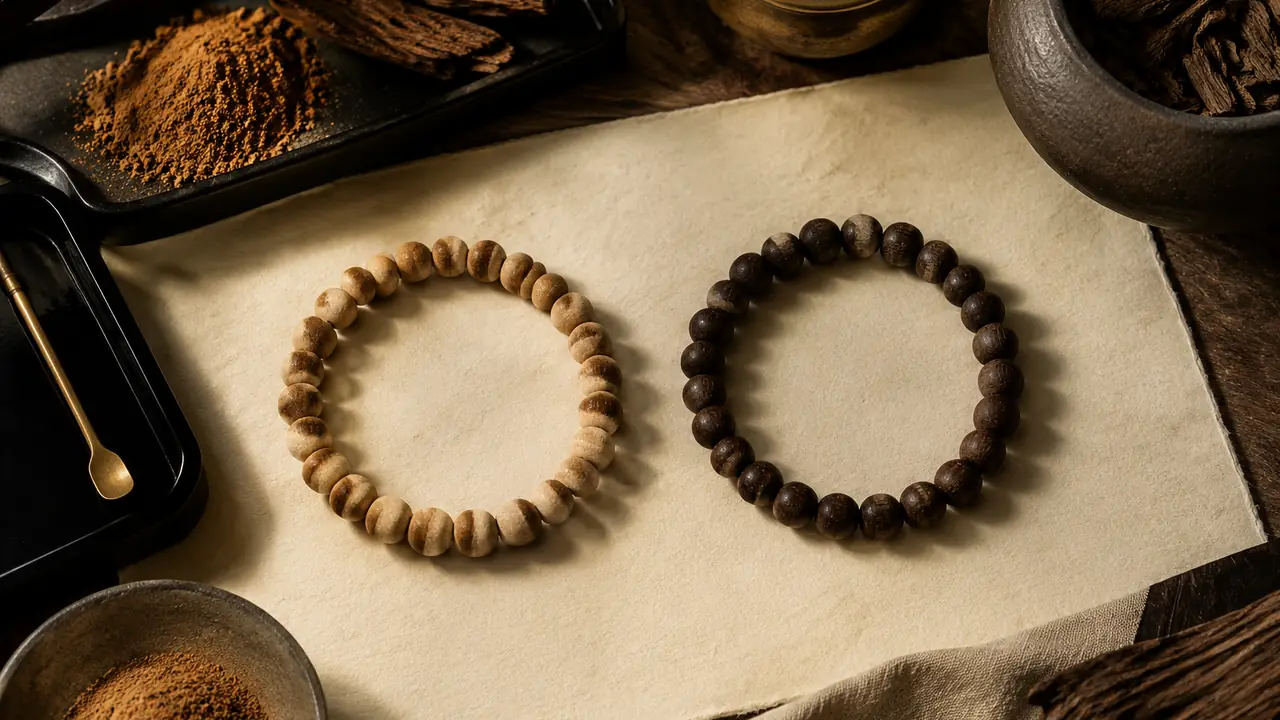
Two formats from one dough
An incense bead bracelet is a short strand sized to the wrist, usually strung on elastic, with 18 to 22 beads at 8 mm or 17 to 19 at 10 mm. A 108-bead mala is a long strand of 108 beads, usually at 6 or 8 mm, with a larger guru bead, often a tassel and sometimes a counter. The material is identical: ground aromatic powder, nanmu bark binder and honey, hand-rolled, shade-dried and aged. The difference is structure, use and the shop it ends up in. For the meaning of the number 108 in a strand, see why 108 beads.
Side-by-side comparison
| Criterion | Bracelet | 108 mala |
|---|---|---|
| Scent character | Close to the skin; warms quickly on the wrist | Wider presence when worn as a wrap or held; more beads add up |
| Scent life | Years with proper storage | Years with proper storage; more material overall |
| Weight and feel | Light; one small strand | Noticeably heavier as a whole strand, still light per bead |
| Documents needed | Ingredient declaration, origin, CITES for agarwood; metal report for findings | Same, with a larger powder volume per piece and tassel and guru bead materials declared |
| Typical channel | Fragrance and gift shops, jewelry boutiques, e-commerce | Yoga and meditation studios, retreat and temple shops, practice-oriented retail |
| Relative cost factors | Fewer beads, simple cord, lower material per piece | 108 beads to roll and pierce, guru bead and tassel, longer assembly time |
How each format is used
The bracelet is worn. It is an everyday accessory. Customers buy it for how it looks and smells, often as a gift. It sells on first impression, and it benefits from a clear scent story and good packaging.
The mala is used. It is carried, held, counted or worn wrapped around the wrist in multiple loops or around the neck. Customers who buy a mala usually have a reason connected with practice, and they care about structure: the number of beads, the guru bead and the way the strand hangs. Product copy should speak about the object and its use in neutral terms, without making claims beyond tradition or personal experience.
Many yoga and meditation shops stock both. A mala sells as the practice piece; a short wrist version made from the same beads sells as the entry price point, and a customer who buys the bracelet often returns for the full strand.
Production and cost differences
A mala needs several times as many beads as a bracelet, and every bead is rolled, weighed, pierced and dried by hand. Material per piece rises accordingly, but labor rises more, because assembly includes knotting between beads if the strand is knotted, attaching a guru bead and finishing a tassel. Hand knotting is slower than elastic stringing. That is why malas sit well above bracelets in price per piece even at the same bead size.
Lead time follows the volume of drying. Typical reference timelines for stock designs are in the ranges on MOQ and lead time, with the hand-rolling and drying window setting the pace for both formats, confirmed in writing for each program. A large mala order simply means more beads in the drying racks at the same time, which can extend a custom schedule.
Cord, knots and findings
Bracelets are normally strung on elastic for easy wear, with an option for silk cord. Malas are commonly strung on silk or cotton cord with a knot between beads, so that if the cord breaks the beads do not scatter. Guru beads, spacers and tassels are specified separately, and any metal parts need a material declaration, as described under incense beads with silver.
How to decide
- If your shop is fragrance, gift or jewelry focused, start with the bracelet.
- If your customers attend classes or retreats, start with the mala, and add a bracelet as the entry product.
- If your budget is tight, the bracelet carries a lower per-piece outlay and lets you test scent preferences first.
- If you want a single design that reaches both groups, develop one scent and offer it in both formats, with the same packaging family.
- If you serve temple or retreat buyers, ask about traditional structure requirements early, such as a guru bead, tassel and knotting style.
Customer expectations and copy
Customers judge the two formats by different standards. A bracelet buyer asks whether it fits, how it smells and whether it suits a gift. A mala buyer asks about the number of beads, the cord, the knotting, the guru bead and the way the strand hangs, and may notice a bead that is slightly off in size more readily because the strand is read bead by bead. Product pages for malas should therefore state the bead size, the count, the cord type, the finish of the guru bead and the tassel material in plain terms, while pages for bracelets can lead with scent and look.
Copy for malas should stay neutral and practical. Describe the structure and the materials, and say that the scent is released by warmth and handling. Traditional associations with practice can be mentioned as traditions, without claiming any effect on the user. Retreat and temple buyers in particular value restraint in the wording, and they will usually ask for plain, understated packaging rather than decorative boxes.
Finally, plan sampling accordingly. A mala sample takes longer to assemble than a bracelet sample, so allow for it in your launch calendar, and ask the workshop to show the knot spacing and the tassel before the full run is approved.
Packaging and display
A bracelet fits a small box or pouch and can hang on a retail card. A mala is longer and needs a pouch or a rigid box wide enough to hold the strand without kinking the cord. Display matters: a mala hangs well on a peg or hook, while bracelets stack in a tray. Both need a sealed inner pack with a desiccant so the scent stays inside until the customer opens it. See packaging and gift boxes for options.
When you have chosen, send the format, bead size, count, cord and packaging through the quote form. The desk will shortlist partner workshops, return a formula sheet and confirm the reference minimums and lead time in writing for the program.