
The retail fit
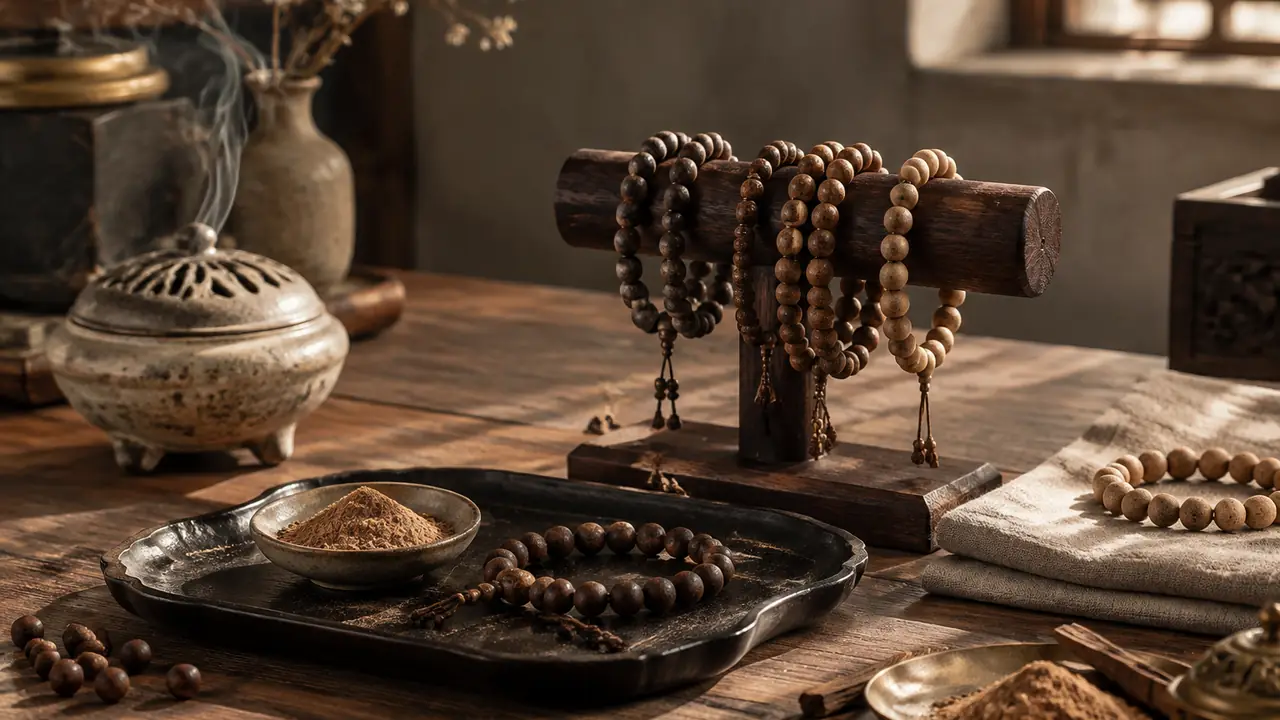
Spa and wellness retail has a recognizable shape. A small front counter, a few shelves, a loyal clientele that already trusts the venue's taste, and a strong preference for products that feel considered rather than mass-market. Candles, room sprays and body products dominate, which makes the category crowded and price-compared. Incense beads give the shop something different: a wearable scent that is dry, travels easily, needs no refill and does not leak in a handbag.
They also solve a quiet operational problem. Liquid products carry shipping restrictions, breakage and leakage risk; beads are light, shelf-stable when sealed and simple to pack. A shop can offer an in-store sample, send a bracelet by post to a customer who could not buy on the day, or include a small piece in a gift card envelope without special handling.
Scent direction that suits the setting
Spa customers tend to respond to soft, warm and woody profiles. Two lines cover most needs, and a third is useful for variety.
| Line | Sensory character | Where it fits |
|---|---|---|
| Sandalwood | Creamy, milky wood, warm and gentle | Entry bracelet, gift, most customers |
| Agarwood | Resinous, deeper, slower to develop | Premium shelf, repeat customers |
| Goose pear formula | Sweet, rounded, fruit and wood | Seasonal item, a distinct story |
Detail on each is on the sandalwood bracelet and goose pear beads pages. Keep the story simple: the scent is the material, bound by nanmu bark powder and a little honey, with no synthetic fragrance oil in the standard specification, confirmed in writing for each order.
Formats for a spa shop
- Bracelet. An 8 mm strand of 18 to 22 beads is the core item. It is light enough to wear through a service and does not need removing for most sessions.
- Bracelet and sachet set. A bracelet with a small cloth sachet of aromatic powder or flakes, boxed as a gift. Useful for loyalty programs and seasonal campaigns. See bracelet and sachet sets.
- Tablet pendant or room charm. A pressed tablet with a relief pattern, hung on a hook in a changing room or wardrobe, is a quiet way to present the scent in the venue itself.
- Single bead tester. A small tin with one loose bead per scent lets customers compare without opening sealed stock.
Presentation in a service setting
In a venue where the air already carries scent from oils, candles or steam, a bead's gentle output can be lost. Place the tester away from competing scents, offer it on the back of the hand, and let the customer warm it for half a minute. The scent is released by warmth and touch, not by projection, so it should be experienced in the hand. A shelf close to the entrance, with a clear card naming each scent in plain sensory terms, performs better than a display deep in a corridor.
Humidity is the other consideration. Spas are warm and often damp, with steam rooms, hydro areas and laundry. Keep sealed stock in a dry cupboard rather than on a shelf near the wet area, and use closed tins for display testers. Beads are shade-dried to a stable weight and kept dry; prolonged damp exposure can dull the surface or, in the worst case, grow mold. A silica gel sachet in the storage box is cheap insurance.
Writing about the product
This is the area where wellness retail most often goes wrong. Incense beads may be described in sensory and traditional terms. They are traditionally associated with quiet moments and ritual, and many users describe the scent as calm or comforting. Shops should not write that the beads relieve stress, aid sleep, support health or affect the body in any way, nor should therapists or front-desk staff say so verbally. Authorities in several markets regard such statements as health claims, and a scented accessory does not carry that evidence. The line is explained in more detail in the notes on compliance and certifications.
Useful alternatives: describe the scent (warm, creamy, resinous), the material (sandalwood, agarwood, nanmu bark binder), the making (hand-rolled, shade-dried, aged) and the use (worn on the wrist, kept in a pocket or bag). That is persuasive enough, and it is accurate.
Seasonal and venue programs
Spas and wellness shops run on seasons: a winter gift period, a spring reset campaign, a summer travel edit. Incense beads adapt to this calendar without new tooling. The same dough can be offered in a seasonal colorway of cord or tassel, a limited scent such as the fruit-and-wood goose pear formula, or a boxed set with a printed card that names the season. Because the beads are shaped and dried by hand, lead time for a custom formula is longer than for a stock line, so seasonal plans should start early. Reference timelines are about 25 to 40 working days for a regular batch and 40 to 60 days for a custom classical formula, confirmed in writing per order.
Venue programs can go further. A hotel spa or day spa can place a small charm in each gift bag, include a bracelet in a package booking, or sell a bead set as a take-home version of the signature scent in the service suite. Where the venue wants the product to match a room scent, ask the sourcing desk to compare the approved sample against a reference and keep a retained bead from the lot, so repeat orders stay consistent with the first delivery.
One more practical point is staff training. A ten-minute briefing covering the material, the making, the care rules and the wording boundaries prevents most of the problems a shop meets later. Give the team the same one-page sheet that goes into the customer box, and ask them to demonstrate the warming test, not to describe benefits.
Sizing a first order
A spa shop rarely needs depth. Two scents in one bead size, sandalwood and a second, and perhaps one boxed set for gifting, is a sensible opening range. Stock bracelets are typically available from about 50 to 200 pieces per design, while a branded or boxed version with the venue's name usually starts at a higher level, in the range of several hundred pieces per design. These are reference ranges, not offers; the desk confirms terms in writing for each program, and the working ranges are on MOQ and lead time.
- Pick two scents and one bead size, usually 8 mm.
- Choose cord, finish and whether a sachet set is included.
- Decide packaging: a small box with a foil pouch and a care card keeps the product sealed on the shelf.
- Request samples and compare them for scent after a day of wear, not only on first opening.
- Place the order and keep one sealed sample strand as a quality reference.
Start the process with the quote form, or look at packaging choices on the packaging and gift boxes page first.