
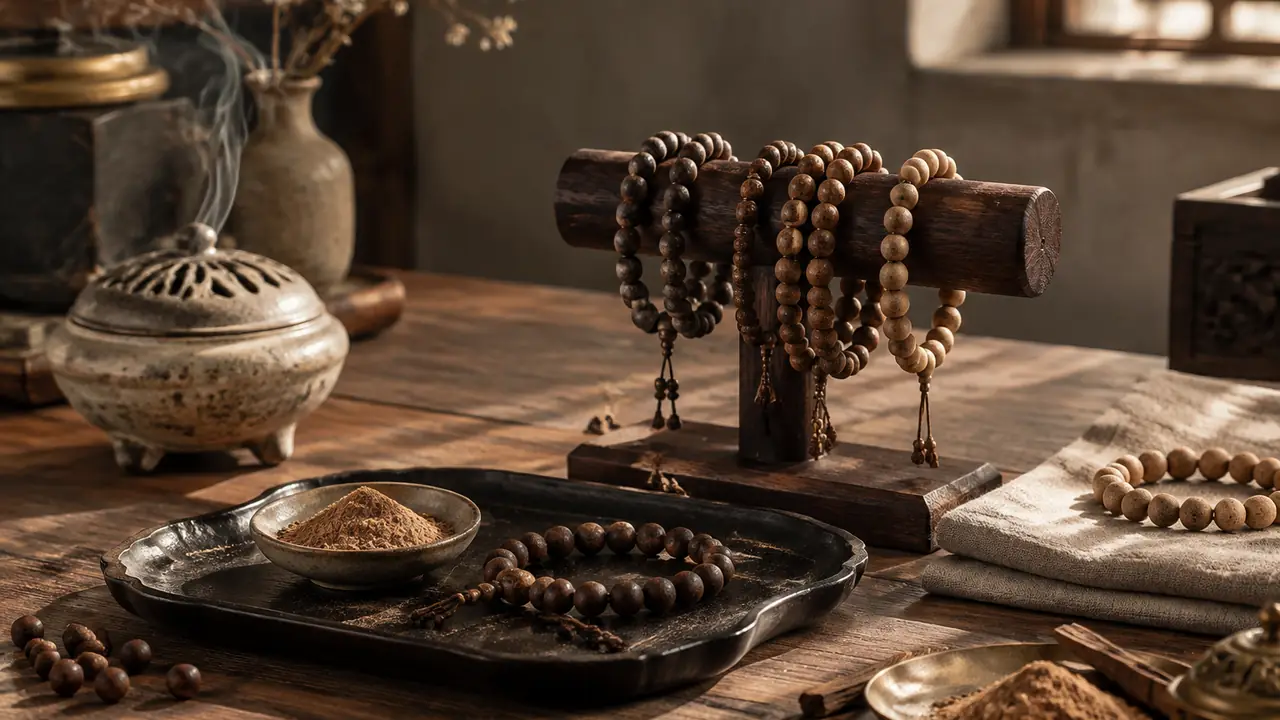
Why beads work as favors
Favors have three jobs: to say thank you, to be small enough for every guest, and to feel considered. Edible favors depend on dietary rules and shelf life; candles are heavy and can melt. An incense bead piece is dry, keeps for years with proper storage, and takes almost no space in a guest bag. Because the scent is released by warmth and touch, the piece reveals itself gradually, which suits a keepsake better than a fragrance that fades in a day.
The product also adapts to different tastes. A short charm for a bag or a key ring suits guests who do not wear jewelry; a slim bracelet suits those who do; a tablet with a pressed pattern or initials sits in between, as something to hang in a car or a closet.
Favor formats
| Format | Typical spec | Notes for events |
|---|---|---|
| Bag or key charm | 3-5 beads, 6-10 mm, knot and tassel | Lightest, easiest for large guest lists |
| Slim bracelet | 6 or 8 mm, elastic cord, card | Count varies by wrist; use a standard size and elastic |
| Tablet pendant | Pressed 30-50 mm, 3-6 mm thick, relief or initials | Personal marking possible, mold needed |
| Bracelet and sachet set | Bracelet with cloth sachet | Better for the wedding party and family |
Many planners use two tiers: a charm or short bracelet for all guests and a boxed set for the wedding party and parents. The product lines are on the pages for car and bag hanging beads, tablet pendants and bracelet and sachet sets.
Personalization that works
Round beads are too small for text, so personalization lives on the packaging and the tablet. Realistic options are a printed or stamped tag, a card with names and a date, a colored cord or tassel matching the event palette, and an intaglio mark or initials on a tablet. Tablet molds take time to cut, and fine lettering softens over time, so choose bold shapes and short text. Colored thread and tassels are cheap to vary and give a strong visual match for a color theme.
It is worth keeping the personalization to a single element per piece. A tag with names, a custom tassel and a custom mold adds three approval stages, each of which can delay delivery. The branding process is described in OEM and private label, and packaging options in packaging and gift boxes.
Quantity and timing
Event orders often involve a few hundred pieces, which sits above the stock minimum for many designs. Reference ranges are about 50 to 200 pieces per design for stock bracelets and about 300 to 1,000 per design for branded or boxed programs, both confirmed in writing for each program. Lead times are set by sampling, hand-rolling and drying.
| Stage | Reference range |
|---|---|
| Stock sample | 5-10 working days |
| Custom formula sample | 15-25 days including drying and aging |
| Ready line, bulk | 15-25 working days |
| Regular batch | 25-40 days |
| Express shipping | 3-7 days |
| Air freight | 5-10 days |
For a wedding, work back from the date: shipping to the venue, a buffer of two weeks for delays and replacements, then production, then sampling and artwork approval. Three to four months is a comfortable window for a branded program; stock items without printing can move faster. Because the date cannot move, ask the desk to confirm the timeline in writing before committing.
Practical points for planners
- Allow extra. Order a few percent over the headcount, for late additions and damage.
- Choose neutral scents. Sandalwood is soft and widely liked; strong or sweet scents divide guests. Check that guests with sensitivities will not be bothered, since a sealed pouch limits exposure.
- Wrap individually. A small foil or paper pouch keeps scent in and dust out, and it makes display on a table easier.
- Prepare a short card. Say what the piece is, what it is made from and to keep it dry. Do not promise luck, health or any effect.
- Watch customs and venue rules. If the favors travel across borders, include the packing list and ingredient declaration in the shipment.
Presentation at the venue
How favors are laid out affects how guests handle them. Pieces left loose on a table are often picked over and left behind, while a favor placed at each seat with a name card is almost always taken home. For a standing reception, a small tray or basket near the exit with a short sign works well, provided it is topped up during the event. Keep the pieces out of direct sun and away from heaters and candles, since heat drives off the lighter notes of the scent before the guests arrive. If the event is outdoors in a humid season, hold the stock sealed until just before guests are seated and place a desiccant sachet in the storage box.
Ask the venue about table decorations and floral scents too. A heavily scented centerpiece can mask a favor entirely, which is a reason to let guests smell the piece away from the table, for example when they collect it on departure. A short printed line on the tag, such as warm the beads in your hand to release the scent, teaches guests how to enjoy the favor without any staff explanation.
Cultural considerations
Wedding customs vary widely across cultures, and colors, numbers and symbols carry different meanings. Neutral earth tones and simple cords are safe in most markets, while red, white or gold can have strong associations depending on the audience. Where a favor is meant for a specific cultural tradition, ask the planner or the couple what is suitable, and keep any religious imagery out of the product unless it has been requested. The sourcing desk can adjust cord color, tassel and card style, but the design decision belongs to the buyer.
How to start
- State guest count, delivery date and destination.
- Choose a format and one personalization element.
- Select a scent direction and bead size.
- Approve a physical sample and card proof together.
- Confirm quantities with a small overage and book shipping.
Send the brief through the quote form; the desk will return options and a written timeline. Reference ranges are also listed on MOQ and lead time.