
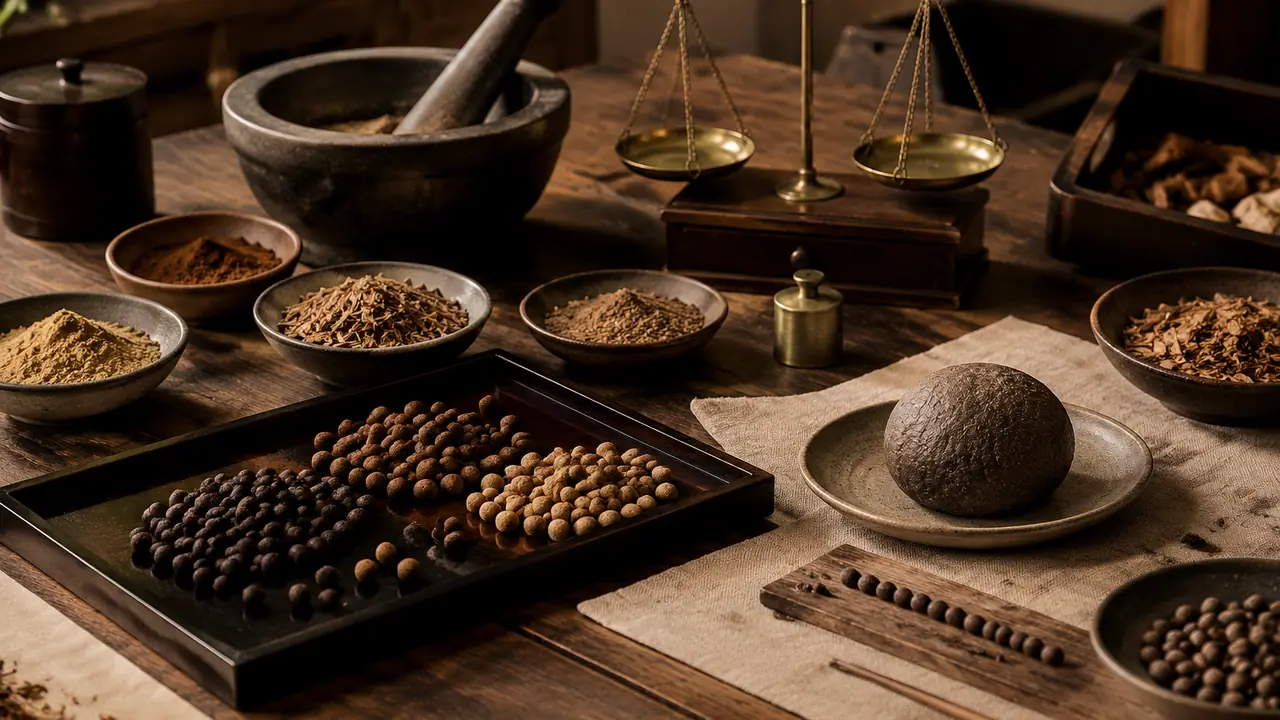
What custom blending means here
A custom blended incense is a formula that belongs to your brand. It may begin with a historical text, with a house scent you describe in words, or with a modification of an existing line such as adding a botanical or changing the sandalwood share. Ouvare does not run a single workshop; the desk shortlists partner ateliers in the Fujian and Guangdong incense clusters according to the formula type, briefs them, and manages the sample rounds, inspection and shipment. The result can be hand-rolled beads, tablets for pendants, or pills, all using the craft described in how incense beads are made.
Because the scent develops during drying and aging, a custom formula cannot be judged from a fresh sample. Each round takes time, which is why custom programs are planned in weeks rather than days.
Development steps
- Brief. You supply scent words, bead size or format, finish, packaging, target market and any restrictions, such as an origin requirement for sandalwood or a no-honey request.
- Formula sheet. The desk drafts ingredients and percentages by weight. Reading the sheet is explained on blended incense beads.
- Sample rounds. One to three rounds, each with drying, polishing and aging. You compare scent on the skin and over several days, not only on the first sniff.
- Retained sample. The approved sample is sealed and kept as the reference for scent, color and size.
- Batch. Production follows the sheet; beads are checked against the retained sample before packing and shipment.
Ancient formulas as starting points
Many custom programs begin with a historical recipe because it brings a story and a proven balance of ingredients. The Song dynasty Chen Shi Xiang Pu and the Ming compendium Xiang Sheng record dozens of compound incense formulas, each listing ingredients in liang and qian. A workshop cannot copy such a text directly into a bead: the original is for burning as loose powder or cakes, so the ingredients must be re-balanced with a binder, ground finer and dried differently. The desk and the atelier make that translation, and you decide how closely to follow the text. The best-known example is the formula behind goose pear incense beads, and the wider background is on ancient incense formulas.
What you can specify
| Option | What changes | Effect on the program |
|---|---|---|
| Base wood ratio | Sandalwood, agarwood and other powders | Scent character and documents needed |
| Botanical accents | Added herbs, flowers or fruit | Another sample round |
| Bead size or tablet | 6-20 mm beads, or a pressed tablet | Weight, drying time, mold needs |
| Engraving | Intaglio logo on tablets | Mold or carving cost, MOQ |
| Finish | Matte, polished, gold-leaf fleck | Surface treatment step |
| Packaging | Pouch, jar, gift box | Branded packaging minimums |
Anything you add is recorded on the formula sheet and confirmed in writing, so the batch can be compared with the retained sample.
Documents and compliance
Custom blends that use agarwood require CITES documentation per lot because the genus Aquilaria is listed in Appendix II; read the agarwood guide for what that means in practice. Blends with sandalwood carry an origin statement per lot, as covered in the sandalwood guide. The standard specification excludes synthetic fragrance oils and industrial glue; if you want an exception, it is sampled and confirmed in writing. Incense products are sold as sensory goods, and the desk will not draft label copy that implies health benefits; scent descriptions stay with words such as warm, creamy, resinous or sweet.
Choosing a format for the formula
The same formula can be cast in several shapes, and the shape changes how it behaves. Round beads suit bracelets and necklaces and need hand rolling, piercing and the longest drying time. Pressed tablets suit pendants and bag charms; they dry faster and can carry an engraved logo, but they are flatter and release scent from one face. Pills, small unpierced spheres, are used for burning or for sachets and need less finishing. The desk will say which format fits your channel before the first sample, because switching format late means starting the drying clock again.
Plan the retained sample as a living reference. It is kept sealed, and every batch is compared with it for color, size and scent. If you later launch a second size or a gift-box edition of the same scent, the retained sample is the anchor that keeps the family consistent across lots.
Ordering notes
A custom blend typically starts from about 500 pieces and includes sample rounds. A formula sample commonly takes 15-25 days because of drying and aging, and a batch about 40-60 days, since hand rolling and shade-drying of 7-10 days are the bottleneck. Branded packaging usually starts from about 300-1,000 pieces. These are typical reference ranges confirmed in writing for each program. See MOQ and lead time and the family overview loose beads and custom formulas, then send the brief through the quote form.