
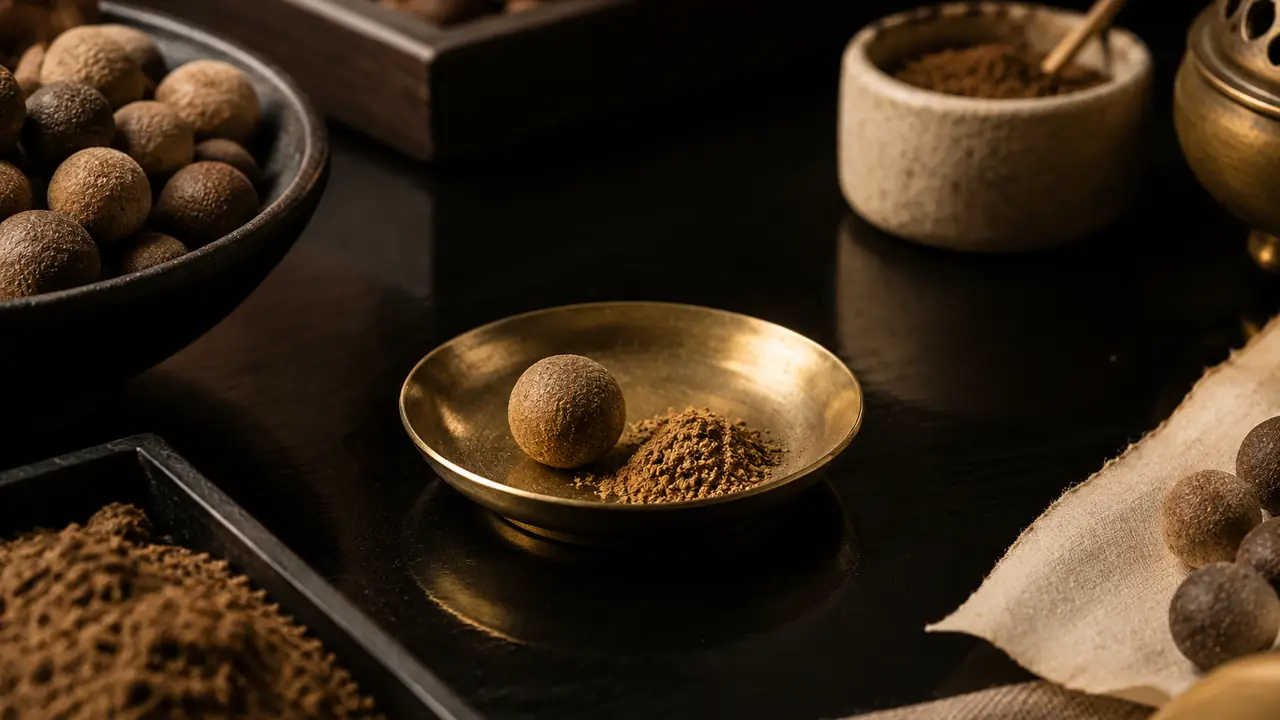
What nanmu powder is
Nanmu powder is a fine, pale powder ground from the bark of trees in the Phoebe genus, grown in southern China. Sold under names such as nanmu bark powder, it is known in the incense trade as a plant binder: when mixed with water it releases a mucilage that turns the dough sticky and cohesive. Once the dough is shaped and left to dry, that mucilage sets and the bead becomes firm. The binder carries little scent of its own, which is why it can hold a sandalwood or agarwood bead together without dominating the blend.
The same powder has a long history outside beads. It is the traditional binder for stick incense, where it holds the aromatic powder around a bamboo core, and incense makers in the Fujian clusters, including Yongchun, work with it routinely. Using it in beads follows the same principle on a smaller scale.
Why a bead needs a binder
Aromatic wood powders are dry and brittle. Pressed alone, they crumble. Adding water helps a little, but the shape collapses when it dries. A binder solves three problems at once.
- Forming. The mucilage gives the dough enough tack to be rolled between the palms into a smooth sphere.
- Hold. When dry, the binder sets the powder into a firm bead that can be pierced with a steel pin and strung.
- Durability. A well-bound bead resists chipping and keeps its surface through years of wear.
Without a plant binder, workshops would have to use an adhesive. Industrial glue can work but it changes the ingredient declaration, may alter the scent and is not part of the standard specification described here. The native binder keeps the bead entirely botanical, which is the point of the product.
How much is used
Binder content is a balancing act. Too little, and beads crack or crumble; too much, and the binder dilutes the scent and the bead becomes harder and heavier. A common working figure is nanmu powder at about 25 percent of the total powder weight, with honey and water added as plasticizer. The exact ratio depends on the main aromatic: dense, oily agarwood powder behaves differently from dry, fine sandalwood, and a formula with sticky resins may need less binder.
| Component | Example share (by weight) | Role |
|---|---|---|
| Aromatic powder (for example sandalwood) | About 60 | Scent and character |
| Nanmu binder | About 25 | Cohesion and strength |
| Honey and water | About 10 | Workability and a rounded scent |
| Botanical accents | About 5 | Tuning the blend |
This is an example of a standard formula, not a fixed rule; the exact figures appear on the formula sheet for each line. The sandalwood bracelet page lists the formula for that line.
How the binder behaves in the workshop
When nanmu powder meets water it takes a little time to swell, which is one reason the dough is rested for about 24 hours after mixing. During that rest, the mucilage hydrates evenly and the dough becomes smooth and elastic. A dough that was rolled too early can feel grainy and crack later. After rolling, the beads dry slowly in the shade over five to ten days; a binder-rich bead dries with a firm shell, so too much heat or sun at this stage causes surface cracks. After drying, polishing and a period in a sealed jar finish the job. The whole sequence is on the making process page.
In humid climates, plant binders attract moisture, so finished beads should be sealed with a desiccant. That is a storage matter and a good reason to specify foil pouches or tins with every order.
Quality points for the powder itself
Not every nanmu powder is equal. The bark is dried, cleaned and milled, and the fineness of the powder decides how evenly it mixes with the aromatic base. A coarse or contaminated binder leaves grit in the dough, which shows up as pitting on the bead surface and uneven strength. Moisture is the other variable: powder that was stored damp has lost some of its binding power and may carry mold. Reputable partner workshops keep binder in sealed containers, sieve it before use and keep a record of the lot used for each batch.
For a buyer, three simple checks are enough. Ask for the binder lot to be recorded on the batch sheet. Ask for a cut bead from the sample to be inspected for even, pit-free texture. And ask for a hardness check by finger pressure on a random pull from each production lot, since a bead that dents easily or crumbles on pressure is under-bound.
Nanmu compared with other binders
| Binder | Type | Effect on bead |
|---|---|---|
| Nanmu bark powder | Plant mucilage | Neutral scent, firm bead, botanical declaration |
| Honey and beeswax | Natural sweetener and wax | Softer pellets, used with nanmu in small amounts |
| Starch or sticky rice | Plant starch | Used in some pellets, tends to be weaker when wet |
| Industrial glue | Synthetic adhesive | Strong hold, but not botanical and not in the standard spec |
A deeper side-by-side is in nanmu binder vs synthetic glue, and the role of honey is covered in honey, nanmu and plant binders. The rule is simple: if a bead is sold as natural, the binder should be natural and should be named on the formula sheet.
What to ask a workshop
- What binder is used, and what share of powder weight does it make up?
- Is any synthetic adhesive or fragrance oil used? The standard answer should be no, confirmed in writing.
- Where does the nanmu powder come from, and is the lot documented?
- How long is the dough rested before rolling?
- How are beads packed against moisture after drying?
The answers tell you quickly whether a workshop follows the traditional method. They also give your own compliance team the facts it needs for an ingredient declaration. When you are ready to specify a program, include the binder requirement in the brief you send through the quote form.
The practical takeaway
Nanmu powder is not glamorous, but it decides whether a bead is firm, clean-smelling and truly botanical. If you read a formula sheet and see the binder named and quantified, you are dealing with a workshop that takes the specification seriously. If the binder is missing or vague, read that as a flag. Reference ranges for minimums and timelines, which depend on the formula and the format, are on MOQ and lead time.