
One material, five formats
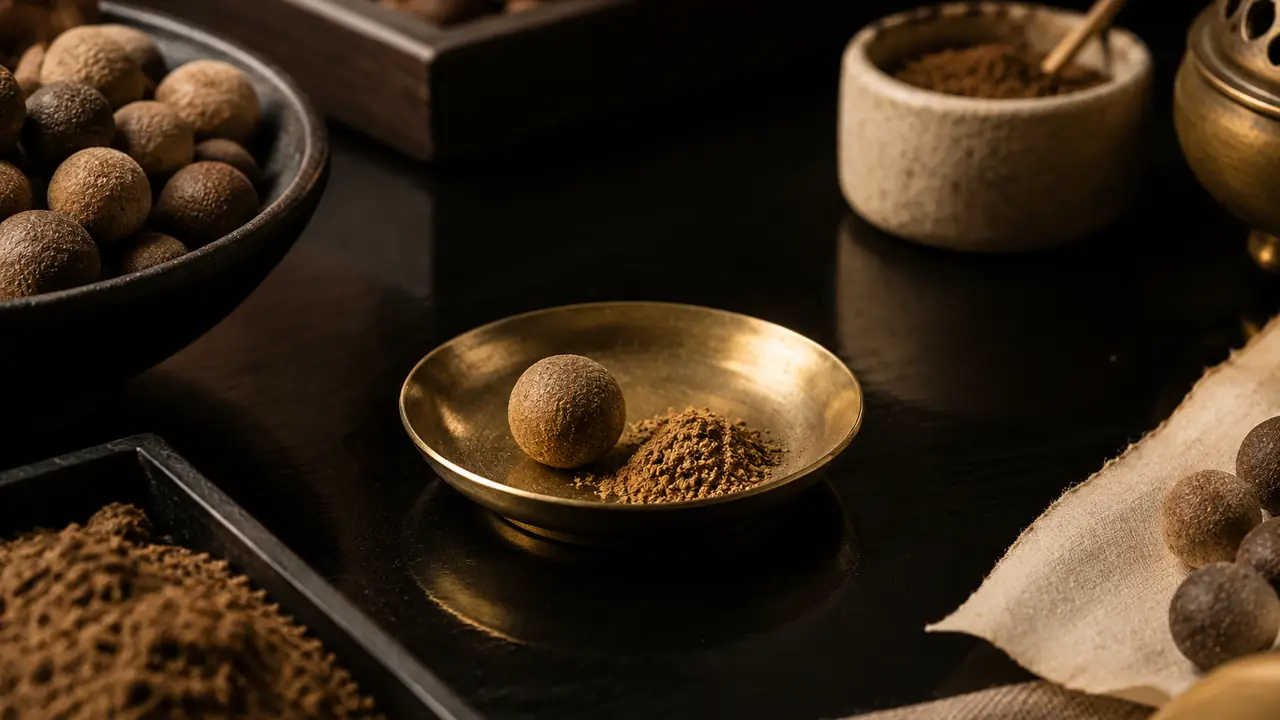
All wearable incense uses the same core: a dough of aromatic powder and plant binder shaped by hand or in a mold, dried and aged. The format decides how it is worn, how it releases scent and who buys it. The five formats below cover most programs.
| Format | Typical spec | Worn or carried | Typical buyer |
|---|---|---|---|
| Bracelet | 8 mm, 18-22 beads, elastic or silk cord | On the wrist | Fragrance brands, gift, e-commerce |
| 108-bead strand | 6 or 8 mm, guru bead, tassel or counter | Wrist wrap, neck, hand | Yoga and meditation studios, retreat shops |
| Tablet pendant | Pressed tablet, 30-50 mm, 3-6 mm thick, cord or tassel | Neck or bag | Jewelry brands, gift |
| Car and bag charm | A few beads, knot, tassel | Hung in car or on bag | Lifestyle stores, e-commerce |
| Silver set | Beads with 925 silver or plated spacers and clasps | On the wrist or neck | Jewelry brands, boutiques |
Bracelets: the entry format
The bracelet is the easiest format to sell because customers understand it immediately. An 8 mm bracelet usually has 18 to 22 beads, depending on wrist size and cord stretch; a 10 mm bracelet usually has 17 to 19. A typical 8 mm bead weighs about 0.3 to 0.5 g, so a full strand is light. Most are strung on elastic for easy wear, while silk cord with a knotted closure suits a premium presentation. Sandalwood is the usual starting line because its milky scent is easy to like; agarwood sits higher in price and character. Details on both lines are on the sandalwood bracelet and agarwood bracelet pages.
Pendants and tablets
A tablet pendant is made from incense dough pressed into a mold, then dried and finished. It offers a flat surface that bead formats lack, so it can carry a relief pattern, an engraved logo or a short inscription. Typical tablets run 30 to 50 mm across and 3 to 6 mm thick. They are lighter than they look, and they suit buyers who want brand marking, such as jewelry labels or hospitality programs. Because the surface is flat, fine relief shows wear sooner than on a bead, so design depth should be chosen with care. See incense tablet pendants.
Charms for car and bag
Hanging charms use a handful of beads with a knot and tassel. They are bought as small gifts and as impulse items, and they reach customers who would not wear a bracelet. The specification differences are practical. A car charm sees heat and sunlight, so the cord should not melt or fade, and the beads should be free of added chemical fragrance that could off-gas in a closed cabin. Packaging should state that the charm should not be left on a hot dashboard. The specifics are on the car and bag hanging beads page.
Combining beads with metal
Silver and plated findings turn an incense bracelet into a jewelry piece. Spacers, caps, charms and clasps have to match the bead holes, which commonly run 1.2 to 2.0 mm, and should be declared by material: 925 silver or copper with silver plating. For the EU and US markets, findings need checking against nickel release and heavy metal rules for jewelry in the target market; test names such as REACH and CPSIA can be cited, and the requirements are verified per lot. Pairing details are covered in incense beads with silver.
Building a small range
- Start with one scent family, such as sandalwood, in two bead sizes.
- Add one contrasting scent, such as agarwood or a fruit-and-wood formula, in the same size.
- Add a format that reaches a different customer, such as a pendant or a charm, using the same dough.
- Add a gift format, such as a bracelet and sachet set, only after the core formats sell.
Using one dough across formats keeps development cost low, makes sampling simpler and makes the scent consistent across the range. It also means a single formula sheet and one set of ingredient documents cover several SKUs.
What stays the same across formats
- Ingredient declaration. Botanical powders, nanmu bark binder and honey, with no synthetic fragrance oil in the standard spec.
- Storage. Sealed bags or tins with desiccant, away from heat and direct sunlight.
- Care. Keep away from water; wipe, do not wash. See how incense beads release scent.
- Compliance. CITES documents for agarwood lots; metal reports for findings; no health claims.
The wording about benefits matters. Incense jewelry can be described as traditionally associated with calm moments and ritual use, and customers often describe the scent as relaxing in their own words, but copy should not promise any physical or health effect.
Packaging and display
Wearable incense has a particular packaging need: it must stay sealed until sold so the surface scent does not leak away, and it must stay dry in transit. Most programs use a small kraft box or tin with an inner foil pouch and a silica gel sachet, plus a care card. For retail display, open testers are useful but should be replaced regularly, since a tester left on a counter for weeks loses its freshness and gives the wrong impression of the stock.
Presentation also affects how the format is perceived. A bracelet in a cloth pouch reads as a personal accessory; the same bracelet in a rigid box with a card reads as a gift. A pendant on a printed card with the scent family named reads as jewelry. Decide on the presentation early, because box size changes freight volume and lead time, and artwork changes need approval before print. The options are laid out on the packaging and gift boxes page.
Getting a first quote
For a first inquiry, send the format, bead size and count, material line, findings and packaging, plus a rough quantity per design. Typical MOQ for stock bracelets is in the range of 50 to 200 per design, while branded or boxed programs usually start higher; these are reference ranges and are confirmed in writing for each program. Use the quote form, or read the ranges on MOQ and lead time first. Also compare the full set of lines in the product catalogue.