
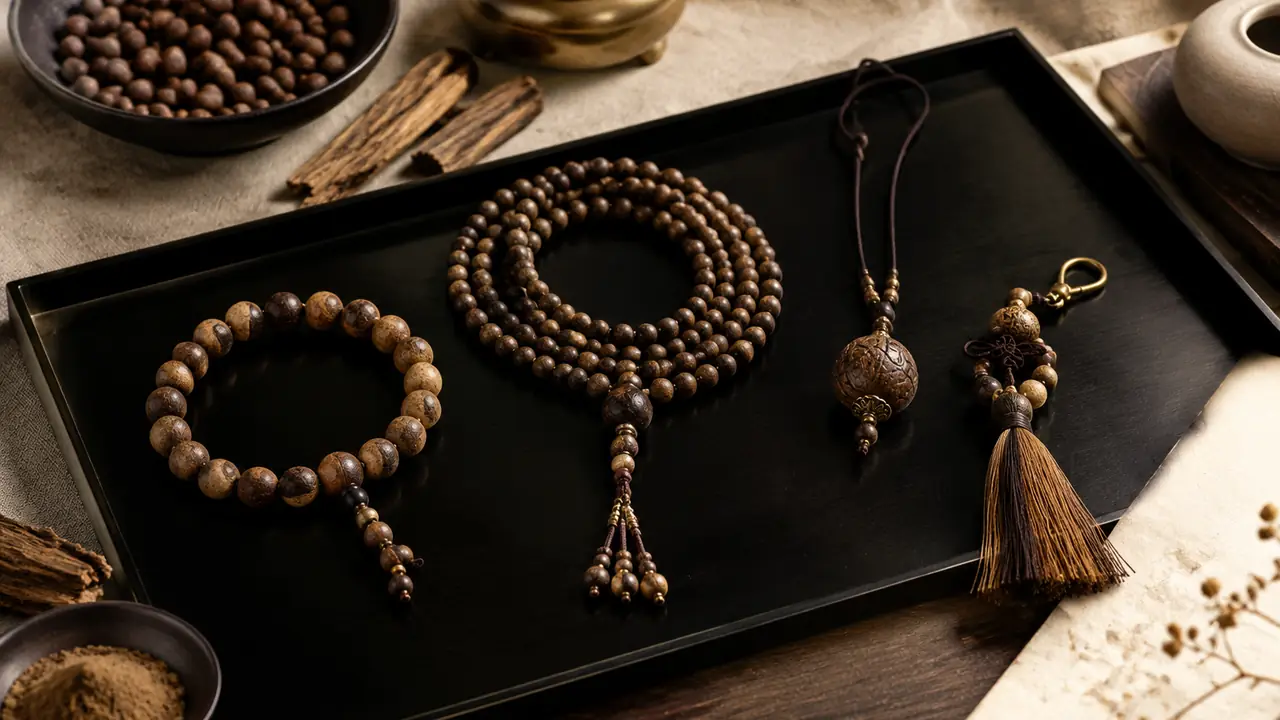
What a sandalwood bracelet is made of
A sandalwood incense bead is not a carved sandalwood bead. It is rolled from ground sandalwood heartwood, bound with nanmu bark powder and a little honey, then shaded-dried and aged. The scent comes from the powder itself, so the bead smells the same through its whole volume. The standard specification uses no synthetic fragrance oil and no industrial glue, confirmed in writing for each order.
A typical formula sheet for the standard version lists a majority share of sandalwood powder, a quarter-weight style binder, a small amount of honey and water, and optional botanical accents. The line page shows the sheet in full; the point for a buyer is that the percentages can be read, compared and approved before any beads are rolled. The binder is explained in the nanmu binder guide.
Origin wording that holds up
The word sandalwood in trade copy covers several things, so the wording matters. The species used for the standard line is Santalum album. Origin is stated per lot: either Australian plantation wood or legally sourced Indian wood, depending on what the partner workshop holds at the time. Santalum album is listed as vulnerable by IUCN, is not a CITES Appendix species, and India restricts the export of sandalwood, so the legal mainstream supply is plantation material. Laoshan, often written as old mountain sandalwood, is a trade term for old Indian stock; it should only be used where the actual lot supports it.
Practical rule: write the origin the workshop documents, not the one that sounds best. A lot sheet with species, origin and supplier declaration is better than an adjective. Background is in the sandalwood guide, and the question of legality is taken up in sandalwood legality and sourcing.
Sizes, counts and weight
| Bead size | Typical count | Best for |
|---|---|---|
| 6 mm | Set on the approved sample | Slim bracelets, layering, 108 strands |
| 8 mm | 18-22 beads | The default core SKU |
| 10 mm | 17-19 beads | Fuller or men's bracelet, premium variant |
| 12 mm | Set on the approved sample | Statement bracelets, accent beads |
An 8 mm bead typically weighs about 0.3-0.5 g, so a whole bracelet is light on the wrist. Counts depend on wrist size and cord stretch, and are agreed on the sample. If you serve a wide range of wrists, keep the bead size fixed and change the count by one or two beads rather than changing the diameter; it is simpler to stock. More detail on diameters is in incense bead sizes explained.
Scent direction and how to describe it
Sandalwood beads read creamy, milky and warm, with a soft woody base. Many users describe the scent as calming; retail copy should stay with sensory words and avoid any promise about the body. The scent is quiet in the box and grows with body heat and friction, which is how a wearable bead is supposed to behave. Sandalwood also ages gracefully: lighter top notes fade over months while the woody heart stays, so customers who keep the bracelet sealed when not worn will find it keeps its character for years with proper storage. The release mechanism is explained in how incense beads release scent.
Because the character is soft, sandalwood pairs well with additions. A single botanical accent such as a small share of osmanthus or clove can lift the scent without turning it into a different line. If the accent is more than a minor share, handle it as a custom formula and ask for a separate sample round. Keep the accent list short and written down, so every later lot can be checked against the same sheet, and so the ingredient declaration on the pack stays accurate and easy to read for customers and for customs paperwork alike.
Cord, findings and finish
- Elastic cord. The usual choice for retail bracelets. Easy to put on, forgiving across wrist sizes, replaceable.
- Silk or waxed cord with a slide knot. A more premium presentation and adjustable; higher labor cost.
- Spacers and charms. 925 silver or copper with silver plating are the usual choices; holes commonly run 1.2-2.0 mm. See incense beads with silver.
- Surface. Matte natural, lightly polished, or with gold leaf on selected beads. Polishing slightly slows scent release on the surface.
Packaging and handling
Packaging is part of the specification. A sealed foil pouch with a small desiccant, inside a kraft box or cloth pouch, keeps the surface scent from leaking and protects against humidity in transit. A care card that says keep away from water, heat and direct sun prevents the most common complaints. Sea freight needs the pouch heat-sealed and the carton lined, because a damp container can encourage surface mold. Box options are on the packaging and gift boxes page.
What goes in a first order
- Choose one bead size, usually 8 mm, and one cord type.
- Confirm the origin wording the lot supports and ask for the declaration.
- Order two or three sample strands, including one in a second size, and wear them for a week.
- Agree a tolerance for bead size and a reference strand kept from the approved sample.
- Set packaging and a care card before production, not after.
Stock bracelets typically start at around 50-200 pieces per design, while branded or boxed programs usually start higher; these are reference ranges, confirmed in writing for each program. Samples of stock designs are typically 5-10 working days. Send the brief through the quote form, and read the full table of ranges on MOQ and lead time.
Common buyer mistakes
The first is asking for a stronger scent in the box. A bead that smells loud in a bag has usually been dosed with oil, which fades quickly and changes the ingredient declaration. The second is treating Laoshan as a grade. It is a trade term and says nothing reliable about the lot in front of you. The third is skipping the aging step during sampling: a bead smelled the day after rolling can seem rough, and the same bead smells round after a few weeks in a sealed jar. Build that wait into the sample plan. If you want to compare against agarwood, see agarwood vs sandalwood beads.