
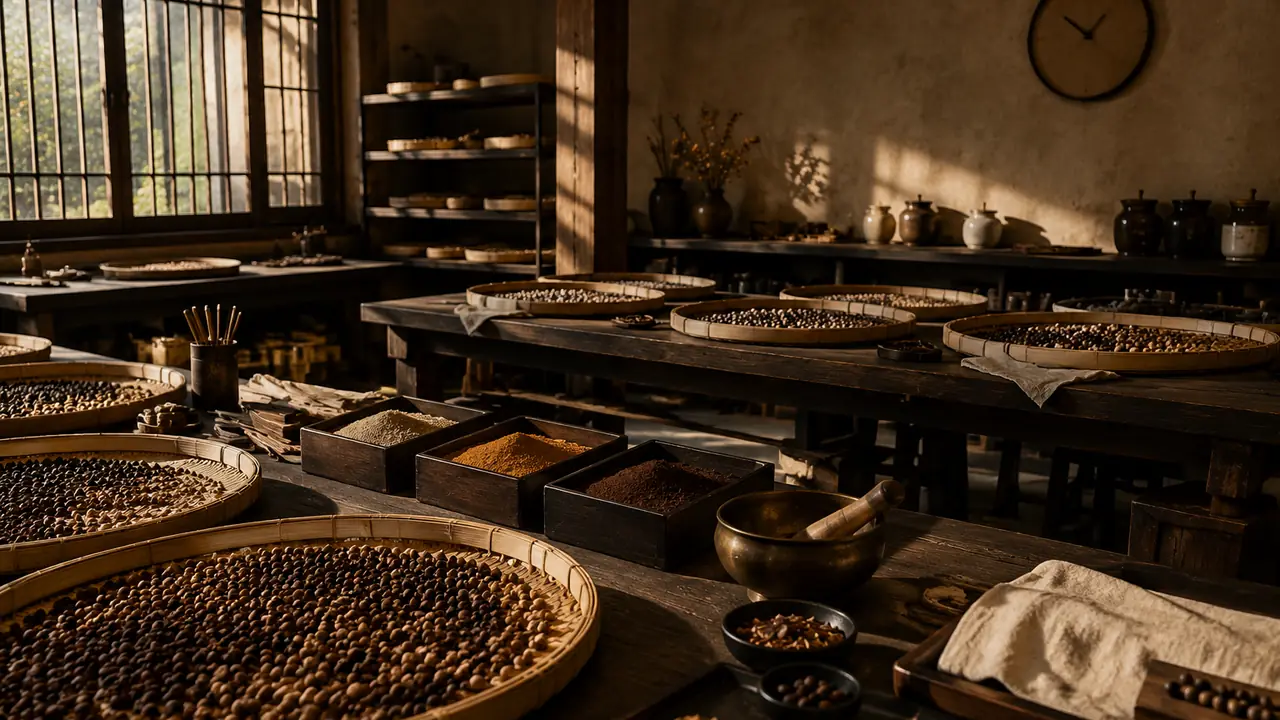
What a workshop audit means here
Incense beads are made in small partner workshops, mostly by hand, so there is rarely a large plant with an audit certificate to point to. Ouvare does not own or run a workshop; it is a sourcing desk that coordinates them. The screening described here is therefore practical rather than ceremonial. The desk visits or video-inspects a workshop, works through a written checklist, and records what it finds before any money moves on a program. Findings are shared with the buyer in a short note.
Which workshops are suitable depends on the line. A workshop good at pressed tablets may not roll beads well, and a bead workshop with excellent drying may have no experience with agarwood paperwork. The check is made per line and per program, not once for all time.
Materials and documents
The first question is what goes into the powder and where it came from. The desk asks to see the material records before it asks to see the room.
- Origin. Where the sandalwood, agarwood and any botanical accents were bought, and from whom. Sandalwood origin is stated per lot, as Australian plantation or legally sourced Indian wood.
- CITES. Agarwood belongs to the genus Aquilaria, listed in CITES Appendix II. Export paperwork has to exist for each lot before shipment. See compliance and certifications.
- Ingredient declaration. A written list of every component, including honey, binder and any additives, so that a buyer in Europe or the US can declare it.
- Purchase records. Invoices or delivery notes that link the powder in the room to the document on file.
Powder, binder and drying
These three areas decide whether a bead cracks, molds or loses its scent, so they get the most time during a visit.
For powder, the desk looks at how raw wood is dried and milled, which sieve grades are used and whether different woods are kept apart. For the binder, it checks that nanmu bark powder is the natural binder in use, that its share is recorded, and that no industrial glue or synthetic fragrance oil is added to the standard recipe; the binder page explains why. For drying, it looks for a shaded, ventilated room rather than open sun, a thermometer and hygrometer on the wall, racks that let air pass, and a record of turning the beads. Workshop practice is typically around 25 C and 60% relative humidity, with beads drying for five to ten days.
Hygiene, retained samples and packing
Dust and damp are the enemies of a botanical bead. The desk checks whether work surfaces are cleaned between batches, whether finished beads are handled with clean hands or gloves, and whether any mold spots have appeared on stock or racks. It also asks how the workshop keeps a retained sample from each lot, because that sample is the reference for the scent check at final inspection. Finally it looks at packing: foil pouches or sealed jars, desiccant, a clean separate area, and clear lot labelling.
Audit checklist
| Area | What is checked | Evidence kept |
|---|---|---|
| Materials | Origin, supplier, CITES paperwork for agarwood | Copies of documents, purchase records |
| Powder | Milling, sieve grade, separation of woods | Photos, sieve sample |
| Binder | Nanmu share, honey, no glue or synthetic oil | Written recipe, ingredient declaration |
| Drying room | Shade, airflow, temperature and humidity control, turning | Photos, reading log |
| Hygiene | Cleaning routine, mold on racks or stock | Visit note |
| Retained samples | Sample kept per lot, sealed and labelled | Sample record |
| Packing | Foil pouch or jar, desiccant, lot label | Packing photos |
What happens after the screening
A workshop that passes is matched to the line and a sample round starts. Minor findings, such as a missing hygrometer or an unlabelled jar, are put into a written corrective note and rechecked at the first inspection. A workshop that cannot show materials documents for agarwood is not used for agarwood lines. Every point in the checklist is photographed or noted, so that a buyer who cannot travel can still see the same rooms, racks and jars the desk saw, and can ask for a closer look at anything unclear. The audit feeds directly into the inspection plan in quality control, and the cluster each workshop belongs to is described on industry clusters. To discuss a program, send details through the quote form or read the sourcing process.